
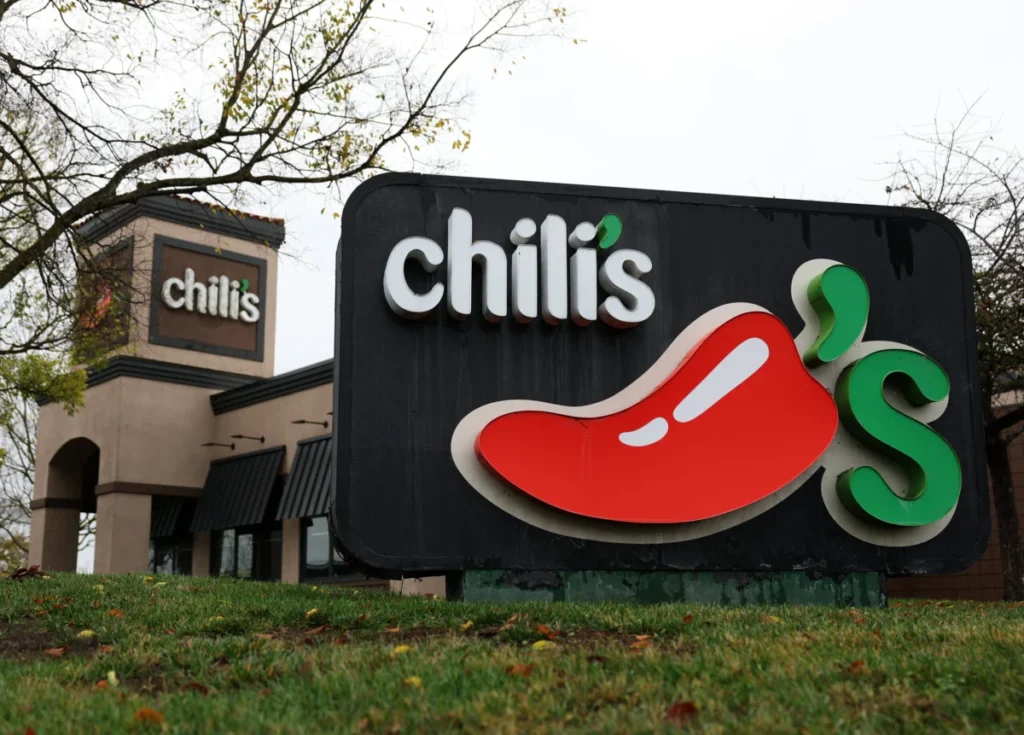
A sign is posted in front of a Chili’s restaurant in Rohnert Park, California, on Dec. 13, 2024. Justin Sullivan | Getty Images
The restaurant industry is experiencing a profound divergence on Wall Street this year, and financial analysts suggest the underlying division may come down to a fundamental corporate strategy: how many restaurant brands a company actually owns.
As consumer spending habits shift in an increasingly complex and cost-conscious economic environment, shares of major multi-brand restaurant operators have shown notable resilience and growth. Companies that house multiple household names under a single corporate umbrella are reaping the rewards of diversification, offering investors a cushion against individual brand fatigue or localized slumps.
Shares of Brinker International, Darden Restaurants, and Restaurant Brands International have posted strong gains year to date, rising roughly 32%, 18%, and 12%, respectively. These corporations collectively own a diverse stable of well-known dining establishments, ranging from casual dining staples like Chili’s and Olive Garden to upscale options like LongHorn Steakhouse, alongside fast-food and beverage giants such as Burger King, Tim Hortons, and Popeyes.
In sharp contrast, companies tethered to a single core culinary concept have faced significant headwinds. Stocks representing prominent names such as McDonald’s, Chipotle, Cava, Wendy’s, Shake Shack, and Domino’s have all experienced declines over the same period, with several suffering double-digit percentage drops. Each of these businesses relies heavily on the fortunes, marketing execution, and public appeal of one primary brand.
These contrasting share movements highlight what industry analysts view as the distinct advantages of a diversified restaurant business model. In a landscape where any operational misstep, pricing friction, or shifting preference can prompt cash-strapped consumers to dine elsewhere, having alternative revenue streams can protect a company’s bottom line.
Investors will soon receive another comprehensive look at how operating multiple chains—or conversely, sticking to a singular concept—impacts financial performance as major restaurant corporations report their quarterly results starting next week. Among those observing the broader market trends is Inspire Brands, the private equity-backed parent company of popular chains like Dunkin’, Buffalo Wild Wings, and Jimmy John’s, which has been moving quietly toward an initial public offering.
A business built around one main restaurant concept depends inherently and heavily on that single brand holding consumers’ attention and retaining its market share. By contrast, a company with a robust multi-brand portfolio possesses alternative sources of revenue and foot traffic if one particular chain experiences a temporary loss of momentum or macro-level headwinds.
That portfolio cushion can prove critical, though financial experts note it only works effectively if another subsidiary chain is strong enough to pick up the slack during a downturn.
"Darden is probably the best case of the scale and size and diversity of business," said Nick Setyan, a restaurant analyst at Mizuho Securities. "If one business
isn’t doing well, the other ones are."
Setyan pointed out that this exact dynamic has played out visibly between Darden’s two flagship casual dining brands, Olive Garden and LongHorn Steakhouse, over recent quarters. LongHorn’s steady growth has notably outpaced Olive Garden’s for months. In the most recent reported quarter, LongHorn’s comparable sales rose by a solid 6.2%, starkly outperforming Olive Garden’s more modest 1.1% comparable sales increase.
KeyBanc Capital Markets also underscored the strategic advantages of Darden’s diverse portfolio in an October research note to clients. The firm noted that operating multiple distinct concepts provides the parent company with "exposure to a broad range of consumers." In a segmented or K-shaped economy, where consumer discretionary spending varies sharply across different income brackets, having both casual dining and upscale fine-dining offerings allows a corporation to capture spending from various demographics.
KeyBanc maintains a buy-equivalent rating on Darden alongside a $237 price target, compared with the stock’s trading price of around $215.
Similarly, Restaurant Brands International provides investors with broad exposure to different dining categories and geographic markets through its prominent trio of Burger King, Tim Hortons, and Popeyes. However, analysts caution that even a multi-brand structure does not completely insulate a parent company from the struggles of a single underperforming brand within its portfolio.
Tim Hortons owner to purchase Popeyes Louisiana Kitchen. The parent company of Tim Hortons and Burger King said it will pay US$1.8 billion cash to buy the Popeyes chain. Randy Risling | Toronto Star | Getty Images
During the second quarter, for instance, Burger King’s domestic U.S. comparable sales accelerated impressively to 8.5%, up from 5.8% in the first quarter. Meanwhile, Tim Hortons’ comparable sales in Canada slowed dramatically to just 0.1%, down from 1.5% over the same comparative period. That divergence meant Burger King’s ongoing turnaround efforts had to carry a much heavier share of the portfolio’s momentum while Tim Hortons experienced a temporary growth stall.
Setyan emphasized that Burger King’s recent operational strength has been central to the parent company’s overall market momentum, aided significantly by the brand’s ability to communicate value-oriented menu items effectively to consumers at a time when competitors like McDonald’s saw their sales growth moderate.
"If it weren’t for Burger King’s current performance, I don’t know if [Restaurant Brands] would be going so well," Setyan observed.
Reflecting confidence in this operational balance, Mizuho initiated coverage of Restaurant Brands International on Oct. 20 with a buy-equivalent rating and an $85 price target, against a trading price of roughly $76.
At the same time, industry observers note that an intense focus on a single brand can still yield exceptional results under the right conditions. Companies like Starbucks and The Cheesecake Factory have emerged as notable restaurant-stock standouts this year, demonstrating that a clear, unified brand identity, combined with disciplined capital investment, can drive substantial outperformance when execution and customer demand align seamlessly. Their shares have climbed 21% and nearly 123%, respectively, over the course of the year.
Starbucks, for its part, recently addressed acquisition speculation head-on, stating that it would not pursue a buyout of Chipotle after reportedly considering a massive transaction that would have significantly diversified its own operating footprint across the fast-casual landscape.