
The limited partners who provide the foundational capital to venture firms—often described as the "money behind the money"—are feeling remarkably confident in the current market climate. Operating in a landscape that is in many ways uncharted, these institutional backers are simultaneously navigating territory that has the potential to become exceedingly lucrative.
Traditionally, limited partners (LPs) spread their capital across a broad array of firms to diversify their portfolios. They write checks to emerging managers and established institutions alike, balancing bets between generalist funds and specialized niches. The overarching goal has always been twofold: to secure strong returns while rigorously minimizing risk.
That is the typical playbook for institutional venture investing, but standard conventions are currently out the window. The valuations of generative artificial intelligence leaders like OpenAI and Anthropic have shot up with such unprecedented speed that nearly the entire venture ecosystem has piled into the same two companies on the way up. This convergence often occurs inside the very same venture firms, defying the longstanding venture capital convention of avoiding investments that conflict with one another. Yet, despite this departure from tradition, no one within the LP community seems to be complaining. The limited partners interacting with the market appear unbothered by these high-stakes gambles given the sheer scale of the potential returns, with many anticipating an impending financial bonanza.
However, these investors are not blind to potential hazards. They view the road ahead through the lens of a "yellow light" situation, expressing lingering unease regarding the rapid pace at which venture capitalists are returning to the market to raise successive funds.
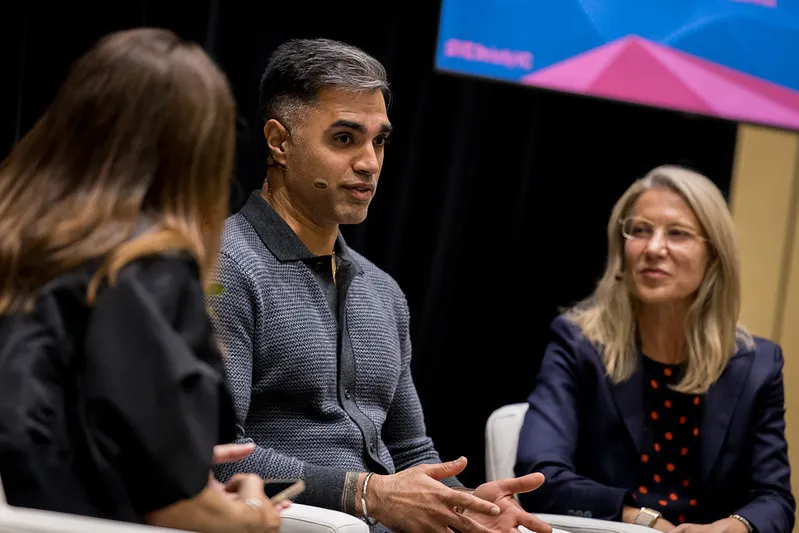
To examine these market dynamics, a recent conversation brought together Beezer Clarkson of LGT Capital Partners, a Zurich-based diversified asset manager, and Amit Bhatti of TrueBridge, a Chapel Hill firm that focuses exclusively on venture capital.
Riding the Chaos of the Venture Ecosystem
Discussing the current climate reveals a dichotomy of extreme excitement mixed with underlying caution. When asked about their roles and institutional standing within the fast-moving startup ecosystem, Clarkson and Bhatti offered perspectives shaped by decades of market cycles.
"It’s very busy, but I wouldn’t say it’s scary," Clarkson noted. "There’s a lot of change and a lot of variables at play. I love venture, so I find the chaos fun. I’ve been doing this for a couple of decades, so seeing the cycles makes it less scary. You appreciate that these things happen, and that we should enjoy the upside, because sometimes there’s downside, and the up is a lot more fun than the down."
Bhatti echoed a similar sentiment of optimism regarding the spotlight currently shining on the industry. "If anything, it’s exciting," Bhatti said. "Venture is sometimes looked at as a niche, and now that AI is all-consuming, all the attention is on venture. This feels like our moment more than it is like, ‘Oh gosh, what’s going to happen?’ The pace of investing and the valuations may be different, but really meaningful stuff is happening, and all the attention is focused on this corner of private equity."
Portfolio Concentration and the Power Law
A defining characteristic of the current boom is portfolio overlap. Funds across the board hold shares in the exact same breakout brands—OpenAI and Anthropic—multiplied across however many portfolios an LP backs. For institutions whose mandate is to maintain strict diversification, this concentration presents a unique paradox.
"Venture has always been a power law business, so I actually view the concentration as a good thing," Bhatti explained. "If we were getting to the maturity of one of our funds and there were still lots of tiny positions, something’s gone wrong. Our funds that are 10-plus years old are starting to consolidate into a few names. There’s a lot of Databricks, a lot of SpaceX, a lot of Stripe. In this generation of funds, I would hope there’s a lot of Anthropic and a lot of OpenAI. That’s a feature, not a bug. Not every one of these companies is going to work out, but that consolidation is typical. What’s different is how quickly it’s happened. I don’t view it as an immediate panic signal."
Clarkson added that early-stage investing maintains a different risk-reward profile and operational scope. "At the early stage, you still see quite a diversity of opportunity sets, and the dollars are smaller," she said. "It aggregates up into the same companies, but early-stage funds obviously aren’t doing the big late-stage stuff, so you have more diversity there, if that’s what you’re looking for."
The Accelerating Pace of Fundraisings
Historically, venture funds operated on a reliable four-year investment cycle. Over recent years, however, that cadence has compressed significantly, shrinking to three years, then two, and in some cases, down to 18 or even 12 months. This accelerated deployment pace has raised eyebrows among institutional backers.
"We’re seeing funds come back on one-year pacing, which is fast," Clarkson observed. "The norm was probably two to two and a half years. Some funds are deploying much faster because they’re taking concentrated, big-check positions. That could be a worrisome sign. It could work out, we don’t know, but it’s typically harder to do a one-year vintage and get it right."
Bhatti concurred, noting that while a 24- to 36-month window used to be the industry standard, a 12- to 18-month deployment window has become common for fast-moving managers. Furthermore, many funds are bumping up their fund sizes mid-cycle—a practice driven largely by exploding round sizes. When giants like Anthropic command massive capital injections, a fund allocating 20 percent of its capital to a single deal will naturally accelerate its pacing. Seed round sizes have also nearly doubled, requiring larger leading checks.
"It’s definitely a yellow light," Bhatti admitted. "It gives us a little bit of heartburn. But when we look at what these managers actually bought, the numbers are different. The last time we had accelerated pacing, there was a lot of investing in zero-revenue crypto moonshots. Now we’re seeing a lot of companies go from zero to $100 million in revenue, which was totally unheard of before."
When stellar managers return to the market annually before paper returns have materialized into realized cash, LPs face difficult allocation decisions. Walking away from a trusted manager risks losing access to top-tier deals, yet maintaining pacing can overextend an institution’s balance sheet.
"It’s very hard to leave a manager and then come back," Clarkson explained. "It happens, but it’s more typical to downsize your check. In 2021, a lot of LPs said, ‘If I was going to give you $10 million, I’ll do $5 million, because $10 million was for two years.’ In our portfolios, the pacing gets pulled through, so we think about our pacing as well as yours."
Bhatti noted that TrueBridge maps out long-term calendars for anticipated commitments to manage capital flow. "You see people downsize or communicate it up front," he said. "It’s hard to say you’re sitting it out altogether, because then you’re not reliable capital. That’s also why you’re seeing upsizes; managers don’t want to come back and say they’re raising a whole new fund, so they bump up the old one."
Clarkson also pointed out the systemic strain placed on non-profit institutions like university endowments, hospitals, and foundations. When capital calls continue running continuously without distributions flowing back to cover operating budgets, severe liquidity pressures emerge.
Assessing Past Vintages and the Maturing Secondary Market
Reflecting on the heavy deployment eras of the pandemic, the long-term health of 2021 vintages remains an open question. While those funds faced extreme valuations, industry veterans note that generational breakout companies were planted during that window. Moreover, liquidity channels have begun expanding beyond traditional initial public offerings.
"The 2021 vintages are still early, five years in, but they argue against doing one-year funds," Clarkson said. "Some will catch a piece of an AI company and look excellent, but your odds of getting it right in one year are just tougher, and the valuations were extreme."
Bhatti added that the market is finally seeing substantial liquidity through M&A and secondary transactions, moving past the sluggish exit environment of prior years. Major exits, including large-scale acquisitions and multi-billion-dollar transactions, have helped inject fresh capital back into the ecosystem.
This maturation has elevated secondaries into an essential third pillar of liquidity alongside IPOs and mergers and acquisitions. Once viewed within venture capital as a sign of distress, secondary transactions are now utilized strategically by managers looking to return capital to investors while retaining their primary upside exposure.
"Secondaries have become much more sophisticated in venture over the last, call it, five years," Clarkson said. "It’s localized in the top handful of companies, but it’s much more prevalent than before, which I think is good, because the ecosystem needs liquidity options. Venture is predicated on that, and if you wait 20 years for an IPO, that is not what structurally we all thought it could be."
The Evolution of Emerging Managers and Geography
As established mega-funds capture a significant share of committed institutional capital, emerging managers face a more rigorous fundraising climate. However, opportunities persist for smaller funds that maintain a distinct point of view and disciplined check sizes.
"There are still first-time and emerging managers, funds one through three, being raised this year, last year, the year before," Clarkson explained. "You still need a differentiated point of view, a reason for being. Fundraising has gotten harder, but we see them being funded, and the fund sizes are just smaller. Fifty percent of the money might go to the big funds, but if your average first fund is $25 million to $50 million, there can still be enough of those to add up to $1 billion."
Bhatti emphasized that emerging managers often benefit from starting small—such as formalizing angel syndicates with $5 million to $10 million funds—before attempting to scale institutional vehicles. By building a verifiable track record of access and investment judgment on a smaller scale, GPs can avoid the steep hurdles associated with raising massive initial funds.
When evaluating these smaller pools of capital, institutional investors have also shown increased flexibility regarding part-time operators and younger general partners embedded within top-tier academic and technical talent hubs. Whether backing operator-turned-investors or young entrepreneurs with privileged access to emerging AI talent, LPs remain focused on identifying managers who can secure coveted spots on top-tier cap tables.