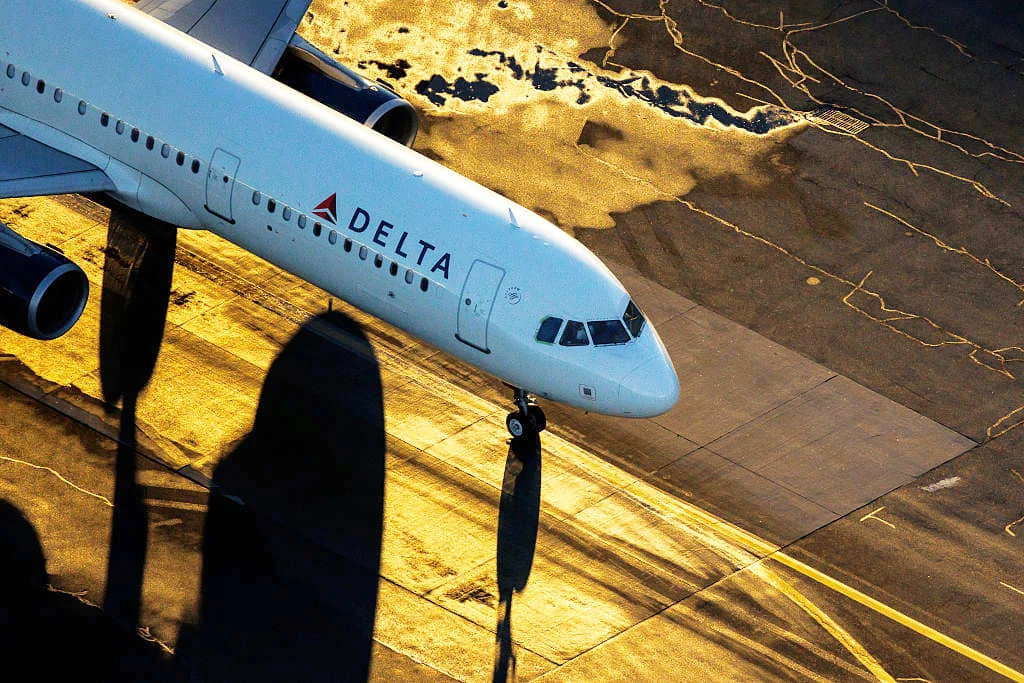
Delta Air Lines, long considered the bellwether of the U.S. aviation industry and its most consistently profitable carrier, is facing a significant financial reality check. On Friday, the company announced a downward revision of its 2026 profit outlook, citing the persistent and punishing impact of high fuel prices. Despite this volatility, Delta CEO Ed Bastian remains optimistic about the resilience of the consumer, asserting that travelers are showing little sign of pulling back despite the airline’s aggressive efforts to pass on the ballooning costs of operation.
The adjustment to the company’s financial forecast was stark. Delta now expects full-year adjusted earnings per share (EPS) to fall between $5.10 and $5.60. This is a significant retreat from the guidance provided just months ago in July, when the company anticipated earnings in the range of $6.50 to $7.50 per share. The revision reflects the shifting economic landscape, particularly regarding the price of crude oil and its refined products, which have severely constrained the airline’s margins. In addition to the earnings guidance, Delta lowered its free cash flow outlook for the year to $2.5 billion, down from the $4 billion ceiling it had projected during the summer.
The announcement was met with concern by investors, particularly as Delta’s fourth-quarter guidance also trailed analyst expectations. This development marked a notable milestone for the carrier, as it was the first time in two years that the airline failed to meet Wall Street’s consensus estimates.
The Fuel Price Burden
At the heart of Delta’s financial recalibration is the relentless surge in jet fuel prices. Since the onset of the conflict in Iran this past February, global energy markets have been whipsawed, with fuel costs reaching heights that few analysts predicted earlier in the year. Data from FactSet indicates that jet fuel prices in the U.S. Gulf of Mexico region have nearly doubled over the past twelve months, climbing from $2.19 per year ago to $4.34 as of Thursday.
For an airline, fuel is typically the second-largest operating expense after labor, and such an abrupt price spike creates an immense drag on profitability. While carriers have attempted to flex their "pricing power"—the ability to raise ticket prices without losing customers—the sheer magnitude of the cost increase has proven difficult to fully absorb or offset. Recent inflation data from September underscored this trend, showing that consumer airfares have climbed more than 23% compared to the same period last year.
Despite these price hikes, CEO Ed Bastian insists that the demand for air travel remains robust. During an interview following the release of the quarterly results, Bastian noted that the airline has been successfully passing a significant portion of its $6 billion increase in fuel costs directly to passengers.
"The consumer response continues to be quite strong," Bastian stated. "We’re seeing it across all channels, all cabins of service, all geographies, business, leisure."
Delta’s unique business model offers some protection against these market fluctuations. The airline owns and operates a refinery in Trainer, Pennsylvania, which processes crude oil into jet fuel and other refined products. This vertical integration has historically provided Delta with a distinct competitive advantage, allowing it to hedge against price volatility that leaves other carriers vulnerable. Even with this benefit, however, the sheer scale of the price surge has necessitated a cautious approach to the coming year.
Third Quarter Performance
Delta’s latest report covers the third quarter—a crucial period that encapsulates the peak summer travel season. The company reported a net income of $756 million, or $1.15 per share, representing a 47% decline from the $1.42 billion, or $2.17 per share, reported during the same quarter last year. When adjusting for one-time items, the airline posted earnings of $1.76 per share.

Revenue figures painted a more nuanced picture. When adjusted for sales from its refinery, maintenance business, and profit-sharing obligations, revenue rose 16% from the previous year to $17.59 billion. Total operating revenue jumped 21% to $20.19 billion.
A breakdown of these revenue streams reveals a clear trend in consumer behavior: the rise of premium travel. Revenue from premium cabin offerings grew by 18% to $6.82 billion, signaling that travelers are increasingly willing to pay a premium for comfort, space, and additional amenities. In contrast, sales in the main cabin rose by a more modest 12%, reaching $6.8 billion. This shift suggests that while the broader travel market remains healthy, the most resilient segment of the population—and the most profitable for the airline—is the premium traveler.
Looking ahead to the fourth quarter, Delta is forecasting a 20% increase in revenue over the same period last year. This projection is notably higher than the 16% revenue growth seen in the third quarter, reflecting the airline’s anticipation of sustained demand throughout the holiday season, even as the company grapples with the lingering effects of energy market instability.
Friction Over In-Flight Connectivity
While financial pressures dominated the conversation, Delta also found itself in the spotlight regarding its technological strategy. The airline, which pioneered the move toward offering free Wi-Fi across its fleet nearly four years ago, recently announced a transition to Amazon’s Leo satellite internet constellation. This move is part of a broader industry race to provide "living-room-quality" internet speeds to passengers at 30,000 feet.
The decision to move away from other potential providers led to a public clash with SpaceX CEO Elon Musk. Last week, Musk took to his social media platform, X, to criticize Bastian, suggesting the Delta CEO would "lose his job over this." The comment followed a report from the travel industry blog "View from the Wing," which claimed that Bastian had told staff at an internal event, "We do not want to be with Elon Musk. Trust me."
SpaceX’s Starlink service has quickly become a dominant force in the aviation connectivity market, securing partnerships with several major carriers including United Airlines, American Airlines, Southwest Airlines, and Alaska Airlines, among others. The public nature of Musk’s criticism fueled speculation of a personal or corporate feud between the two executives.
However, when pressed on the matter during his interview with CNBC’s Phil LeBeau, Bastian sought to downplay the significance of the exchange. "Everyone’s entitled to their opinion," Bastian said, dismissing the idea of a personal conflict. He clarified that there is "no tit for tat as far as I’m concerned."
Bastian provided some historical context to the relationship, noting that Delta had engaged in discussions with SpaceX regarding satellite technology roughly six years ago. According to the CEO, those early talks did not result in a partnership because the technology, at that time, simply was not ready to scale to the massive requirements of Delta’s global fleet. As Delta continues its push for premium in-flight experiences, the choice of connectivity remains a strategic priority, regardless of the external commentary surrounding it.
As Delta moves into the final months of the year, it finds itself in a challenging position common to many major corporations in the current economic climate: balancing the need for profitability against the reality of high input costs, all while trying to maintain the loyalty of a consumer base that is feeling the effects of inflation. With the summer travel season behind them, the airline’s focus is now firmly on managing the volatility of the energy markets and continuing the rollout of the passenger-facing improvements that have defined their recent brand identity. Whether the aggressive pricing strategy can continue to hold off the pressures of rising costs remains the primary question for investors and analysts alike as they look toward 2026.