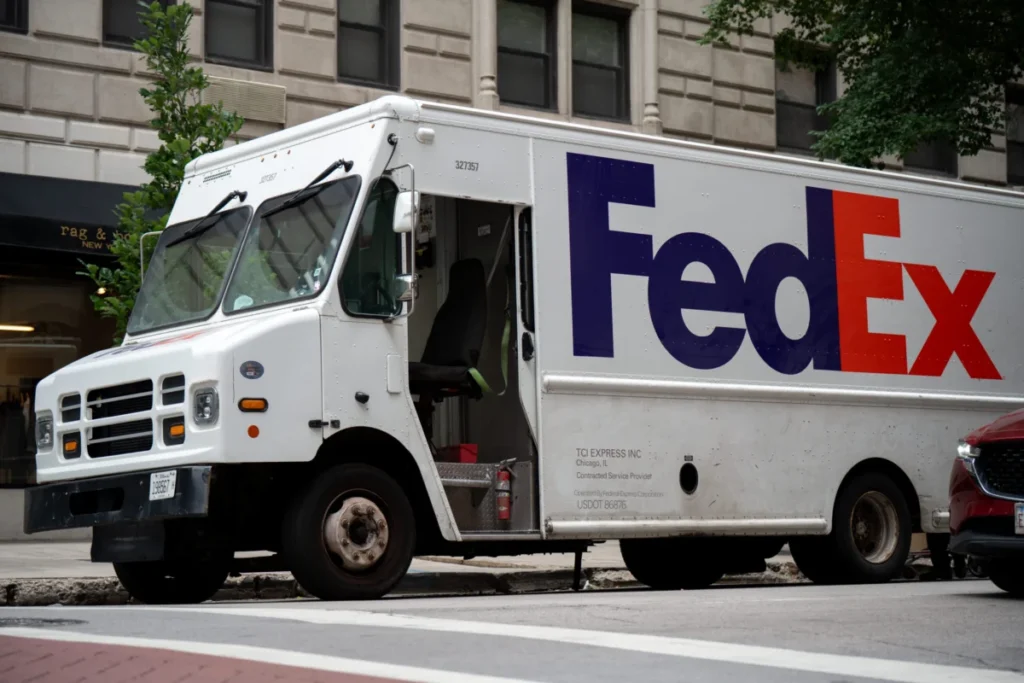
FedEx, the global logistics giant, delivered a robust financial performance in its latest quarterly report, successfully outpacing Wall Street’s expectations on both the top and bottom lines. Despite the positive news, shares of the company experienced a slight dip during extended trading, reflecting the cautious sentiment often seen in the current macroeconomic climate. The report, which covers the period ending September 30, marks the inaugural financial disclosure under the company’s newly realigned fiscal year, a strategic shift that has moved its fiscal calendar end date from May 31 to December 31.
The company reported a net income of $290 million, or $1.21 per share, for the quarter. This figure represents a notable decrease from the $650 million, or $2.73 per share, reported during the comparable period a year prior. However, when accounting for one-time items—including losses associated with short-term investments, gains realized from the extinguishment of debt, and specific restructuring costs—the company’s adjusted earnings per share reached $3.74. This adjusted metric is widely viewed by investors as a more accurate reflection of the company’s operational efficiency and ongoing profitability.
This quarterly update arrives at a transformative time for the logistics conglomerate, occurring shortly after the successful spin-out of its FedEx Freight division into a standalone, publicly traded entity. By isolating the freight business, FedEx aims to streamline its operations, allowing management to focus more intensely on its core express and ground delivery services. This reorganization is part of a broader, multi-year effort to modernize the company’s network, reduce operational overhead, and improve the speed and reliability of its global delivery capabilities.
A key driver of the quarter’s success was the performance of the express U.S. segment. FedEx reported that operating income within this critical division saw a significant increase, a trend primarily fueled by higher package yields and a surge in volume. This suggests that the company’s efforts to optimize its pricing strategies and capture higher-margin business are gaining traction. By focusing on high-value market segments, FedEx is demonstrating an ability to navigate the complexities of the logistics industry while maintaining competitive pricing in an era of fluctuating fuel costs and shifting consumer demand.
CEO Raj Subramaniam highlighted the strategic importance of these results in a statement released alongside the earnings report. "As our strong operating results and adjusted free cash flow demonstrate, FedEx is winning across high-value market segments while we optimize our network, driving an increase to our full-year outlook," Subramaniam said. This sentiment reflects the leadership’s confidence that the current restructuring initiatives are not merely theoretical, but are actively contributing to the company’s bottom line.
The company’s optimism is clearly reflected in its updated guidance for the full fiscal year. FedEx now projects adjusted earnings per share to fall between $18 and $18.60, a notable improvement over the previous forecast range of $16.90 to $18.10. Furthermore, the company has revised its revenue growth expectations for 2026. Management now anticipates a year-over-year revenue increase of roughly 12%, a move upward from the earlier guidance of 11%. These upward revisions indicate that, despite global economic headwinds, FedEx is capturing more market share and managing its internal costs with greater precision.
The shift in the fiscal year calendar is a significant structural change, intended to align the company’s financial reporting more closely with the broader retail and shipping industry cycles. By ending the fiscal year on December 31, FedEx is better able to capture the financial data surrounding the peak holiday shipping season, providing shareholders with a more comprehensive view of how the company handles its most demanding period of the year. This change, while administrative in nature, represents a fundamental shift in how the company communicates its performance to the investment community.
The financial results come during a period of transition in the company’s executive leadership. Earlier this week, FedEx announced the appointment of Jamere Jackson as its new executive vice president and chief financial officer. Jackson, a former executive at AutoZone, is set to assume the role on November 30. His arrival marks the end of a period of interim leadership in the CFO office, following the departure of Claude Russ, who had been serving as the interim CFO since June 1.
The vacancy in the CFO position was created when John Dietrich announced his decision to step down from the role earlier this year, a move made public in April. The appointment of Jackson is being closely watched by analysts and investors alike, as his track record at a major retail organization like AutoZone is expected to bring a fresh perspective to FedEx’s financial strategy. Given the company’s current focus on network optimization and margin expansion, Jackson’s experience in managing large-scale financial operations will likely play a critical role in executing the company’s long-term vision.
The slight decline in shares during extended trading, despite the earnings beat, underscores the complexity of the current market environment. While the company’s operational improvements and upward revisions to guidance are generally interpreted as positive signals, investors are often quick to temper their enthusiasm based on broader macroeconomic indicators. Concerns regarding consumer spending, global trade stability, and the long-term impact of restructuring often influence market behavior more heavily than single-quarter earnings reports. However, the consistent growth in package yields and the successful integration of its realigned business structure provide a foundation of stability that has historically appealed to long-term investors.
The logistics industry remains one of the most vital arteries of the global economy, and FedEx’s ability to adapt its network to meet the demands of e-commerce and B2B shipping is essential to its competitive advantage. The decision to spin off the freight business, for example, is a clear signal that the company is willing to make difficult, large-scale structural changes to ensure the agility of its remaining business units. As the company moves toward the end of the calendar year under its new fiscal reporting structure, the focus will remain on whether it can sustain the momentum generated in this quarter.
Looking ahead, the combination of improved guidance and a new financial leadership team positions FedEx to navigate the remaining fiscal year with a renewed sense of purpose. The challenges that lay ahead—ranging from technological integration to the maintenance of service quality across a global footprint—will test the company’s commitment to its current optimization strategy. Nevertheless, the results from this latest quarter suggest that FedEx is making consistent progress in a highly competitive landscape, setting the stage for what the company expects to be a year of solid growth and increased financial performance.
For shareholders, the primary takeaway from this report is that the company’s core business model remains resilient. The ability to increase operating income in the express U.S. segment, even while undertaking significant corporate restructuring, points to a strong underlying demand for the company’s services. As FedEx continues to transition into this new phase of its history, the integration of new financial leadership under Jamere Jackson and the execution of its revised fiscal goals will remain the central narratives for the company’s future performance. The market will continue to monitor these developments closely, weighing the company’s ability to meet its ambitious full-year targets against the ongoing volatility of the global shipping market.