
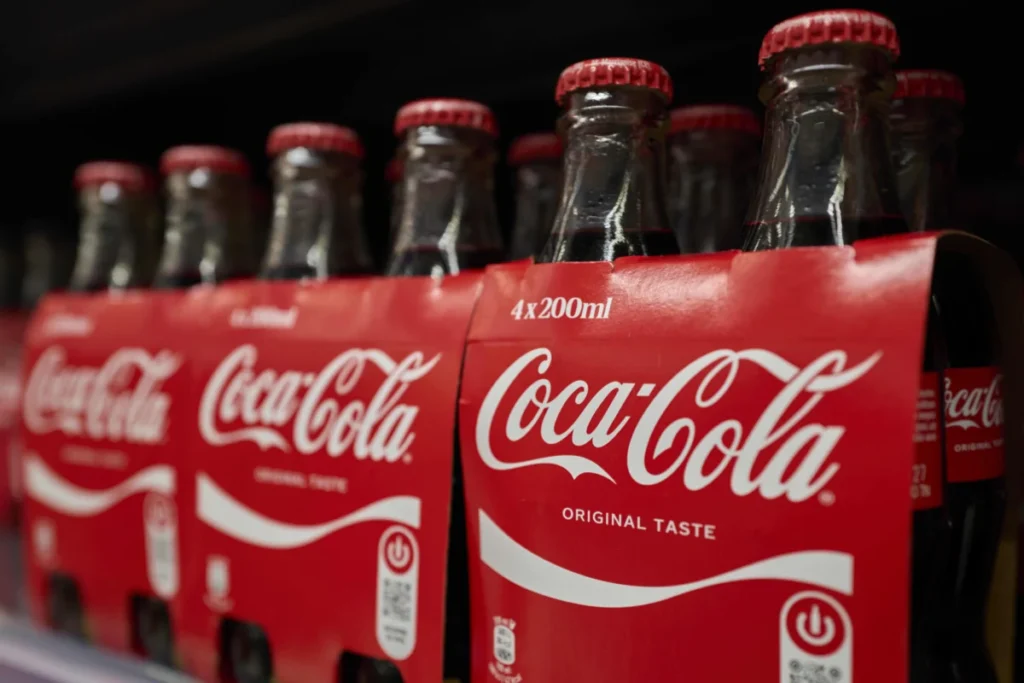
Coca-Cola, the world’s largest non-alcoholic beverage manufacturer, delivered a robust performance in its third quarter, signaling resilience despite a complex global economic landscape. On Tuesday, the company announced an upward revision of its full-year financial outlook for the third consecutive quarter, buoyed by strong international demand that successfully offset a period of stagnant growth in its North American home market.
The beverage giant now expects its comparable earnings per share to grow by at least 11% for the full year, a notable increase from its previous forecast of 9% to 10% growth. Furthermore, the company anticipates that its organic revenue will climb by at least 5%, marking a slight improvement over its prior projection of approximately 5% growth. Investors responded positively to the announcement, with shares of the company rising about 1% in premarket trading as the market digested the news of the firm’s sustained momentum.
For the quarter ending in September, Coca-Cola reported net income attributable to shareholders of $4.01 billion, or 93 cents per share. This represents a significant increase compared to the same period a year earlier, when the company posted $3.7 billion in net income, or 86 cents per share. When adjusted to exclude transaction gains and other one-time items, Coca-Cola earned 91 cents per share, comfortably exceeding analyst expectations.
The company’s top-line performance was equally strong. Net sales rose 7% to $13.4 billion, while organic revenue—a metric that strips out the effects of acquisitions, divestitures, and foreign currency fluctuations—also climbed 7% during the period. This marks the second consecutive quarter in which the company’s unit case volume increased by 5%, a trend largely driven by heightened consumer demand outside of the United States.
While the international business flourished, the North American market remained flat in terms of volume. This stagnation has drawn significant attention from investors and analysts, particularly as the company navigates the ongoing challenges of inflationary pressures and a shifting consumer base. However, company leadership remains optimistic, suggesting that the domestic lull is more of a temporary technicality than a reflection of declining brand strength.
CFO John Murphy, in an interview with CNBC, clarified that the North American business would have actually reported volume growth had it not been for two specific, non-recurring factors. First, the timing of the Fourth of July holiday created a challenging comparison against the previous year. Second, a months-long supply chain shortage of Topo Chico, the popular sparkling water brand owned by Coca-Cola, significantly impacted the company’s ability to meet demand in the region.
"The underlying momentum remains quite strong," Murphy stated. "Consumer sentiment is largely unchanged in the sense that, wherever you are on the income scale, you’re looking for value, and I think our system here has done a good job interpreting that."
This narrative of consumer "value-seeking" has become a central theme for Coca-Cola’s executive team over recent quarters. They have frequently observed that while North American shoppers are currently feeling the squeeze of inflation and general economic uncertainty, they have not abandoned the brand. Instead, consumers are balancing their budgets while continuing to purchase Coca-Cola’s products, ranging from premium, high-value offerings like Fairlife dairy products to the company’s namesake soda brands.
The global sparkling soft drinks segment, which serves as the core of the company’s business, saw a 5% increase in volume during the quarter. This growth was propelled by the continued popularity of flagship products, including Coca-Cola, Coke Zero Sugar, and Diet Coke.
Diet Coke, in particular, has seen a surprising and robust resurgence. Murphy highlighted the brand’s unique ability to reinvent itself for modern audiences. In the United States, a cultural shift among Gen Z consumers has led to the affectionate, if unconventional, nickname of "fridge cigarette" for the drink, reflecting a level of brand loyalty and social media integration that the company did not anticipate. This cultural phenomenon is mirrored internationally as well, albeit for different reasons; in India, consumers have been hosting "Diet Coke parties" as supply chain disruptions—exacerbated by regional geopolitical tensions, specifically the U.S.-Israeli conflict with Iran—have made the drink a scarce commodity.
When asked about the competitive landscape, Murphy noted that Coca-Cola has successfully gained market share as rival PepsiCo faces struggles within its own soda division. However, the executive team remains pragmatic, acknowledging that not all brands under the Coca-Cola umbrella are performing at the same level. For instance, Murphy admitted that some of the company’s soda brands, such as Sprite, still have "some work to do" to regain their full growth potential.
Beyond its core soft drinks, the company’s water, sports, coffee, and tea division also posted a 5% increase in volume. Growth in this category was primarily fueled by strong demand for the company’s water portfolio, led by the premium Smartwater brand. Performance in the other segments of this division was more muted, with tea and coffee demand remaining flat, while sports drinks saw a slight decline.
The juice, value-added dairy, and plant-based beverage division reported flat volume for the quarter. While this segment faced some headwinds, it still benefited from the growth of powerhouse brands like Fairlife and Minute Maid, which continue to capture consumer interest. These results highlight the diversified nature of Coca-Cola’s portfolio, which allows the company to balance weakness in certain categories with strength in others.
As Coca-Cola looks toward the end of the fiscal year, the company appears well-positioned to maintain its current trajectory. By raising its outlook, management is signaling confidence in its pricing power and its ability to continue executing effectively in diverse global markets. While the North American market presents a unique set of challenges related to logistics and consumer spending habits, the company’s ability to leverage its brand equity and maintain volume growth internationally suggests that its core strategy remains sound.
Ultimately, the results reflect a company that is successfully navigating the "value" trade-off that defined the retail landscape in 2026. Whether through the continued cultural relevance of its legacy sodas or the expansion of its premium health-focused brands, Coca-Cola’s third-quarter report indicates that the business is not just maintaining its market position, but actively building upon it in a way that resonates with both long-term investors and a new generation of global consumers. The combination of strong international volume growth, effective price management, and a renewed focus on brand identity has set the stage for what the company expects to be a strong finish to the year.