Boeing significantly narrowed its financial loss in the third quarter, buoyed by a substantial rise in defense sales and improved top-line momentum, even as the aerospace manufacturer navigates ongoing operational headwinds. While the company is showing signs of recovery from previous manufacturing missteps and massive charges, leadership remains acutely aware that critical challenges lie ahead, particularly regarding the stabilization and acceleration of its core commercial aircraft production lines.
For the three months ended Sept. 30, Boeing reported a net loss of $116 million, or 26 cents a share. This represents a dramatic improvement compared with the same period a year earlier, when the company posted a staggering net loss of $5.34 billion, or $7.14 per share. When adjusting for one-time items, the manufacturer reported an adjusted loss of 34 cents a share. The stark contrast in year-over-year performance is largely attributed to the heavy financial burden Boeing absorbed during the prior year, which included a nearly $5 billion pre-tax charge tied to its long-delayed and heavily scrutinized 777X widebody aircraft program.
Revenue for the quarter climbed 4% compared with the previous year, reaching $24.19 billion. At the same time, Boeing’s financial liquidity showed positive movement, with free cash flow rising to $464 million, up from $238 million in the third quarter of the prior year. This cash flow improvement is vital for the company as it attempts to repair its balance sheet, rebuild its credit standing, and fund ongoing investments in safety, quality control, and factory-floor improvements.
Despite the broader financial progress, the company’s vital commercial aircraft business faced persistent pressures during the quarter. Revenue in the commercial division fell 3% to $10.72 billion. Furthermore, the unit posted a negative operating margin of 6.5%. Boeing executives explained that this margin compression was driven by a less favorable delivery mix, higher projected costs associated with future production rate adjustments, and elevated estimated supply chain costs that continue to plague the broader aerospace manufacturing sector.
In terms of physical deliveries, Boeing handed over 161 commercial airplanes to customers during the third quarter, representing an increase of just one jet compared with the 160 commercial airplanes delivered during the same period a year earlier. Aircraft production and deliveries remain the single most critical driver of Boeing’s financial recovery, given that the vast majority of an aircraft’s purchase price is collected upon final delivery to the customer. Every incremental delivery directly impacts top-line revenue generation and cash conversion, making production stability an absolute priority for executive leadership.

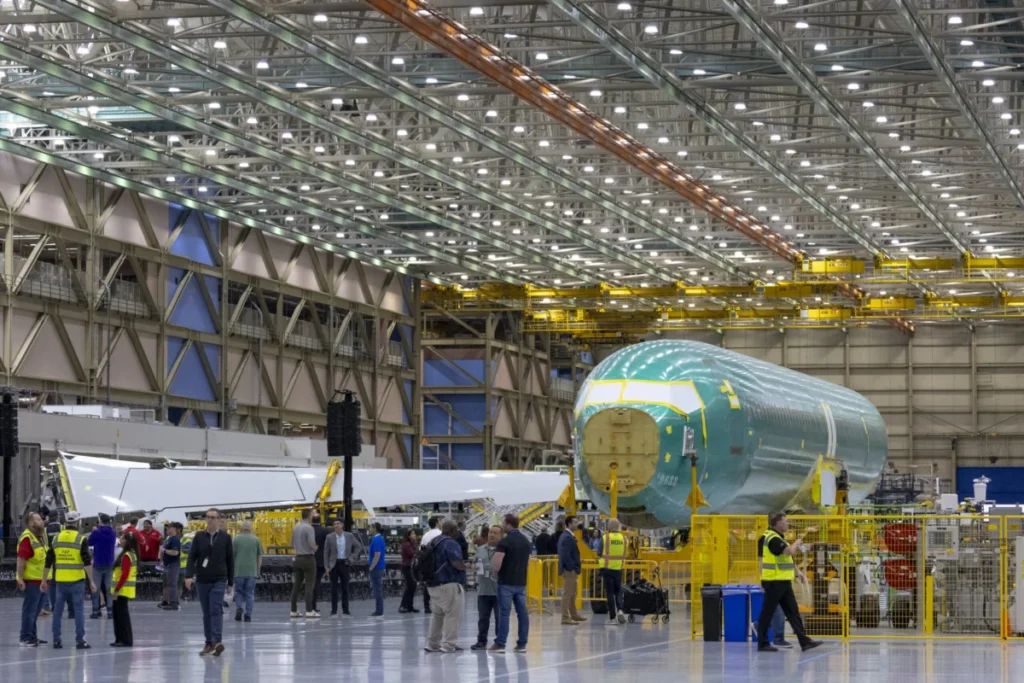
Boeing has been producing approximately 47 of its workhorse 737 Max single-aisle planes per month, but the company harbors ambitions to push that output significantly higher. However, ramping up production is proving to be a delicate and deliberate process. CEO Kelly Ortberg informed investors last month that factory output is taking "a little bit longer" than initially anticipated to fully stabilize. Consequently, the company now expects to meaningfully increase its output of the 737 Max family of aircraft next year, prioritizing sustainable, repeatable manufacturing processes over aggressive, rushed volume targets.
Executive leadership is scheduled to provide further updates to investors and financial analysts regarding how quickly the company can accelerate aircraft production in the coming months during a quarterly earnings call. The market will be closely scrutinizing these timelines, as Wall Street looks for concrete evidence that Boeing can safely scale its operations without triggering additional supply chain bottlenecks or quality escapes.
Reflecting on the company’s current standing and the expectations moving forward, CEO Kelly Ortberg addressed employees in an internal note, emphasizing that the organization still has significant ground to cover. "Looking ahead, expectations are rising, and they should," Ortberg wrote in the note to staff. "That means elevating our performance through lean, productivity and efficiency improvements in our day-to-day work while upholding our high levels of safety and quality."
While the commercial aircraft division works through its margin pressures and production pacing, Boeing’s defense, space, and security unit provided a much-needed financial cushion during the third quarter. Revenue in the company’s defense segment rose 15% from a year earlier to reach $7.94 billion. This robust growth in the defense portfolio helped offset some of the near-term softness and profitability challenges in the commercial airplane business.
Adding to its defense momentum, Boeing recently secured a major strategic victory when the U.S. Navy tapped the manufacturer to develop its next-generation fighter jet. This high-profile win secures Boeing’s footprint in advanced military aviation for decades to come and reinforces its core technological capabilities outside of the commercial sector.
On the regulatory front, Boeing also received monumental news regarding its commercial product lineup. The Federal Aviation Administration formally signed off on the certification of the 737 Max 10, the largest variant in the Max single-aisle family. This long-awaited regulatory milestone followed the FAA’s approval of the smaller 737 Max 7 in August, effectively marking the final regulatory certifications required for the entire 737 Max aircraft line and clearing the path for future airline deployment of the complete family.