

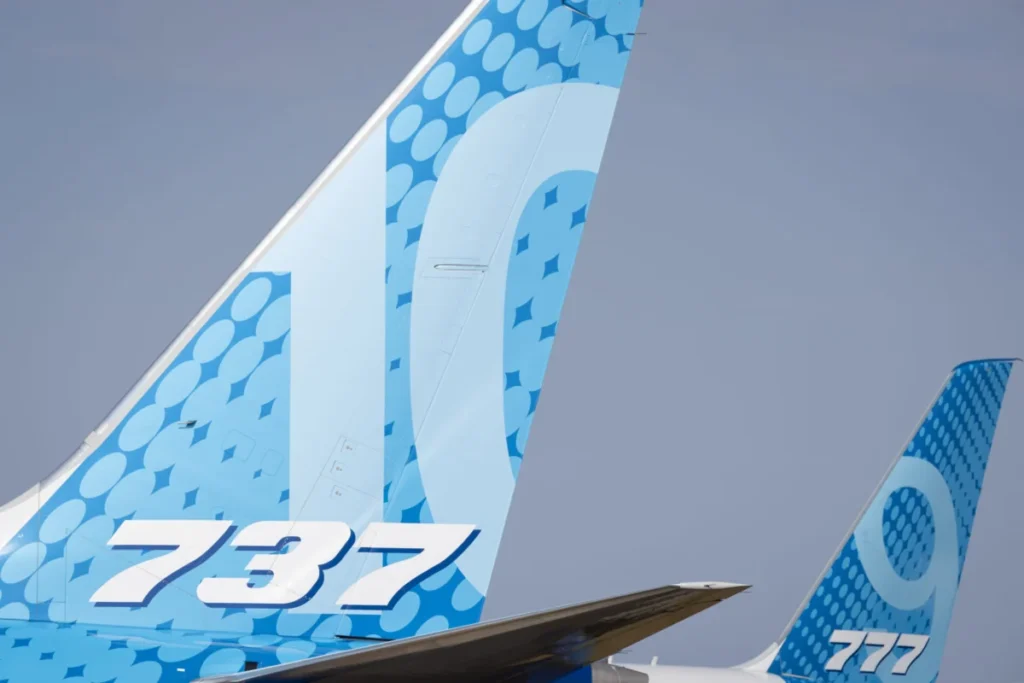
In a pivotal development for the aviation industry, the Federal Aviation Administration (FAA) officially granted certification to the Boeing 737 Max 10 on Tuesday. This regulatory milestone marks the conclusion of a years-long, arduous journey for the manufacturer, effectively greenlighting the largest variant of its best-selling 737 Max family. The certification represents a significant victory for Boeing, as the Max 10 is the final member of the current generation of its narrow-body fleet to receive government approval for passenger service.
The long-awaited clearance follows a period of heightened regulatory scrutiny. Just weeks prior to the final approval, federal officials conducted a deep-dive review into a reported navigation system glitch on the aircraft. After thorough testing and analysis, the FAA determined that the anomaly did not constitute a safety-of-flight issue, allowing the certification process to proceed to its successful conclusion.
The approval of the Max 10 serves as a symbolic and practical turning point for Boeing, which has spent years navigating a complex landscape of engineering challenges, shifting safety standards, and intense public and political pressure.
A Strategic Call for Regulatory Reform
The certification process has reignited a broader conversation regarding the efficiency and competitiveness of the American aviation sector. Speaking with CNBC’s Phil LeBeau, Transportation Secretary Sean Duffy emphasized that while the paramount priority of the FAA remains the absolute safety of the flying public, the current timeline for aircraft certification requires a strategic re-evaluation.
“It takes Boeing, to certify an aircraft in Europe, about half the time, less than half the time that it does in the U.S.,” Secretary Duffy noted. “You have China now playing to take over in aviation. We have to certify aircraft more quickly if we’re going to compete as Americans.”
Duffy’s remarks underscore a growing sentiment in Washington and within the aerospace industry that the United States must balance its rigorous, gold-standard safety protocols with the need to maintain industrial velocity. As global competitors ramp up their own domestic aviation programs, the pressure on the FAA to streamline its oversight—without compromising on its core mission—has become a central theme in the national economic discourse.

A Long Road to Approval
The path to the Max 10’s certification was anything but straightforward. Originally envisioned to enter service in 2020, the aircraft’s rollout was repeatedly sidelined by external pressures. The primary driver for these delays was the intense, industry-wide scrutiny that followed the tragic 737 Max crashes in 2018 and 2019. These events triggered a fundamental shift in how the FAA evaluates, tests, and certifies new aircraft models, resulting in a much more laborious path for Boeing’s engineering teams.
Beyond the initial regulatory hurdles, the Max 10 required specific technical refinements. Among the most notable was a necessary redesign of the anti-icing system for the aircraft’s engines. These engineering modifications were essential to meet updated safety criteria, ensuring that the aircraft could perform reliably across a wide range of global environmental conditions.
The sheer scale of the Max 10—designed to accommodate up to 230 passengers—makes it a critical asset for airlines looking to maximize capacity on high-density routes. For Boeing, the stakes were high; the Max 10 represents roughly 30% of its total Max backlog. The certification is therefore not just a technical victory, but a vital economic necessity for the company’s financial recovery.
Airline Integration and Future Outlook
With the FAA’s blessing now secured, the focus shifts to the logistical challenge of bringing the jets into commercial operation. While the certification allows airlines to legally carry passengers, the transition from the tarmac to the departure board is rarely instantaneous. Carriers must now integrate the new aircraft into their existing fleets, a process that involves pilot training, ground crew familiarization, and the complex task of scheduling the jets into existing networks. This transition period can take several months, depending on the specific operational requirements of each airline.
The customer base for the Max 10 is robust, including major domestic carriers such as Alaska Airlines, American Airlines, United Airlines, and Delta Air Lines. For these operators, the delivery of the Max 10 is a major factor in their long-term fleet planning.
The impact of the delays has been felt across the industry, occasionally forcing airlines to rethink their product offerings. For instance, United Airlines CEO Scott Kirby previously expressed frustration over the extended wait times, noting in an August interview that the airline’s original plans for premium cabin interiors had been affected. The lie-flat seats intended for the Max 10—once the centerpiece of a premium strategy—had effectively been sitting in storage as the airline waited for the planes to arrive.

Similarly, other carriers are adapting their cabin strategies to match the realities of the current market. Alaska Airlines recently announced plans to incorporate lie-flat seating on some of its forthcoming 737 Max 10s, signaling a commitment to providing a more elevated, premium experience for travelers on longer-haul flights.
Momentum for Boeing’s Commercial Unit
For Boeing, the certification of the Max 10 complements the recent approval of the Max 7, the smallest member of the family, which received the FAA’s green light in early August. Together, these certifications provide the company with a much-needed sense of momentum as it looks to stabilize its operations.
Stephanie Pope, CEO of Boeing’s commercial airplane unit, underscored the importance of the moment in a recent news release. “Completing the certification program clears the path for us to deliver a Boeing airplane that will set a new standard in commercial aviation,” Pope stated.
The timing of the certification is advantageous for Boeing, which has been aggressively working to ramp up production rates for its 737 Max and 787 Dreamliner programs. Since the bulk of an aircraft’s purchase price is paid upon delivery, the ability to move these jets out of the factory and into the hands of customers is the primary driver of the company’s cash flow and long-term recovery.
To support these efforts, Boeing has been expanding its industrial footprint. In July, the company opened a fourth production line for the 737 Max at its facility in Everett, Washington. This move is designed to provide the necessary capacity to meet the high demand from airlines as they modernize their fleets with more fuel-efficient, next-generation aircraft.
As Boeing transitions into the delivery phase for the Max 10, the company faces the dual challenge of meeting a massive backlog while maintaining the highest levels of quality and safety. The FAA certification is the first, albeit most critical, step in that process. For the airlines waiting in the wings, the focus now turns to how quickly these new, high-capacity jets can begin contributing to their bottom lines and, more importantly, to the passenger experience in a competitive and rapidly evolving global travel market.