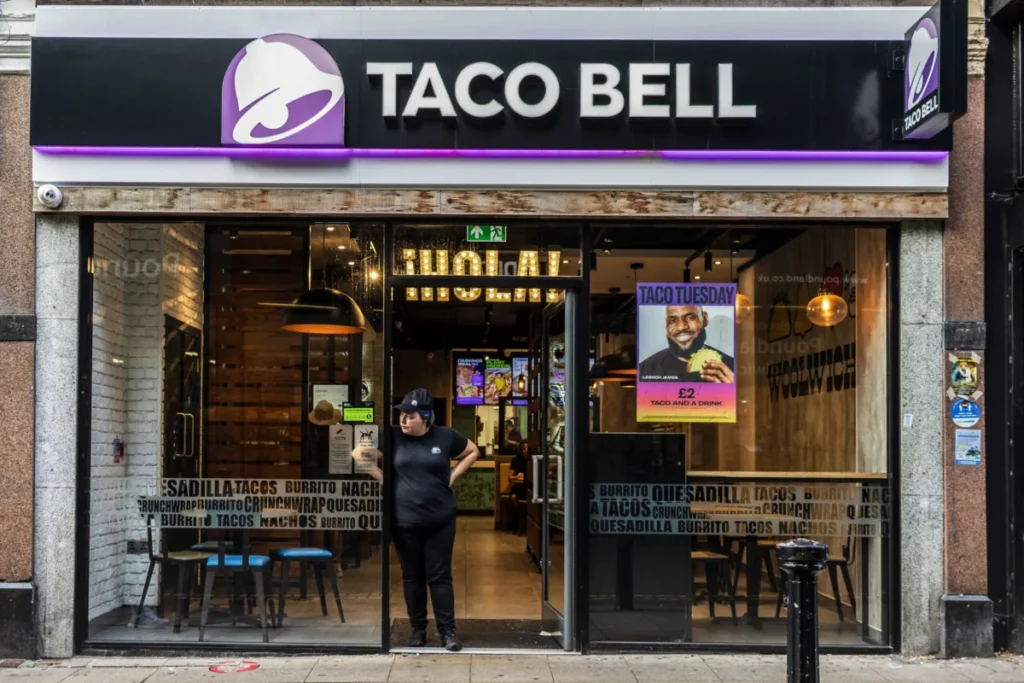
In a significant move that secures a cornerstone of the fast-food landscape for the next decade, PepsiCo and Taco Bell announced on Thursday that they have officially renewed their long-standing partnership. The agreement, which extends the collaboration through 2036, ensures that PepsiCo’s vast portfolio of beverages will remain the exclusive drink provider for the Yum Brands-owned taco chain across its domestic U.S. locations and several key international markets, including Canada, the United Kingdom, Ireland, and Thailand.
The announcement serves as a strategic reaffirmation of a relationship that has become deeply embedded in American food culture. For decades, the synergy between the two brands has transcended the typical supplier-vendor dynamic, resulting in iconic menu collaborations that have defined the Taco Bell experience for millions of consumers. By formalizing this commitment through 2036, both companies are signaling a desire to maintain stability in a rapidly shifting retail environment.
This development follows closely on the heels of a major shake-up within the Yum Brands ecosystem. Just one week prior to the Taco Bell announcement, the chain’s sister brand, KFC, revealed that it would be ending its own long-standing association with PepsiCo in the United States. In a strategic pivot, KFC announced it would transition to Coca-Cola as its exclusive U.S. beverage supplier. This "defection," as it has been characterized by industry analysts, represents a rare instance of a major quick-service restaurant chain switching its primary beverage partner, highlighting the intense and often high-stakes competition between the two beverage giants.
While the beverage industry is often viewed as a stable sector, the battle for fountain drink contracts at massive restaurant chains is fiercely competitive. Coca-Cola and PepsiCo frequently vie for these exclusive partnerships, utilizing a combination of pricing incentives, marketing support, and logistical perks to entice corporate partners. For a chain of KFC’s magnitude, a move to a new supplier is a massive operational undertaking, involving the recalibration of equipment and the retraining of staff, underscoring the significance of the shift.
Industry observers suggest that Coca-Cola’s successful bid for the KFC contract is more than just a logistical win; it serves as a symbolic victory in the ongoing "soda wars." Atlanta-based Coca-Cola has, in recent years, demonstrated a consistent ability to outpace its Purchase, New York-based rival in market share and category growth within the broader soda landscape. The loss of a major partner like KFC, even while the brand remains under the same corporate umbrella as Taco Bell, serves as a pointed reminder of the evolving nature of these long-term contracts.
The history of the relationship between PepsiCo, Taco Bell, and KFC is uniquely intertwined. Their shared lineage traces back to the late 20th century when PepsiCo actually owned all three of these major restaurant brands. In 1997, in a strategic effort to streamline its operations and focus on its core beverage and snack business, PepsiCo spun off its restaurant division into a separate, publicly traded entity known as Tricon Global Restaurants, which eventually rebranded as Yum Brands.
Despite the corporate divorce, the symbiotic relationship between PepsiCo and the former "PepsiCo restaurants" remained remarkably intact for decades. The beverage giant continued to act as the primary supplier for the brands, a testament to the deep integration of their marketing and supply chain strategies. Even with KFC’s recent decision to switch to Coca-Cola for its U.S. operations, the partnership remains robust in other areas. According to a memo authored by KFC U.S. President Catherine Tan-Gillespie on October 15, which was obtained by CNBC, PepsiCo will remain a vital partner for the chicken chain in its international markets, where the supply dynamics often differ from those in the domestic United States.
The partnership between Taco Bell and PepsiCo has proven particularly successful due to their ability to innovate beyond the standard fountain drink experience. Perhaps the most famous example of this collaboration is Mountain Dew Baja Blast, a tropical-lime flavored soda that was developed specifically for Taco Bell. The drink has achieved a cult-like status, becoming so synonymous with the Taco Bell brand that it has evolved into a key marketing asset, often appearing in dedicated promotions, social media campaigns, and even limited-edition retail releases.
This level of menu integration extends to food items as well. The wildly popular Doritos Locos Tacos, which utilize PepsiCo’s Frito-Lay brand of snack chips for the taco shell, stand as a landmark achievement in fast-food innovation. These collaborations have provided a competitive moat for Taco Bell, creating a unique value proposition that is difficult for competitors to replicate. By securing the partnership through 2036, Taco Bell ensures that its ability to leverage PepsiCo’s intellectual property and brand recognition remains a core component of its future growth strategy.
From a business perspective, the extension is a strategic win for both parties. For PepsiCo, maintaining its foothold at Taco Bell—one of the largest and most successful quick-service chains in the world—is crucial for maintaining volume in the food service channel. For Taco Bell, the renewal offers operational certainty and the continued support of a partner that has been instrumental in developing some of its most profitable and recognizable menu items.
The announcement also provides clarity for the international landscape. As Taco Bell continues its expansion into global markets, the consistency of its beverage offerings becomes increasingly important for brand recognition. By codifying the agreement to include territories like the United Kingdom, Canada, and Thailand, Taco Bell ensures that its international customers receive the same experience that has helped drive its success in the United States.
While the industry continues to monitor the impact of KFC’s move to Coca-Cola, the Taco Bell-PepsiCo renewal serves as a counter-narrative, proving that long-term, legacy partnerships can still hold weight in an era of corporate restructuring. The shift in supplier for one brand, while notable, has not triggered a complete domino effect across the Yum Brands portfolio. Instead, it highlights the complexity of these relationships, where corporate-level decisions must be balanced against the specific needs and marketing strategies of individual chains.
As the retail and food service sectors continue to face challenges from changing consumer habits, rising commodity costs, and increased competition, the stability offered by this multi-year deal is significant. Both companies are looking beyond the immediate fiscal cycle, planning for a future where the integration of digital ordering, drive-thru efficiency, and unique menu offerings will define success. For Taco Bell, having a partner like PepsiCo that is deeply invested in the brand’s success through 2036 provides a solid foundation for that vision.
In the coming years, consumers can expect the partnership to continue yielding the same type of cross-branded innovations that have defined the last two decades. Whether through new flavor profiles for fountain drinks or the introduction of co-branded menu items, the alliance remains a cornerstone of the Taco Bell consumer experience. While the competitive landscape for beverage contracts will undoubtedly remain heated, this agreement effectively locks in one of the industry’s most significant and enduring partnerships for the foreseeable future, ensuring that the legacy of innovation between the two companies remains a central part of the Taco Bell story.