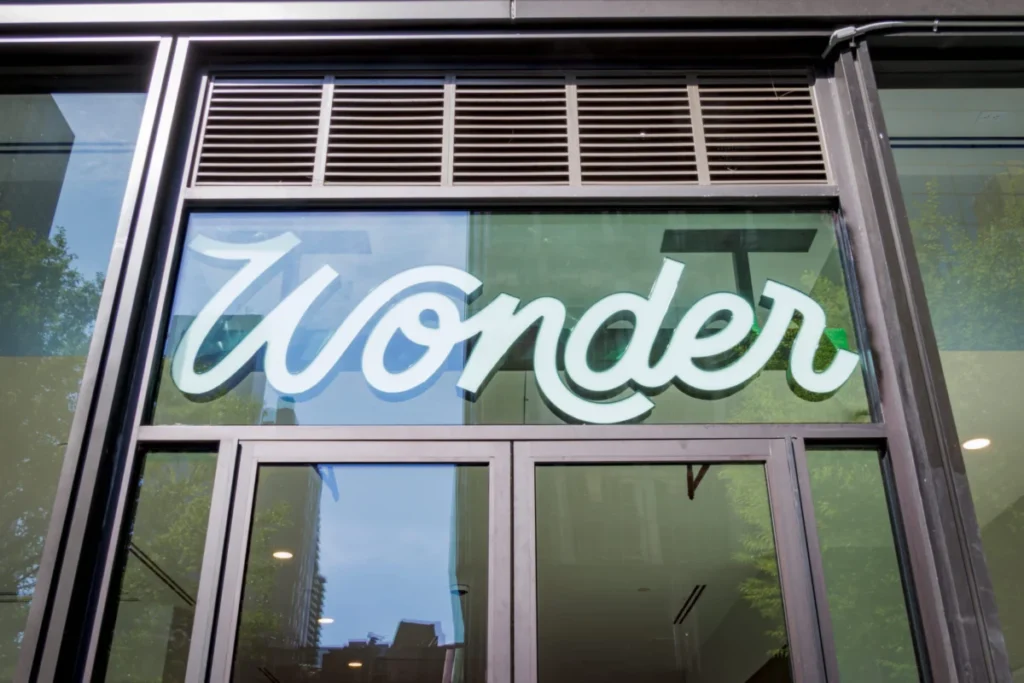
Less than a decade after its founding, the food technology startup Wonder has rapidly transformed from a niche experiment into a major industry player with a valuation that rivals long-standing restaurant chains. Founded in 2018 by serial entrepreneur Marc Lore, the company has seen its footprint and valuation soar, reaching a $9 billion pre-money valuation during its Series D fundraising round earlier this year. As it moves toward a potential initial public offering, the company is preparing for an aggressive expansion into Texas and a bold new subscription-based business model that aims to democratize restaurant ownership.
Wonder markets itself as an aggregator of "the best restaurants from across the country, all in one place." Through its mobile app and acquired platforms like Grubhub, the company allows diners to order from a variety of concepts housed within its food hall-style locations. Unlike traditional ghost kitchens—a sector that struggled significantly following the post-pandemic decline in delivery demand—Wonder emphasizes its brick-and-mortar presence. Each location serves as a modern, high-tech hub where customers can dine in or order for delivery.
"Wonder is a vertically integrated food technology platform to make great food more accessible," Lore told CNBC. To achieve this, the company is pursuing a multi-layered strategy that includes establishing locations in urban, suburban, and rural markets nationwide. By leveraging its ownership of Grubhub, the company eliminates the commission fees typically passed on to consumers, allowing it to keep prices competitive—even, as the company claims, lower than the cost of purchasing groceries for delivery.
Lore’s Track Record and the Vision for Automation
The ambition behind Wonder is fueled by the track record of its founder. Marc Lore is a veteran of the e-commerce industry, having co-founded the parent company of Diapers.com, which he sold to Amazon for $545 million in 2010. He later founded Jet.com, which Walmart acquired for $3 billion in 2016. Lore remained at the retail giant until 2021, helping to steer its e-commerce expansion. His transition from retail giant to the restaurant industry has drawn significant interest from investors, including DoorDash, Alphabet’s venture arm, and celebrity investor Gwyneth Paltrow.
Beyond e-commerce, Lore has recently been in the public eye for his involvement with the Minnesota Timberwolves. After a lengthy process to acquire the NBA team alongside baseball legend Alex Rodriguez, a deal was finalized in 2025. However, Lore recently opted to shrink his investment to a minority stake, a move Rodriguez attributed to Lore’s need to focus on the growing demands of Wonder.
A key component of Wonder’s long-term strategy is the aggressive implementation of technology. The company is currently automating various kitchen functions, such as the assembly of salads and bowls, with plans to expand this to sauces and beverages. Lore has set a target for food preparation and delivery to be fully autonomous by 2040.
This technological focus is central to why investors remain bullish. Dave Munichiello, managing partner of Alphabet’s venture capital arm, GV, noted that he typically focuses on AI and enterprise software but makes an exception for companies led by Lore. "Everybody eats," Lore said, framing his company as a venture that is fundamentally defensible against the risks of artificial intelligence by being rooted in an essential, physical human need.
Aggressive Expansion and the "Wonder Create" Initiative
Wonder’s growth trajectory is set to accelerate significantly. With roughly 170 storefronts currently operating from Virginia to Massachusetts, the company plans to enter the Texas market in 2025 with an ambitious goal of opening at least 100 locations in the state by the end of 2027.

The logistics behind this expansion are highly specialized. Wonder prepares its food at centralized commissary kitchens before transporting it to individual storefronts, where staff unseal and finish the meals. These facilities are designed to be all-electric, eliminating the need for complex gas and venting infrastructure. This efficiency allows the company to reduce renovation costs and navigate regulatory hurdles more quickly than a standard restaurant operator.
The menu at these locations features items from more than two dozen brands, including Dabba Indian Kitchen, Tejas Barbecue, and Pop Salad. The company has secured partnerships with high-profile celebrity chefs like Bobby Flay, Michael Symon, and Marcus Samuelsson, who receive equity and upfront payments for the use of their names and recipes.
Perhaps the most experimental phase of the company’s growth is the upcoming launch of "Wonder Create." Beginning November 17, the platform will allow influencers, entrepreneurs, and brands to pay a $10 monthly subscription to launch their own "restaurants" operating out of Wonder’s existing infrastructure. Using AI to assist in branding, logo design, recipe development, and pricing, the platform seeks to allow users to profit from food sales without the overhead or capital requirements of owning a physical kitchen.
Furthermore, the company is developing a proprietary AI platform called MEL. While not yet available to the public, MEL is designed to ingest a user’s health data—such as blood biomarkers or statistics from wearables like Oura rings—to curate personalized, nutritionally optimized meal plans.
The Challenge of Quality and Market Skepticism
Despite the high-profile funding and rapid growth, Wonder faces the same challenges as any other player in the hyper-competitive restaurant industry. Consumers have become increasingly budget-conscious, often pulling back on delivery orders as menu prices and fees rise. While Wonder touts its cost-saving model, the company has faced criticism on social media regarding food quality. Some diners have expressed skepticism about the "gourmet" claims of the startup, with TikTok reviewers questioning the value proposition compared to traditional fast-casual dining.
Lore acknowledges that the company is "maniacally focused" on food quality and claims that the company’s internal metrics show consistent improvement. "We’re constantly iterating on the meals that score lower, and see over time, the last 12 months, our taste scores have improved," he said. Data from the research firm Indagari suggests that, despite mixed social media sentiment, Wonder maintains a higher weighted average retention rate and higher lifetime value per customer than established players like Cava and Sweetgreen.
The path forward for the company is centered on reaching the public markets. In March, Wonder hired Gabrielle Scheibe Rabinovitch, formerly of the payment processor Worldpay, as its chief financial officer to steer the company through the complexities of an IPO. While Lore has declined to provide a specific timeline, his goal is clear: to raise the capital necessary to build a "generational business" and gain the "public currency" required for future mergers and acquisitions.
The company’s financial path is currently defined by heavy investment. Since acquiring companies like Blue Apron, Grubhub, and the logistics provider Relay, Wonder has been operating at a financial loss. As the startup landscape shifts away from a "growth-at-all-costs" mentality, analysts note that Wonder will need to demonstrate a clear roadmap to profitability. Whether the company’s blend of automation, celebrity partnerships, and tech-forward subscription models can win over public market investors remains the defining question of Lore’s latest venture. For now, the company continues to spend heavily to lay the groundwork for what it hopes will be a national, tech-integrated food empire.