The latest push into high-end travel is taking place on the high seas, as major cruise lines increasingly lean on ultra-luxury offerings to capture affluent consumers. While massive megaships featuring onboard surfing simulators and towering waterslides continue to carry thousands of passengers at a time, smaller and more elite vessels are quietly powering profits for traditional maritime operators. Companies are discovering that an exclusive, high-cost, low-density model is yielding significant financial returns as affluent travelers increasingly prioritize privacy, expansive living spaces, personalized service, and distinctive, memorable experiences over mass-market volume.
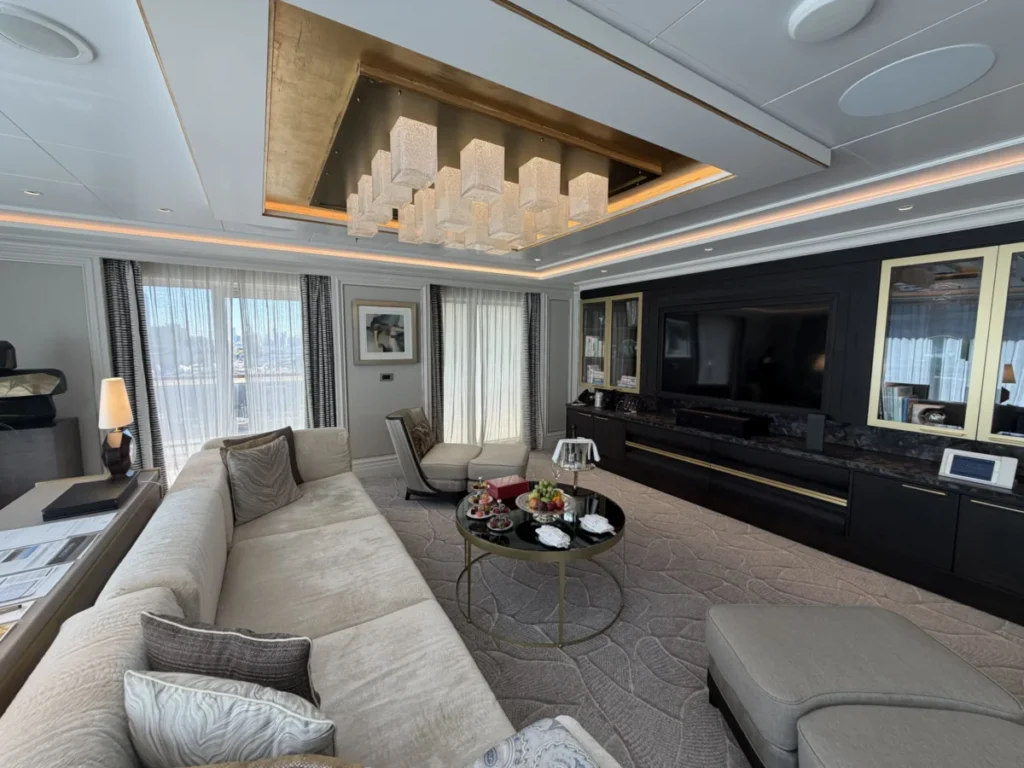
On Regent Seven Seas Cruises’ Seven Seas Splendor, an all-luxury ship designed to cater exclusively to high-spending travelers, cabin prices range widely from $1,800 to a staggering $15,000 per night for its premier accommodation, known simply as the Regent Suite. The dramatic price difference reflects far more than just the roughly 5,100 square feet of lavishly appointed living space. The top-tier suite features a custom Steinway piano, an elegant private dining room for hosting guests, and an expansive wraparound private deck complete with a personal hot tub and views comparable to those enjoyed by the captain from the ship’s actual navigation bridge.
Demand for these ultra-high-end spaces remains remarkably resilient. Regent executives told CNBC that multiple affluent passengers actively vied to secure the suite for the Splendor’s grueling 151-night global cruise scheduled to embark in January, and noted that the premier accommodation is almost always occupied. Building on this momentum, Regent is setting its sights even higher for the near future. The cruise line plans to officially debut the Seven Seas Prestige in December, marking the introduction of its first entirely new ship class in a decade. On this upcoming vessel, the top-tier suite will push pricing boundaries even further, costing an unprecedented $25,000 per night.
These smaller, elite ships—some of which carry fewer than a thousand passengers—are serving as major profit drivers for parent companies like Norwegian Cruise Line Holdings, which owns both the Regent and Oceania luxury brands. Norwegian Cruise Line Holdings CEO John Chidsey has repeatedly emphasized that he is intensely focused on sharpening the strategic positioning of these luxury brands, continuously improving the onboard products and overall guest experience, and strengthening their long-term commercial performance. According to Chidsey, both Regent and Oceania are currently in robust financial shape looking ahead to 2027, though he did not break out specific financial metrics between the two individual companies during recent discussions.
Growing Competition and Industry Expansion
Competitors across the global cruise industry are also betting heavily on upscale offerings, pouring substantial capital into brand-new ships and increasingly specialized, niche experiences. Regent competes directly with well-established luxury cruise operators, including Royal Caribbean’s Silversea Cruises and Carnival Corporation’s Seabourn Cruise Line. At the same time, the market is seeing a wave of newer entrants carrying famous land-based hotel and hospitality names into the maritime space. Renowned hospitality brands such as Four Seasons, Aman, and Orient Express are among the prestigious names bringing traditional luxury hotel hospitality directly onto custom yacht-style vessels.
Industry projections highlight the rapid pace of this maritime transformation. Data from the global cruise industry indicates that the luxury cruise fleet is projected to expand significantly, growing from 104 specialized ships in 2026 to at least 130 ships by the year 2036. While overall global cruise passenger volumes are forecast to increase by approximately 11% between 2025 and 2028, according to figures from the Cruise Lines International Association, the industry’s actual investment dollars are flowing disproportionately into luxury and expedition brands. Shipyards are seeing rising orders for smaller ships with fewer total passenger berths extending through the next decade.
The scale of this shift is underscored by historical metrics. According to CLIA data, between 2020 and 2025, there was a remarkable 71% increase in the total number of luxury cruise ships in operation, alongside an 84% increase in available luxury berths. Current order books indicate yet another 26% jump in the total number of specialized luxury ships through the end of 2029, accompanied by a 32% increase in overall luxury passenger capacity.
Broad Trends Across the Travel and Leisure Sector
This pivot toward ultra-upscale offerings is by no means limited to the cruise industry. Across the broader travel and leisure sector, major hotels, casinos, commercial airlines, restaurants, spas, and other hospitality companies are recognizing a powerful market trend: affluent customers remain consistently willing to pay substantial premiums for additional space, high levels of personal service, and distinctive experiences.
Major airlines are actively redesigning their cabins to capture this high-spending demographic. United Airlines earlier this year launched its larger Polaris Studio business-class suites, featuring enhanced privacy doors and premium touches like caviar service. Similarly, American Airlines has increased its lie-flat seating capacity across its long-haul fleet and reported that its premium passenger unit revenue rose by an impressive 18.5% in the third quarter, significantly outpacing the 14.4% growth seen in its traditional main cabin.

The hotel sector is experiencing a parallel dynamic. Financial results from Marriott International showed that luxury revenue per available room grew at a notably faster pace than the broader hotel business across the United States and Canada. Luxury revenue rose by 9.1% year over year, compared with a 5% increase for all Marriott-branded hotels in the region. In June, Marriott CEO Anthony Capuano told CNBC that there is an "almost insatiable appetite" among consumers for high-end travel experiences.
Meanwhile, gaming and hospitality giants like Wynn Resorts, which caters almost exclusively to high-end and premium-tier customers, have consciously opted to maintain their high room rates in Las Vegas even as overall tourist visitation has slowed over the past year. Rather than discounting rates to fill every available room with bargain-seeking travelers, the company has prioritized preserving the exclusivity and pricing integrity of its properties.
Cracks Forming in Luxury?
Asked onstage at the Global Gaming Expo regarding whether Wynn is successfully extracting more profit from a smaller overall volume of customers, Wynn CEO Craig Billings emphasized the company’s strategic focus. "We will always focus on what’s the most comfortable experience for the customer and where can we drive the highest possible EBITDA," Billings stated.
However, simply offering luxury vacations and high-end accommodations does not automatically guarantee financial success or immunity from market fluctuations. The Ritz-Carlton Yacht Collection, for instance, has notably struggled with passenger occupancy despite mounting major international marketing campaigns, and has reportedly accumulated nearly $700 million in financial losses since 2017, according to data from the Financial Times.
Furthermore, increasing competition within the luxury space risks undercutting the vital perception of scarcity. As a growing number of corporate entities introduce competing luxury products to the market, they face the ongoing challenge of convincing discerning travelers that the upscale experience genuinely justifies its exorbitant price tag.
Such market friction was recently highlighted by Las Vegas Sands, which reported quarterly earnings that missed Wall Street expectations for both revenue and profit. The company’s financial performance was noticeably weighed down by softness in its high-end gaming and hospitality segments in both Macao and Singapore.
"When the customers don’t show up, it’s a little problematic," said Las Vegas Sands CEO Patrick Dumont during the company’s earnings call. While Dumont noted that he could not point to any single underlying cause for the market softness, adding that "perhaps people are not feeling as good about the market," he expressed optimism that the disappointing quarter would prove to be a temporary aberration rather than a lasting trend.
When pressed on whether the luxury travel sector risks becoming overcrowded during an appearance at the NBA China Games in Macao, Dumont pointed to the strong foundation of long-term wealth creation across Asia. He argued that the ultimate challenge for operators is not finding enough wealthy individuals, but rather crafting experiences that consumers find truly indispensable.
"It’s not about, are there enough customers," Dumont said. "It’s, can we create enough of an interesting set of experiences where people find us indispensable in their lives."