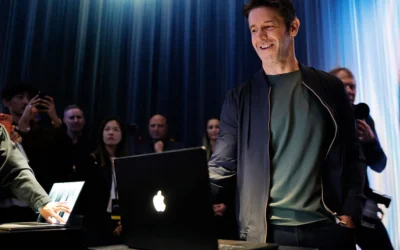

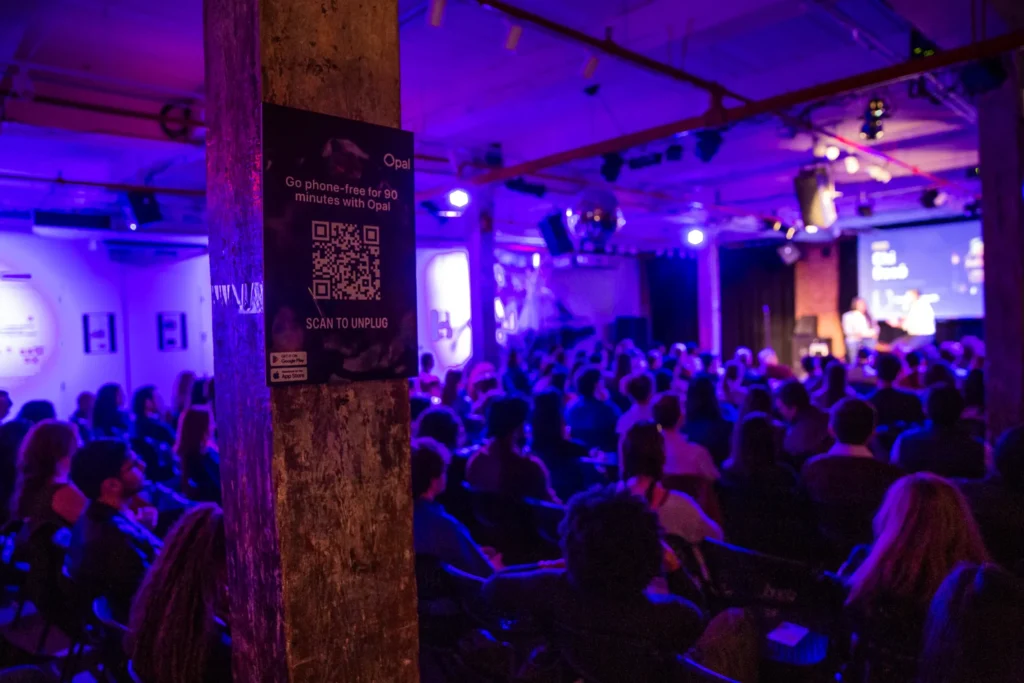
On a brisk Thursday evening in Brooklyn, stepping into a dimly blue-lit warehouse meant entering a space buzzing with media types, tech policy advocates, and political insiders. Dressed for the occasion in a floral mini dress and neon yellow heels—a sartorial choice entirely fitting for New York—the atmosphere immediately signaled that this was no ordinary political gathering. The event, aptly titled “Midterm Madness” and hosted by the media company Newsreel, was designed to bring together sharp minds to discuss the upcoming midterm elections just days away.
Founded by former Forbes and Newsweek reporter Jack Brewster, Newsreel’s goal for the evening was simple yet ambitious: to get influential figures to put their phones away and talk candidly about the political landscape. The lineup featured prominent names, including Kenneth Schlenker, co-founder of the focus app Opal, who sat down for a fireside chat about “the state of attention,” and Aryan Banjan, the creator of the campaign management software Barza, who delivered a midterm forecast. Throughout the venue, conversations ranged from campaign strategy to the future of democracy. Yet, as the evening progressed, a single, unifying topic began to consume nearly every corner of the room: artificial intelligence, the rapid proliferation of data centers, and a growing backlash against the broader technocracy.

For a tech reporter immersed daily in Silicon Valley optimism, the experience served as a sharp reminder of the widening chasm between the tech industry and the general public. While professionals within the tech bubble often focus exclusively on the benefits and ambitious potential of AI, those outside of it view the rapid, unchecked expansion of the technology—and its physical infrastructure—with deep suspicion. Far beyond the confines of tech hubs, data centers have transformed from esoteric industrial projects into intense ballot-box issues capable of swaying midterm races.
Recent data underscores this friction. A report from Data Center Watch revealed that nearly $200 billion worth of data center projects were delayed, stalled, or blocked in the first half of the year due to intense political and community opposition. States such as Pennsylvania, Georgia, Texas, New York, and Virginia are currently weighing stricter guardrails and transparency measures to manage the rapid development. Virginia, already widely recognized as the “data center capital of the world,” faces hundreds of new proposed facilities, igniting fierce local debates over resource consumption and community impact.
The evening’s programming reflected this tension right from the start. A fireside chat featuring New York City Council member Chi Ossé set a critical tone. Toward the end of the discussion, the topic shifted to AI. Ossé noted that he does not personally use the technology, adopting a stance that was neither purely pro- nor anti-AI, but rather centered on accountability. He emphasized the need for stricter oversight of tech executives and higher taxation for trillionaires like Elon Musk. Describing himself as a “law and order” democratic socialist, Ossé argued that when corporate leaders develop technologies capable of profound societal disruption, they should be subjected to rigorous congressional scrutiny.

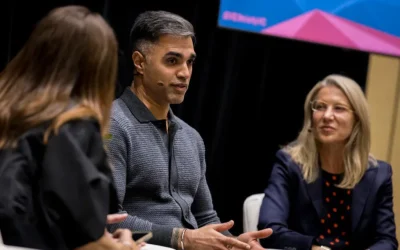
That critical energy carried directly into the panel discussion on data centers, which featured Maia Woluchem, a technology and human rights researcher, and Hilary Flint, an environmental and public health advocate. Taking the stage, an initial question to the crowd—“Who here is pro-AI data center?”—was met with an immediate chorus of boos. The ensuing conversation explored a range of frustrations, particularly regarding big tech companies accused of cutting secret deals with local officials to bypass community input. In many regions, outdated zoning laws obscure what is actually being built until it is too late for residents to mount an effective protest.
Against the backdrop of economic anxieties and the rising cost of living, citizens are fighting to preserve their communities while tech leaders discuss automation and the future of work. For many residents, data centers have become the physical embodiment of their fears and anger toward an elite class moving at a dizzying pace. When discussions turn to the localized economic benefits sometimes promised by developers, the human cost remains paramount. Pointing to the real concerns of affected communities, Flint captured the room’s sentiment when she questioned the value of temporary economic gains against long-term environmental and public health risks, noting that residents frequently protest because they value their lives far more than a temporary check.
Subsequent panels intended to focus strictly on political futures similarly drifted back to the infrastructure debate. A later discussion featuring NewsNation host Batya Ungar-Sargon, political strategist Morris Katz, and Vox’s Astead Herndon quickly gravitated toward the political ramifications of technological expansion. Ungar-Sargon pointed out that some labor unions initially support data centers for the promise of construction jobs, even though studies show that these employment opportunities are rarely permanent once building concludes. Drawing a parallel to the Rust Belt, she noted that while older industrial sites once brought generational pride and stability, modern data centers often evoke feelings of alienation rather than shared prosperity.

Other panelists echoed these concerns regarding consent and corporate power. Herndon highlighted similar dynamics observed in Rust Belt states like Ohio, where political figures have faced public backlash over top-down technological impositions. Katz offered a sharp critique, arguing that the same institutional powers that spent decades hollowing out traditional labor and working-class jobs are now returning under the guise of technological progress to build facilities that offer little enduring value to local populations.
Throughout the venue, tangible evidence of these anxieties was visible. Along the warehouse walls, sticky notes posed probing questions from attendees, including inquiries into whether big money could ever be successfully removed from politics—to which one respondent scrawled a hopeful, weary prayer.
As the formal panels concluded, the warehouse transitioned into a networking mixer set to the sound of pulsing techno music. Attendees gathered in small groups, continuing their debates over AI and infrastructure in more intimate settings. Reflecting on the evening, Brewster expressed little surprise at the dominance of the topic, noting that it surfaced repeatedly on stage and ranked among the most common queries submitted by attendees ahead of the event. Even in New York City, where massive server farms are largely out of sight, AI has firmly established itself as a mainstream electoral concern. In rural communities, the backlash centers on the fear of economic displacement, whereas in urban centers like Brooklyn, the friction stems from questions surrounding wealth distribution and corporate power.

Before the night wound down, conversations with attendees revealed how deeply technology permeates daily cultural life. While tech founders discussed emerging AI assistant startups, other attendees pointed to the growing cultural fatigue surrounding deepfakes and generative art. The proliferation of low-quality AI-generated content has begun signaling cheapness to consumers, prompting luxury brands to pivot in the opposite direction. Notable examples include Prada’s holiday campaign featuring hand-drawn illustrations and Hermès highlighting handmade artisan works on social media, reflecting an emerging cultural premium on human craftsmanship.
For one software engineer in attendance, the omnipresence of tech culture hit close to home, noting how quickly data center developments have begun encroaching upon communities nationwide, including her own hometown in Southern California. Growing up in a Chinese immigrant neighborhood, she described how local residents have begun displaying yard signs depicting dragons choking data center buildings—imagery that has since required translation into multiple languages to accommodate the diverse community. Hearing such accounts highlights how a debate that begins in corporate boardrooms and Silicon Valley labs ultimately manifests in the backyards of everyday citizens, turning infrastructure into a defining political battleground of the modern era.