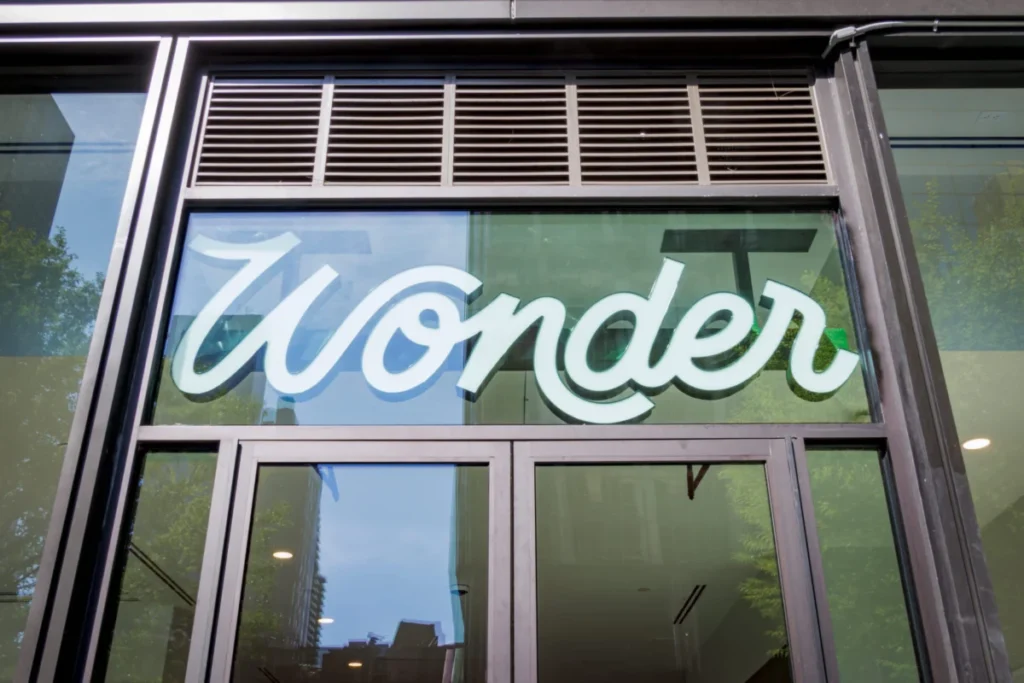
Less than a decade after its founding, the innovative food startup Wonder has seen its physical footprint and valuation soar to impressive heights, positioning itself as a major disruptor in the modern dining and delivery landscape. Despite already achieving massive scale, the company has laid out even more ambitious plans for the future. These include an upcoming subscription program designed to let everyday diners launch and manage their own virtual "restaurants," an aggressive geographic expansion into Texas, and preparations for a potential initial public offering that could cement its status as a generational business.
Created in 2018 by serial entrepreneur Marc Lore, Wonder has consistently advertised itself as a curated collection of "the best restaurants from across the country, all in one place." Diners across its operating footprint can easily place takeout or delivery orders from its sleek, food hall-style brick-and-mortar locations. These orders can be placed directly through the proprietary Wonder-branded app or via third-party platforms—including major delivery player Grubhub, which Wonder now owns as part of its expansive acquisition strategy.
As Lore described the core concept during an interview, "Wonder is a vertically integrated food technology platform to make great food more accessible."
To achieve this overarching goal, Wonder plans to systematically open new locations across urban, suburban, and rural areas nationwide. The company aims to keep menu and delivery prices lower than the typical cost of delivered groceries. Because of its direct ownership of Grubhub, customers who order through the startup’s app bypass traditional delivery fees entirely. Furthermore, its menu prices are not artificially inflated to cover the heavy commission fees typically levied by third-party delivery apps. In addition to these structural savings, Wonder is steadily automating several key kitchen functions, such as assembling fresh salads and bowls, with plans to automate sauces and beverages in the near future.
The company ultimately aims for its food preparation and delivery supply chain to become fully autonomous by 2040, according to Lore. However, before reaching that long-term technological horizon, Wonder must convince everyday diners that its platform—built squarely on cost savings, culinary variety, and efficiency—makes it well worth their time and money in an intensely competitive industry.
Lore’s lofty and expansive vision for Wonder has helped the company raise an astounding $3.3 billion to date. Backers include heavy-hitting investors such as DoorDash, Alphabet’s venture capital arm GV, and celebrity entrepreneur Gwyneth Paltrow. A Series D fundraising round earlier this year successfully pushed the company’s pre-money valuation to an incredible $9 billion, putting it just under the historic sale price of sandwich chain Subway two years prior.
Wonder’s next major pitch to investors could very well take place on an IPO road show, assuming that the broader market window for companies across industries to go public reopens in the coming months.
"The mission is really why I want to go public and raise the capital that it’ll take to build that kind of generational business, also to have a public currency to be able to do more M&A," Lore said, while noting that he could not comment on the precise timing of any public offering.
Lore’s Track Record
Marc Lore’s professional background and primary expertise lie firmly in e-commerce rather than traditional hospitality and restaurants. He previously helped found the parent company of Diapers.com, eventually selling it to Amazon in 2010 for $545 million. Just six years later, retail giant Walmart paid approximately $3 billion to acquire his subsequent venture, Jet.com. Lore remained at Walmart until 2021 to help accelerate the retailer’s e-commerce growth and digital transformation.
Sports fans might also recognize Lore as a prominent owner of the Minnesota Timberwolves. In 2021, he and baseball legend Alex Rodriguez agreed to purchase the professional basketball franchise for $1.5 billion, though the complex deal was not fully finalized until 2025. Lore recently struck an agreement to scale back his investment to a minority stake in order to "focus on his business," as Rodriguez noted in a public statement released in August, explicitly referring to Wonder.
Lore’s latest startup actually began with a radically different concept: bringing food delivery directly to consumers’ homes via customized sprinter vans outfitted with fully functional mobile kitchens. Those specialized food trucks lasted roughly two years before Wonder ultimately decided to phase them out. The company pivoted toward brick-and-mortar locations instead, finding that physical storefronts could serve a much wider variety of food options while significantly lowering operational costs.
Lore’s proven track record of scaling high-growth startups has been instrumental in winning over skittish investors who might otherwise hesitate at the capital requirements of the food sector.
"I joke around at GV that I do enterprise software investing, AI investing and anything that Marc Lore is running as an active CEO," said Dave Munichiello, managing partner of Alphabet’s venture capital arm GV. Munichiello has known Lore since his Diapers.com days and previously invested in Jet.com through GV.
Lore himself believes that his grand, scalable vision is the primary reason behind Wonder’s ability to secure billions of dollars in venture backing. "Everybody eats," he noted simply. "It’s defensible from AI."
To build this infrastructure, Wonder has spent more than $1 billion on corporate acquisitions alone, excluding several smaller deals where financial details were kept private. Its high-profile purchases of Grubhub, delivery and logistics provider Relay, meal-kit pioneer Blue Apron, and buzzy New York restaurant concepts have required significant capital outlay.
Even so, Lore maintains that he sees a tremendous total addressable market for Wonder if the company can successfully sell high-quality meals at accessible prices, particularly in exurban and rural regions where consumers often face limited dining options outside of fast food chains and highway gas stations.
Wonder Gets Bigger in Texas
From Virginia all the way to Massachusetts, approximately 170 Wonder storefronts have popped up over the last three years. The company’s growth trajectory is set to accelerate further next year as it enters the Texas market for the first time, establishing a targeted goal of opening at least 100 locations across the state by the end of 2027.
Wonder prepares the core components of its diverse menu items at centralized commissary kitchens before transporting them to individual neighborhood locations. Once on-site, local employees unseal, cook, and finish the dishes. Because its storefronts are entirely electric—operating without traditional gas lines or heavy commercial ventilation systems—Wonder can move into new commercial spaces rapidly while cutting down heavily on costly renovations and municipal red tape.

Its locations currently serve menu items sourced from more than two dozen distinct "restaurants." These include popular concepts like Dabba Indian Kitchen, Tejas Barbecue, and Pop Salad. High-profile celebrity chefs including Bobby Flay, Michael Symon, and Marcus Samuelsson receive upfront payments and equity stakes in Wonder in exchange for letting the company utilize their culinary names and recipes for select concepts. More recent menu additions stem from direct corporate acquisitions, such as Blue Ribbon Fried Chicken and Salt Hank’s, both of which bring established consumer followings.
With its wide variety of culinary options housed under a single roof, Wonder has frequently drawn comparisons to ghost kitchens—the once-hyped delivery-only startups lacking dine-in seating that largely floundered as food delivery orders dropped off sharply following the peak of the Covid-19 pandemic. Once considered major disruptors to traditional hospitality, ghost kitchen enterprises such as Kitchen United ultimately sought bankruptcy protection and wound down their operations.
Lore strongly rejects this comparison. "You can see there’s a front of house in the brick and mortar," he pointed out. "You’ll see people at lunchtime, sitting there enjoying lunch, so it’s not ghost-y in that way. But I think it’s also just in the fact that we’re vertically integrated."
Wonder has consistently avoided marketing itself as a ghost kitchen, initially describing itself as "a new kind of food hall" or a "modern food court" before settling on its current designation as a "vertically integrated food technology platform."
The company plans to take its platform to the next level with the upcoming launch of Wonder Create. Through this program, influencers, independent entrepreneurs, and consumer brands will be able to pay a monthly fee of $10 to launch and operate their own virtual "restaurant" originating out of a physical Wonder location, earning a direct portion of the revenue generated from customer orders. Artificial intelligence will be leveraged to help participants build their brand identity, including creating custom names, logos, pricing structures, and recipes.
"It could be a restaurant for you and your friends, or you could be an influencer that has a following," Lore said. He envisions Wonder Create as a tool to democratize restaurant ownership by removing the heavy capital requirements, exorbitant overhead costs, and day-to-day oversight of kitchen operations that normally burden aspiring restaurateurs. The platform is slated to become available to the general public, allowing everyday users to design custom menu items utilizing Wonder’s existing supply pantry.
Beyond Wonder Create, the company is also developing another major AI initiative. A proprietary platform known as MEL is designed to ingest and analyze a customer’s personal health metrics—such as data gathered from an Oura ring, a Whoop fitness tracker, or even detailed blood biomarkers—to custom-tailor breakfast, lunch, and dinner recommendations for individual users.
While MEL is not yet commercially available to everyday Wonder customers, Lore has utilized AI tools to advise his own personal meal planning.
The Quality Question
While Wonder has successfully won over venture capitalists and institutional backers, the everyday battle for consumers’ stomachs and wallets remains remarkably difficult. Budget-conscious consumers have scaled back how often they dine out and have grown increasingly selective when they do choose to spend money on prepared meals. And while food delivery remains more popular overall than it was prior to the pandemic, consumers have noticeably pulled back on delivery orders compared to their elevated Covid-era peaks. High service fees and inflated menu prices—which restaurants use to offset delivery app commission fees—make delivery significantly more expensive than traditional dining out.
Furthermore, some consumers harbor specific skepticism toward Wonder’s operational model. Various posts and reviews shared across social media platforms openly critique the company’s food quality and its heavy backing from venture capital funds.
"It’s OK, but it’s just average," remarked Amir Ings, a 27-year-old resident of Philadelphia, in a social media video reviewing an order of three tacos from Wonder. "My expectations were already in the gutter—it’s not as bad as I thought it was going to be, but it’s still not great. And I paid like $16 for this, but it should have been no more than $8."
Responding to public feedback, Lore noted that Wonder receives thousands of detailed reviews every day from actual customers rating the taste, temperature, and portion size of their meals on a scale from 1 to 10. Company executives routinely begin their internal board meetings by reviewing these precise taste scores, according to Munichiello.
"We’re maniacally focused on food quality," Lore emphasized. "We’re constantly iterating on the meals that score lower, and see over time, the last 12 months, our taste scores have improved, our Google reviews have improved. I do expect food quality to improve as we scale, which is not always the case."
Despite mixed reviews found across social media channels, Wonder has clearly built a dedicated base of regular patrons. Based on consumer transaction data compiled by Indagari, Wonder boasts a higher weighted average retention rate—measuring how likely a diner is to return—and a higher customer lifetime value than established fast-casual chains like Cava and Sweetgreen.
Additionally, company leadership emphasizes that Wonder has proven its operational model in some of the most cutthroat restaurant markets in the country.
"They made this company work well in the hardest place in the country to stand up this model: New York," Munichiello noted. "You have so much choice in New York."
Ultimately, Wonder’s leadership aims to capture the rest of the United States market while convincing public market investors of the company’s long-term viability. To support these ambitions, the company hired Gabrielle Scheibe Rabinovitch, formerly of payment processor Worldpay, as its chief financial officer in March to oversee financial preparations for a public offering.
While Lore declined to provide a definitive public timeline for an IPO during his recent interview, the company continues positioning itself for the public markets. Since completing major acquisitions of Blue Apron and Grubhub, Wonder has continued operating at a financial loss. However, management plans to systematically drive down meal preparation costs by leaning more heavily into kitchen automation and exploring drone delivery options. Over the long term, those technological investments are expected to compress overhead costs, even if laying the necessary groundwork requires substantial upfront capital.
In recent years, institutional investors have grown considerably less tolerant of early-stage startups pursuing rapid growth at all costs. To win over skeptical public market investors, unprofitable companies must demonstrate clear, actionable steps toward eventual profitability—or prove that their revenue growth will endure long after the initial public offering is complete.