

As the global artificial intelligence boom places unprecedented strain on computing capacity and infrastructure worldwide, hardware giant Nvidia has thrown its support behind Indian startup Simplismart. The company has secured a $14 million Series B funding round, betting heavily on software designed to help businesses run complex AI models more efficiently and, in specific operational scenarios, with fewer graphical processing units.
Nvidia participated in the all-primary Series B financing round alongside prominent venture capital firms Accel, Shastra VC, and Micromax, with Dallas Venture Capital leading the investment. This new injection of capital values the four-year-old Bengaluru-based startup at approximately $100 million, including the fresh funding.
Modern enterprises are currently allocating massive budgets toward acquiring and deploying GPUs to power expanding portfolios of artificial intelligence applications. However, running those resource-intensive models reliably and economically at scale remains a persistent logistical and financial challenge. Different operational workloads demand distinct, carefully calculated trade-offs between processing speed, operational cost, and overall performance. Deploying and maintaining AI models to precisely meet demanding business requirements often mandates complex, highly technical adjustments. Simplismart asserts that its proprietary software automates a significant portion of that heavy lifting, intelligently tailoring how models execute on existing computing infrastructure rather than forcing corporate customers to manually manage intricate configurations.
"Nobody actually needs the fastest or the cheapest inference," Amritanshu Jain, co-founder and chief executive officer of Simplismart, explained in an interview. He added that enterprises instead require the capability to execute AI models at speeds and cost points that make practical economic sense for their specific, individual applications.
Simplismart’s software layer positions itself directly between the underlying AI models and the computing infrastructure that powers them. By doing so, it dynamically adjusts how models are deployed and managed to satisfy exact customer specifications. The company states that its platform can optimize critical variables such as response latency, request concurrency, and overall power consumption. This capability enables organizations to extract significantly greater performance and value out of their existing hardware and GPU stacks.
Operating primarily out of Bengaluru, the startup offers enterprise clients a flexible mechanism to deploy and execute AI models either through Simplismart’s proprietary managed platform or directly within their own existing cloud and on-premises infrastructure environments. Beyond deployment, the company provides comprehensive tooling designed to fine-tune models, automatically scale computing resources up or down as live demand fluctuates, and continuously monitor performance metrics. Furthermore, Simplismart enables third-party cloud providers to build, launch, and operate their own dedicated AI inference services directly on top of raw GPU infrastructure using its specialized software architecture.
The practical impact of this technology is already visible in enterprise adoption. Simplismart reports that its software successfully helped AI video-generation platform InVideo slash its GPU serving costs by 56 percent. The startup also maintains active commercial relationships with prominent industry players, including AI video firms HeyGen and Higgsfield, as well as enterprise AI startup Ema, among others. Additionally, Indian cloud provider Yotta leverages Simplismart’s technology to power the core serverless AI inference service underpinning its Shakti Studio platform.
This commercial momentum has translated into substantial financial growth. Simplismart’s annualized revenue run rate has expanded fourteenfold over the past six months, reaching a robust eight-figure sum, Jain noted. This calculation is derived from recent, actual customer usage patterns rather than purely contracted recurring revenue, and it deliberately excludes revenue that is simply passed through to underlying infrastructure providers, according to the company. Jain declined to disclose the exact financial figures.
Geographically, more than half of Simplismart’s overall revenue originates from the United States, despite the startup maintaining a larger total volume of individual customers within its home market of India, Jain noted.
Alongside its financial investment, Nvidia has been actively collaborating with Simplismart on technical integrations, particularly centered around Nvidia’s Dynamo inference software, Jain shared. This technical partnership involves direct cooperation between Simplismart’s engineering teams and Nvidia’s specialized solutions architects. Furthermore, Nvidia has aided the startup by actively facilitating introductions to high-value potential customers and industry partners.
This strategic investment creates an interesting industry dynamic, as Nvidia—historically the dominant and primary supplier of advanced AI chips—is actively backing software that can potentially enable companies to accomplish workloads utilizing fewer physical GPUs. Jain, however, argued that optimizing the efficiency of AI inference ultimately serves Nvidia’s broader interests. By making AI deployments more cost-effective and manageable, the technology makes hardware investments more attractive to a wider array of risk-averse customers, thereby encouraging the broader, long-term adoption of AI applications globally.
Simplismart operates within an increasingly crowded and competitive market for AI inference software. The startup faces competition from native offerings developed by Nvidia itself, as well as powerful tools provided by major cloud providers and hyperscalers including Amazon Web Services, Google Cloud, and Microsoft Azure. A rapidly growing wave of early-stage startups is also developing competing solutions aimed at making AI models faster and cheaper to run, fueled by soaring market demand for AI applications and the acute enterprise need to optimize expensive GPU resources.
"Where we tend to win is where people have to be more stringent on their SLAs and TCO," Jain said, referencing rigorous service-level agreements and tight total cost of ownership constraints. Unlike rival platforms that offer rigid, preset options geared strictly toward either maximum speed or minimal cost, Simplismart focuses on identifying a balanced operational equilibrium tailored precisely to each individual customer’s unique business parameters.
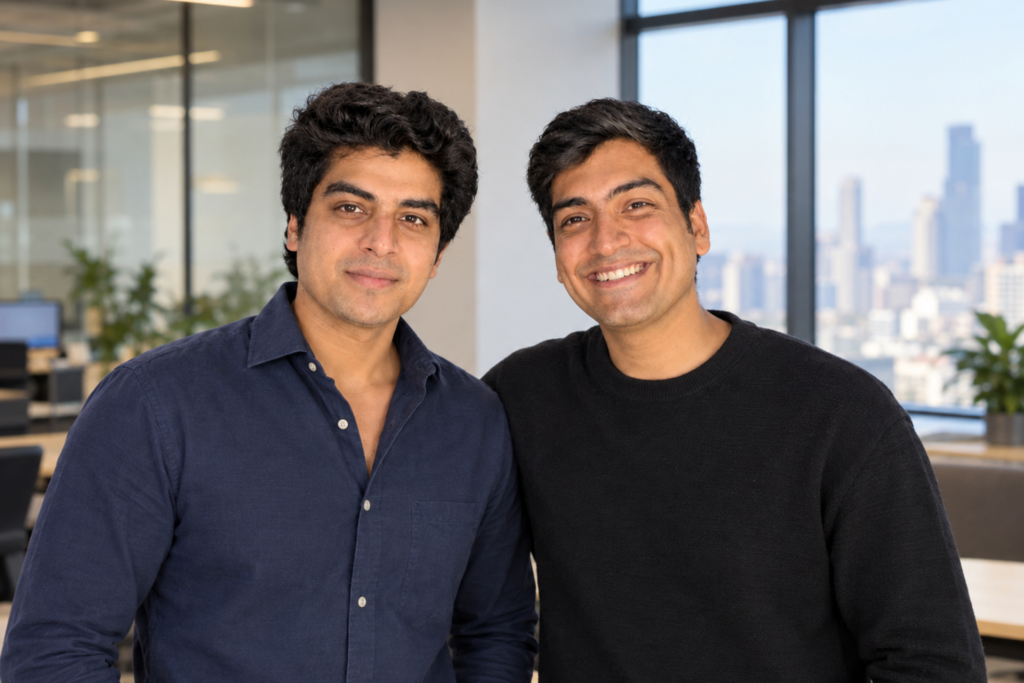
Simplismart was founded in 2022 by Jain, a former Oracle engineer, and Devansh Ghatak, a former Google engineer. The two co-founders first met while studying together at BITS Pilani, combining their shared academic background with deep practical experience in building and deploying large-scale machine-learning systems. Today, the startup employs 58 people.
With the fresh capital secured in this latest funding round, Simplismart intends to expand its operational footprint within the United States, scale up its internal workforce, and invest heavily in ongoing research and development for its core inference software. Jain emphasized that the U.S. market remains a vital pillar for the company’s expansion strategy as it seeks to build upon its established customer foundation there.
The formal funding announcement follows a prior media report by Indian business daily The Economic Times, which indicated that Simplismart had previously been in discussions to raise between $40 million and $50 million at a valuation ranging from $300 million to $400 million. When asked about the report, Jain declined to comment on the speculation, noting that the startup was not actively pursuing an open fundraising process at this time and confirming that the current Series B round is fully closed and will not be extended.