
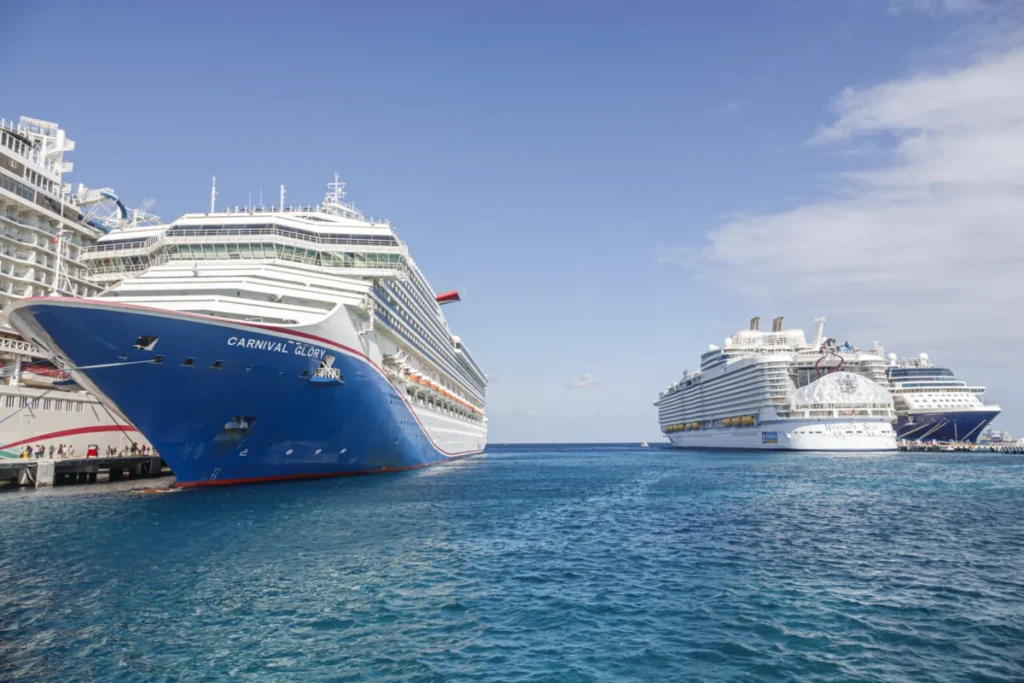
Major global cruise operators, including Carnival Corporation, Royal Caribbean Group, and Norwegian Cruise Line Holdings, have successfully posted strong financial earnings for their most recent quarters, demonstrating remarkable resilience in the face of escalating operational headwinds. Chief among these challenges are surging fuel prices, which have placed immense cost pressures on the maritime travel industry. However, the methods by which these three leading cruise companies choose to navigate and manage volatile fuel expenses highlight starkly different corporate philosophies and risk-management strategies.
Global oil markets have experienced intense volatility and dramatic upward price pressure since the outbreak of the U.S.-Israel war with Iran, which began on February 28. In the wake of the conflict, Brent crude oil prices climbed steadily, ultimately reaching a six-month high when the market settled at $116.72 per barrel. With geopolitical tensions remaining high and no clear diplomatic or military resolution in sight for the conflict in the Middle East, energy analysts and industry executives alike recognize that the pressure affecting cruise ships’ primary operational resource is poised to persist. These elevated fuel expenses threaten to linger directly through the upcoming peak holiday travel season and extend well into the foreseeable future.
Faced with this persistent macro-level volatility, the leading cruise lines have adopted distinct paths to protect their bottom lines. Both Royal Caribbean and Norwegian Cruise Line Holdings heavily practice financial "hedging"—a strategic approach that involves utilizing derivatives and financial instruments to lock in prices and actively reduce exposure to sharp, unpredictable swings in the cost of fuel. By engaging in hedging contracts, these companies aim to create a predictable financial buffer against sudden spikes in the global energy market.
Carnival Corporation, on the other hand, operates under a fundamentally different philosophy. Rather than utilizing financial markets to manage energy costs, Carnival leadership has maintained a steadfast focus on operational efficiency. Carnival CEO Josh Weinstein emphasized in a recent interview that aggressively cutting overall fuel consumption remains the single most effective and logical way to avert the damaging financial effects of expensive fuel.
"At the end of the day, fuel is an input cost for us. The best thing that we can do to control that cost is to use less," Weinstein explained, outlining the core of the company’s long-term strategy.
According to financial experts, the decision to hedge or not to hedge extends beyond simple mathematics; it also involves managing market perceptions. Jefferies analyst David Katz noted in an interview that publicly traded companies that choose to hedge do so primarily to manage their actual fuel expenditures, but also to carefully manage Wall Street expectations. Hedging prevents hectic, reactive stock trading driven purely by daily fluctuations in global oil prices.
"When you’re public, the Street will trade your stock around based on the price of fuel," Katz said, explaining the complex dynamics of investor relations. "The Street’s argument is that volatility puts pressure on your multiple."
While Katz acknowledged that mathematically, hedging can often prove more expensive over the long term due to the costs associated with derivatives, he highlighted the broader corporate advantage. "The benefit of having less fuel volatility in the model and less trading volatility is [it’s] good for your multiple," he noted.
Despite the potential risk-mitigation benefits of financial hedging, Carnival has firmly maintained the corporate stance it established back in 2019. The company’s leadership remains convinced that structural efforts to cut fuel consumption work far better and provide more sustainable long-term value than financial hedging instruments. Furthermore, Carnival’s third-quarter earnings report suggests that this aggressive strategy is indeed paying significant dividends.
Carnival’s ‘Maniacal’ Cutting
Demonstrating the effectiveness of its operational focus, Carnival successfully beat Wall Street analysts’ expectations on both the top and bottom lines for its most recent quarter, culminating in an all-time high net income of $1.9 billion.
Following the release of the stellar financial results, CEO Josh Weinstein elaborated on the company’s relentless efficiency measures during an appearance on CNBC’s "Squawk on the Street." He noted that the organization has been exceptionally rigorous—describing their approach as "maniacal"—regarding the reduction of fuel consumption across their entire fleet. By optimizing routes, upgrading vessel technology, and improving operational procedures, Carnival has successfully slashed its unit fuel consumption rate by an impressive 26% compared to baseline figures from 2019.
"We estimate we’ve saved about $700 million in 2026 based on that consumption savings rate going down since 2019," Weinstein stated, emphasizing the massive scale of the financial savings achieved through sheer efficiency.
According to its most recent earnings release, Carnival spent $615 million on fuel during the third quarter, which accounted for approximately 7.3% of the company’s total revenue. This figure represents an increase from the $425 million, or 6.7% of revenue, that the corporation spent on fuel during the fourth quarter of 2025, a period that occurred just prior to the severe geopolitical spikes in global oil prices. Looking ahead, Carnival currently projects that its overall fuel costs will continue to edge upward, reaching an estimated $640 million in the upcoming fourth quarter.
Careful Hedging
In contrast to Carnival’s purely operational approach, Royal Caribbean Group relies heavily on financial instruments to weather energy market turbulence. The company similarly beat analyst consensus expectations for earnings per share during its third-quarter report. However, it experienced a minor shortfall, narrowly missing Wall Street expectations on total revenue.
During an interview on CNBC’s "Squawk on the Street," CEO Jason Liberty attributed the company’s notable earnings beat in part to its proactive hedging strategy.
"We’re a little bit over 60% hedged here for 2026, and so that’s helping insulate us from some of the impacts on the rising fuel costs," Liberty explained to viewers.
At the same time, the cruise executive acknowledged that financial hedging is not a complete shield against surging global energy markets. "It’s obviously still impacting us," Liberty noted. He added that the high fuel prices ultimately "evaporated a good chunk of our Q3 earnings beat into the full-year guide. But we’re continuing to hedge, and we watch."
According to its official financial disclosures, Royal Caribbean spent approximately $347 million on fuel in the third quarter, representing about 6.2% of its overall revenue. This compares closely with the $293 million, or 6.8% of revenue, spent on fuel during the fourth quarter of 2025, which concluded on December 31. Looking forward, the company anticipates that total fuel expenses will continue to climb, projecting costs to reach approximately $379 million in the fourth quarter.
Despite the persistent pressure from rising energy expenses, Liberty pointed out that broader macroeconomic challenges have done nothing to dampen robust consumer demand for vacations and cruise travel.
"It’s not that we don’t see points of challenges, but really what we’ve seen is that even in those points of challenges, the consumer comes roaring back," Liberty said.
Reinforcing this optimistic market outlook, Royal Caribbean reported exceptionally strong booking volumes throughout the third quarter. Furthermore, the company noted that advance reservations for the 2027 travel season are already tracking higher by a robust high-teens percentage point.
Norwegian’s Continued Bet
Rounding out the major industry players, Norwegian Cruise Line Holdings reported positive results for its third quarter, beating consensus expectations on both the top and bottom lines. The company posted strong total revenue of $2.9 billion alongside an adjusted earnings per share of $1.12.
To manage its exposure to volatile commodity markets, Norwegian has actively pursued a middle-ground hedging strategy. According to the company’s official earnings release, Norwegian has successfully hedged approximately 48% of its anticipated fuel consumption for the 2026 fiscal year.
In terms of actual expenditures, Norwegian spent about $196 million on fuel during the third quarter, which accounted for approximately 6.6% of its total revenue. Notably, this represented a slightly lower share of total revenue compared to the 7.4%—totaling $167 million—that the company spent on fuel during the fourth quarter of 2025, which ended on December 31. Looking toward the immediate future, Norwegian projects that its total physical fuel consumption will rise slightly in the fourth quarter, climbing up to 255,000 metric tons from the 239,000 metric tons consumed during the third quarter.
The company is currently executing a comprehensive ongoing turnaround effort aimed at strengthening its financial foundation and operational efficiency. Despite facing added pressures and complications from the broader macroeconomic environment, Chief Financial Officer Mark Kempa expressed strong confidence during an earnings call with investors and analysts.
"These results reinforce our confidence in the appeal of our products and the opportunity to translate stronger revenue performance and disciplined cost management into improved profitability," Kempa stated.