To understand the profound structural shift currently gripping China’s massive automotive sector, one need only step onto the floor of a car dealership in Beijing. In previous years, the arrival of autumn signaled the "golden September and silver October" season—a time-honored period of frenetic activity where showrooms buzzed with the chatter of prospective buyers and the rhythmic scratching of pens on purchase contracts. This year, however, the silence in those same showrooms is deafening.
For Li Ke, a veteran car salesman with 26 years of experience, the current environment is unprecedented. Aside from the operational paralysis brought on by the Covid-19 pandemic, Li describes the 2026 autumn season as the slowest he has ever witnessed in his quarter-century career. Standing in his largely deserted showroom located on the outskirts of the Chinese capital, Li reflects on a transformation that feels both sudden and systemic.
"In past years, customers would come to the showrooms nonstop," Li told CNBC. "We would have deals to sign every day. But nowadays we see only two to three deals a week. It’s a dramatic drop."
The situation at Li’s dealership is not an isolated incident; it is a microcosm of a broader, more troubling trend across the Chinese economy. The decline in auto sales is inextricably linked to the tightening of household budgets, fueled by a perfect storm of economic headwinds. An unstable job market and a persistent, long-term slide in property values—the primary store of wealth for most Chinese families—have severely eroded consumer confidence. When the bedrock of personal net worth feels precarious, luxury purchases, or even necessary vehicle upgrades, are the first expenses to be deferred.
Furthermore, the state-led support that once fueled the industry’s meteoric rise is retreating. Car salespeople report that the government has scaled back crucial incentives, including "cash-for-clunkers" programs and generous tax breaks specifically designed to encourage the transition to electric vehicles (EVs). Without these artificial stimulants, the natural market demand has proven insufficient to maintain previous sales volumes.
The data provided by the China Passenger Car Association paints a stark picture of this decline. Through the first nine months of 2026, passenger car retail sales totaled 13.33 million units, representing a 21.7% contraction compared to the same period in 2025. Projections for the full year are even more sobering: domestic retail sales are expected to fall by 22% to 18.5 million vehicles. To put that figure in perspective, it marks a return to sales levels not seen since the initial outbreak of the pandemic, effectively erasing years of growth and investment.
Perhaps most concerning for industry analysts is the cooling of the electric vehicle segment. For years, EVs were the undisputed bright spot of the Chinese automotive industry, consistently outperforming the broader market as the country pushed toward a greener future. However, the momentum has stalled. While gasoline-powered car sales have been in a long-term decline due to the structural shift toward electrification, the sales of new-energy vehicles—a category that encompasses both battery electrics and plug-in hybrids—also saw a 12.8% decline from January through September.
"Customers are watching every penny," Li explained, gesturing toward a line of gleaming, high-tech models that currently sit idle on the showroom floor. "When looking at all the new functions on all these new models, they are weighing what is most practical, economic, and worth their money over the long term. We don’t see impulse buying. Because of the bad economy, people are taking more time to replace their cars."
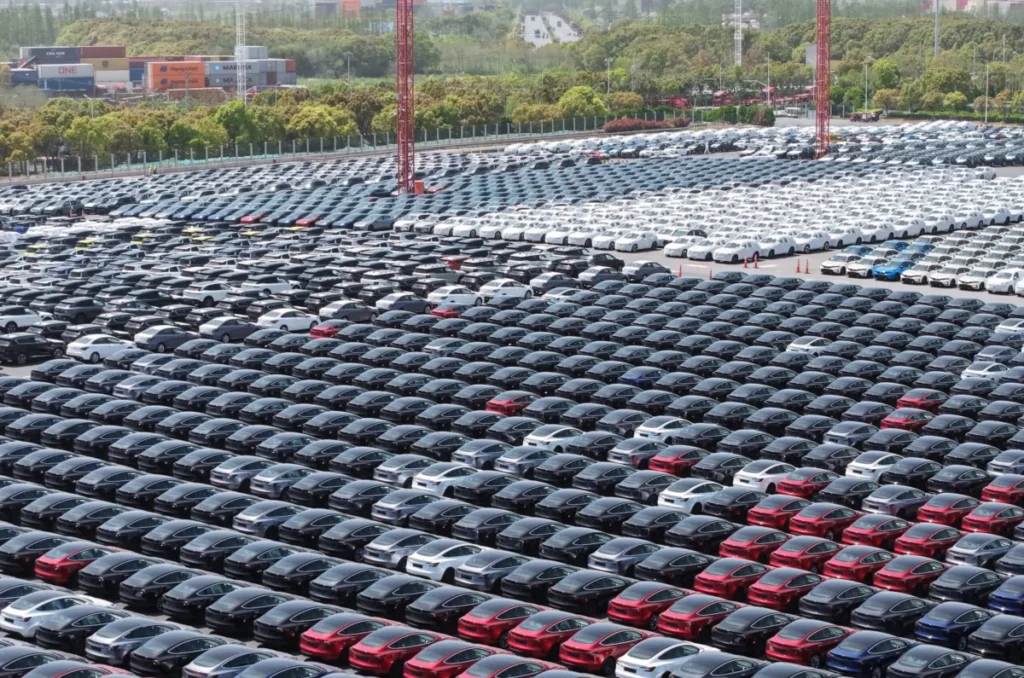
The implications of this slowdown are far-reaching. The fierce competition for a shrinking pool of buyers has triggered bruising price wars that have lasted for several years. Manufacturers have slashed margins to the bone in a desperate attempt to capture market share, but even these drastic measures have failed to reignite demand. This desperation is the primary driver behind why Chinese carmakers are now looking aggressively toward overseas markets to offload their inventory. By "casting their eyes overseas," these companies are attempting to bypass the saturated domestic market, but in doing so, they are running headlong into a geopolitical wall.
Analysts note that Beijing is increasingly fearful that its primary trading partners, particularly in the United States and Europe, are preparing to implement coordinated trade barriers against Chinese auto exports. Should these international markets close their doors, the excess capacity currently clogging Chinese dealerships will have nowhere to go, potentially triggering a crisis for the manufacturers themselves.
The financial toll is already becoming visible in the industry’s balance sheets. While China’s overall industrial profits for the first nine months of 2026 showed a modest 15.5% increase compared to 2025, the data from the National Bureau of Statistics reveals a significant cooling trend as the year progressed. September, in particular, showed signs of weakness relative to the preceding eight months. For the auto manufacturing sector specifically, the impact has been severe: profits from January to September shrank by 22.8% compared to the previous year.
The struggle to survive has forced businesses to make difficult operational decisions. To preserve cash and minimize overhead, Li’s dealership has been forced to relocate. They moved out of a high-visibility, premium streetside space and into a more remote location with significantly less foot traffic. While the rent is a fraction of the cost, the move is a clear admission that the dealership no longer expects to rely on organic walk-in traffic to drive its revenue.
Despite the move and the pressure to move inventory, Li sees little utility in further price reductions. The market has been saturated with discounts for so long that consumers have become desensitized to them. He believes the fundamental barrier is not the price tag itself, but the prevailing psychological state of the Chinese consumer, who is prioritizing liquidity and caution over big-ticket investments.
"Chinese buyers would rather wait," Li said. "There is no urgency to buy, and until the broader economic picture improves, they are content to keep their old cars on the road for another year or two."
As the year draws to a close, the automotive sector remains in a state of high tension. With domestic demand suppressed by economic uncertainty and the specter of international trade barriers looming, the industry faces a difficult path forward. For salesmen like Li, the "golden September and silver October" of 2026 will be remembered not for the deals they closed, but for the stark reality it revealed about the current state of the Chinese economy.