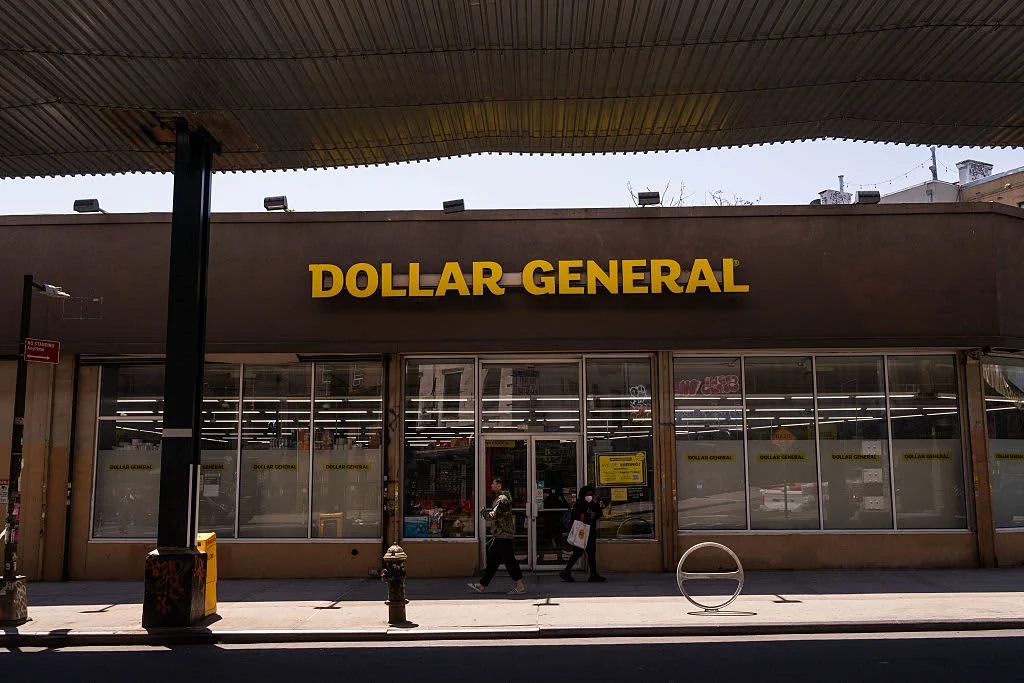
In a significant legal escalation aimed at protecting American households from rising living costs, the Federal Trade Commission (FTC) announced on Monday that it has filed a major lawsuit against Dollar General, the nation’s largest discount retailer. The legal action, joined by a coalition of 20 states, alleges that the company has systematically engaged in deceptive pricing practices, routinely charging customers at the register prices that are higher than those displayed on store shelves, advertised in flyers, or indicated on individual product tags.
The announcement of the lawsuit triggered an immediate reaction in the financial markets. Shares of Dollar General, which operates thousands of locations across the United States, tumbled approximately 4% in early trading following the disclosure of the complaint. The litigation represents a substantial challenge for the retailer, which has long positioned itself as a primary destination for low-income and budget-conscious consumers seeking essential goods at affordable price points.
The core of the FTC’s complaint centers on the allegation that Dollar General has “taken advantage of vulnerable shoppers by extracting millions of dollars in unlawful overcharges.” According to the regulatory agency, the company’s internal systems failed to implement the necessary safeguards to ensure that the prices consumers saw while walking the aisles matched the prices they were ultimately forced to pay at the point of sale. The FTC contends that this is not an isolated error or a series of unintentional technical glitches, but rather a pattern of behavior that has persisted despite repeated warnings and mounting consumer evidence.
Central to the legal argument is the claim that Dollar General has been aware of the issue for an extended period. The complaint asserts that the company has received “tens of thousands” of complaints from its own customers regarding price discrepancies. Despite the high volume of feedback highlighting the issue, the FTC argues that Dollar General failed to implement sufficient internal policies or technological updates to rectify the problem, effectively allowing the overcharging to continue unabated.
The scope of the coalition backing this lawsuit underscores the national significance of the allegations. The states participating in the legal action include Alabama, Arizona, Arkansas, California, Connecticut, Florida, Illinois, Iowa, Kansas, Louisiana, Michigan, Mississippi, Nebraska, New Jersey, North Carolina, Ohio, Oklahoma, Tennessee, Utah, and Wisconsin. By bringing together such a broad group of state attorneys general alongside the federal government, the case signals a unified effort to address what officials characterize as a predatory business practice that disproportionately harms those least able to absorb extra costs.
Christopher Mufarrige, director of the FTC’s Bureau of Consumer Protection, did not mince words when addressing the impact of these practices on the American public. “Dollar General has betrayed the trust of millions of American consumers and imposed significant financial harm on communities and consumers who are already struggling to make their paychecks last,” Mufarrige stated. The agency’s rhetoric emphasizes the perceived breach of the implicit contract between a retailer and its shoppers: that the price marked on a product is the price the consumer will be expected to pay.
The timing of this lawsuit is particularly noteworthy. It arrives at a juncture where American shoppers are under immense financial pressure, navigating a period of elevated food and fuel prices. For many of the shoppers who frequent Dollar General, the difference of a few cents or dollars on a grocery receipt is not a trivial matter, but rather a significant deduction from a limited household budget. As inflation continues to impact the cost of basic necessities, discount retailers have become a lifeline for millions. When that lifeline is perceived as unreliable or deceptive, the economic consequences for the consumer are compounded.
Beyond the immediate consumer protection concerns, the lawsuit is also unfolding against a backdrop of heightened political activity. With midterm elections approaching next week, officials across the political spectrum are increasingly focused on demonstrating their commitment to shielding the public from rising costs. By tackling what the government frames as corporate price gouging or deceptive marketing, federal and state regulators are aligning their policy agendas with the primary concerns of the electorate. The legal action serves as a public-facing initiative, showcasing a proactive stance against corporate practices that appear to worsen the financial strain on everyday families.
The scale of the alleged deception is what sets this case apart from minor retail errors. Because Dollar General operates a vast, nationwide network of stores, the cumulative effect of small, per-item overcharges results in millions of dollars in illicit gains for the company, according to the FTC. The complaint highlights a failure of oversight and a lack of investment in the infrastructure required to manage accurate pricing. Critics have long argued that the rapid growth of discount chains often comes at the expense of operational precision, a criticism that the FTC’s filing now seeks to formalize in a court of law.
As the litigation proceeds, the burden of proof will fall on the FTC and the participating states to demonstrate that these overcharges were not merely accidental, but the result of systemic neglect. For Dollar General, the lawsuit presents a multifaceted crisis. Beyond the potential for significant financial penalties, the company faces a public relations challenge. The brand is built on the promise of savings, and an allegation that it is misleading its core demographic could lead to a loss of consumer trust that is difficult to regain.
As of the time of the announcement, Dollar General had not provided an immediate response to requests for comment regarding the lawsuit. The company is now expected to face a long and rigorous discovery process, during which its internal communications, pricing protocols, and handling of customer complaints will likely be scrutinized by federal and state investigators.
For the average consumer, the development serves as a stark reminder of the complexities inherent in modern retail. While automated systems are meant to streamline the shopping experience, the disconnect between electronic shelf labeling, database pricing, and the actual point-of-sale transaction can leave shoppers vulnerable. The FTC’s move suggests a shift toward more aggressive federal oversight of how retailers manage their pricing data, particularly when that management affects the affordability of essential goods.
The outcome of this case will likely set a significant precedent for how retail chains are held accountable for pricing inaccuracies. If the courts find that Dollar General’s failures were indeed systemic and that the company neglected to fix known issues, it could lead to widespread changes in how retailers are required to verify and disclose pricing information. For now, the millions of Americans who rely on these stores will be watching closely, as will the retail industry, which may be forced to re-evaluate its own internal pricing safeguards in light of the FTC’s rigorous enforcement effort.
The legal battle is just beginning, and the implications for both the corporate sector and the consumer protection landscape are vast. As the midterm elections draw near, the lawsuit will likely remain a focal point of discussion regarding the government’s role in curbing corporate malpractice and ensuring that the marketplace remains fair for all citizens. The combination of the FTC’s regulatory power and the unified support of 20 states makes this one of the most substantial consumer protection cases of the year, underscoring the high stakes involved in maintaining transparency and integrity in the nation’s retail sector.