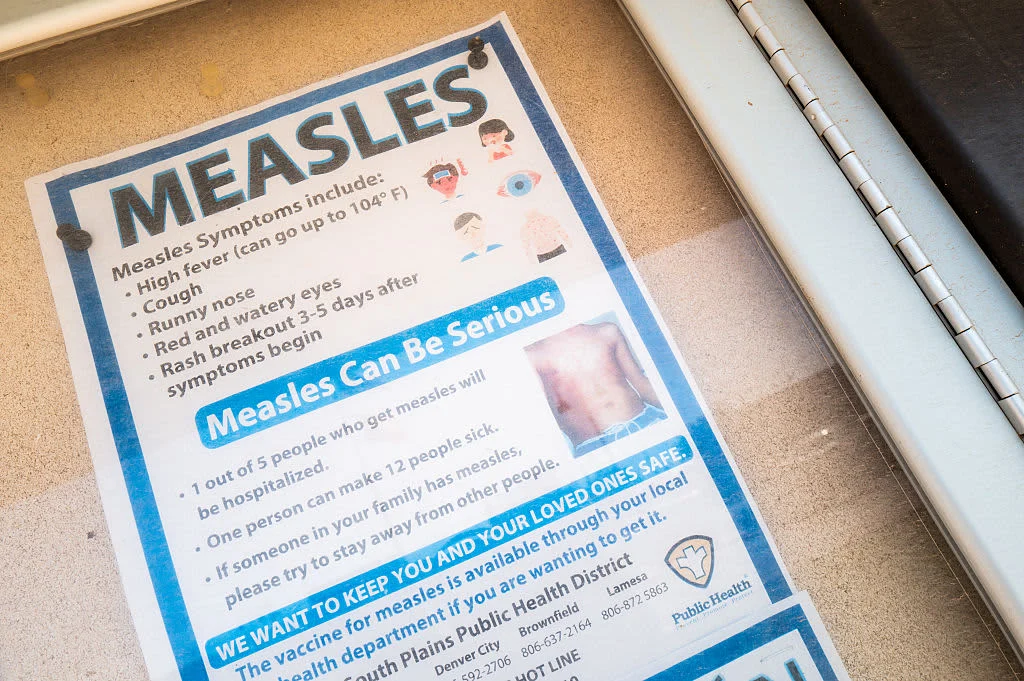
For nearly two years, the United States has been forced to confront an uncomfortable and alarming reality: a highly infectious, potentially devastating disease that was once officially declared eliminated within its borders is making a formidable comeback.
More than 4,400 measles cases and at least three deaths have been reported nationwide, marking the country’s worst outbreak in more than three decades. This sharp escalation follows nearly 2,300 cases recorded in 2025. However, many public health experts and epidemiologists emphasize that the return of the virus itself is only part of the crisis. Equally concerning is what this sweeping resurgence signals about the broader state of America’s public health infrastructure, institutional trust, and collective readiness to handle biological threats.
Measles is widely recognized by medical professionals as one of the most contagious viruses known to science. It is also uniquely unforgiving of any weaknesses in public health defenses. A safe, highly effective vaccine has existed for decades, offering robust protection to individuals and communities alike. Yet, the steady spread of the virus across multiple states exposes a troubling combination of declining vaccination rates, eroding trust in public health institutions, and escalating challenges in persuading the public to protect themselves, their children, and vulnerable members of their communities.
Together, these vulnerabilities have transformed the measles outbreak into a revealing stress test of the nation’s public health system. For numerous experts, the return of a disease the U.S. eradicated more than two decades ago serves as a stark warning sign regarding the country’s capability to contain future health threats—ranging from other vaccine-preventable illnesses to emerging, novel pathogens.
"Measles is the canary in the coal mine for so many different reasons," said Jennifer Nuzzo, an epidemiology professor and director of the Pandemic Center at Brown University School of Public Health. "It’s the canary in the coal mine for other vaccine-preventable illnesses, where we could see a return of things that used to harm kids, but also for very acute, no-notice dangerous infectious disease emergencies."
The United States is currently on track to lose its official measles elimination status during an upcoming review by the Pan American Health Organization, which is scheduled to meet in Washington, D.C., in mid-November.
"It says a lot about a country if it is unable to control measles," noted Nuzzo, reflecting the consensus among public health professionals monitoring the ongoing outbreak and its far-reaching implications.
Pockets of Vulnerability
The U.S. possesses the necessary medical tools to completely prevent measles from spreading. Yet, persistent pockets of low vaccination coverage are leaving the country dangerously exposed.
The measles, mumps, and rubella, or MMR, vaccine is approximately 97% effective against measles after two doses, while a single dose provides about 93% protection, according to data from the Centers for Disease Control and Prevention. Despite this proven efficacy, data aggregated by the CDC shows that routine vaccination coverage for the MMR shot among U.S. kindergarteners declined to 92.4% during the 2025-2026 school year. This rate falls noticeably below the 95% threshold that public health officials universally recommend to prevent sustained community transmission.
In practical terms, this downward trend translates to roughly 280,000 kindergarteners who did not complete their MMR vaccination series, according to CDC figures. Furthermore, childhood vaccination exemptions across the United States reached a record high of 4.2% for incoming kindergarteners during the same 2025-2026 school year, rising from 3.6% the previous year.
"The bottom line is that not enough people are vaccinating their kids," Nuzzo stated plainly.
While a portion of measles cases originates from international travel, the vast majority of recent spread has been driven by local transmission within communities where overall vaccination coverage falls short of the critical 95% benchmark. Among states that collect and report MMR vaccine data, 67% of counties and local jurisdictions now maintain immunization rates below that protective threshold, according to an investigative report published in September.
Recent outbreaks in the United States have frequently erupted in closely knit communities where individuals maintain frequent contact and where vaccination coverage remains low, explained Dr. William Moss, an epidemiology professor at the Johns Hopkins Bloomberg School of Public Health.
However, experts emphasize that declining vaccination rates do not mean the majority of Americans have turned against immunization altogether. Comprehensive polling indicates that broad public support for childhood vaccines remains intact. A national tracking survey found that many Americans occupy an uncertain middle ground regarding the shots, creating a vulnerable space where conflicting information and misinformation can influence their healthcare decisions.
"This is not an edge-case issue," Nuzzo explained, reiterating that the vast majority of parents still choose to vaccinate their children.
Even when outbreaks are concentrated within a minority of communities, the situation can quickly become dangerous far beyond those local areas. Infants who are too young to receive the vaccine and individuals who cannot be immunized for medical reasons are left particularly vulnerable when the virus breaches communities with high baseline vaccination rates.
These growing risks coincide with a period in which federal vaccine policy is undergoing significant shifts under the current administration. President Donald Trump signed an executive order suggesting that the combined MMR vaccine be split into separate individual shots, while simultaneously repeating unverified claims regarding its safety. Additionally, Health and Human Services Secretary Robert F. Kennedy Jr. has pursued an overhaul of the key federal advisory committee responsible for shaping childhood immunization recommendations, though those structural changes remain temporarily frozen amid ongoing legal challenges.
Several health experts warned that such policy maneuvers risk further eroding public confidence in routine vaccines and undermining efforts to safeguard children. At the same time, public health infrastructure was severely strained and diminished in the wake of the Covid-19 pandemic. The CDC, in particular, lost numerous experienced scientists and physicians who had dedicated their careers to combating vaccine-preventable diseases, noted Scott Weaver, a virologist and research director at the Galveston National Laboratory.

Weaver also pointed out that the CDC altered its reporting practices, no longer immediately incorporating state-reported measles-associated deaths into its official national tally, which complicates efforts to track the trajectory of outbreaks in real time. While the federal agency lists three measles-related deaths for 2026, individual states like Pennsylvania have reported at least five fatalities.
"We have folks in federal health leadership right now that are throwing gasoline on the fire, and that is not helping the situation," said Jess Steier, a public health scientist and the founder and CEO of Unbiased Science.
Consequences Beyond Current Outbreaks
Should the United States fail to materially improve its vaccination rates, the current measles resurgence could easily extend far beyond isolated outbreaks, creating long-term public health consequences.
Under current state-level vaccination rates, measles threatens to become endemic once again in the U.S., potentially resulting in an estimated 851,300 cases over a 25-year period, according to a large-scale epidemiological model published in JAMA by researchers at Stanford University and other institutions. That predictive model estimates that such a scenario could lead to 170,200 hospitalizations and 2,550 deaths over the quarter-century timeframe. The simulation, which evaluated infectious disease spread at varying childhood vaccination levels, relied on historical immunization data spanning from 2004 to 2023 as its baseline.
Michael Osterholm, an epidemiologist and director of the Center for Infectious Disease Research and Policy at the University of Minnesota, views the recent measles trajectory in Canada as a direct warning for the United States. Canada lost its official measles elimination status following a multi-province outbreak that generated more than 5,400 cases across 10 jurisdictions.
"We have a population of 350 million. If you extrapolate, if we had the very same experience that Canada had over the next year or two, that would be up to 50,000 cases of measles in the U.S.," Osterholm said. "I think that’s a potential future we have to be mindful of."
Other Vaccine-Preventable Diseases
A larger and more persistent measles outbreak is not the only looming threat facing the nation’s healthcare system. Vaccination coverage for several other major childhood diseases has experienced similar declines.
The share of U.S. kindergarteners vaccinated against polio dropped to 92.4% during the 2025-2026 school year, while coverage for diphtheria, tetanus, and acellular pertussis, commonly known as DTaP, declined to 92%, according to official CDC data.
In parallel with these drops, the U.S. has witnessed a sharp resurgence in pertussis, or whooping cough. Reported cases reached approximately 43,300 and nearly 28,000, representing a substantial increase over pandemic-era lows. Epidemiologists note that this resurgence stems partly from lower uptake of the vaccine, compounded by the fact that immunity provided by the pertussis vaccine naturally wanes over time.
The Stanford-led simulation model also examined how falling immunization rates could impact the future spread of other diseases previously eliminated from the country. While the researchers found that diseases like rubella and polio were unlikely to become endemic under current vaccination levels, a hypothetical scenario involving a 50% drop in childhood immunization rates projected millions of cases over a 25-year span. Such an extreme drop could theoretically yield massive public health burdens, including severe birth complications from rubella and widespread paralysis from polio.
While these extreme scenarios represent projections rather than certainties, they illustrate how significantly potential risks can multiply when baseline vaccination coverage deteriorates.
"What vaccines often buy you is not just the protection, but also less uncertainty," said Mathew Kiang, an assistant professor of epidemiology and population health at Stanford Medicine who contributed to the simulation model. "I think even more frightening is just the really wide uncertainty that we just wouldn’t be sure of what could happen."
Preparing for the Next Threat
Beyond immediate clinical concerns, the ongoing measles resurgence is prompting difficult questions regarding the nation’s overall capacity to detect, monitor, and respond to emerging public health threats before they spread widely.
"Public health is all about prevention," said Dr. Manisha Juthani, president of the Association of State and Territorial Health Officials and commissioner of the Connecticut Department of Public Health. Juthani emphasized that the country must actively maintain its ability to detect threats, invest in robust disease surveillance, and recognize that infectious pathogens do not respect international borders.
Such foundational capabilities remain vital for curbing emerging biological risks, particularly during early phases when scientists know very little about how a novel disease spreads, its clinical severity, or how best to treat it. Because a pathogen can transmit rapidly before targeted vaccines or treatments are developed, early detection, transparent public communication, and coordinated response strategies are essential.
Some policy analysts argue that visible weaknesses in domestic public health infrastructure could have broader implications for the country’s national security and its defenses against deliberate biological threats. Researchers have noted that struggling to contain a well-understood, vaccine-preventable disease might expose vulnerabilities that could embolden actors who view public health shortcomings as strategic opportunities.
However, other specialists who work extensively in biodefense point out that low MMR immunization rates and rising measles numbers do not automatically mean the American public would reject medical countermeasures during a distinct biological emergency. The specific vaccines and therapeutics deployed to counter novel biological threats often differ from routine childhood immunizations, and the immediate prospect of a severe, high-consequence outbreak could generate a different level of public urgency to seek protection.
While the current measles resurgence alone cannot fully determine whether the nation could withstand entirely novel or catastrophic public health threats, it serves as a glaring indicator of existing vulnerabilities. As a preventable disease continues to spread across communities, experts stress that the stakes of addressing these systemic weaknesses extend far beyond measles, carrying profound implications for whatever health challenge may arise next.