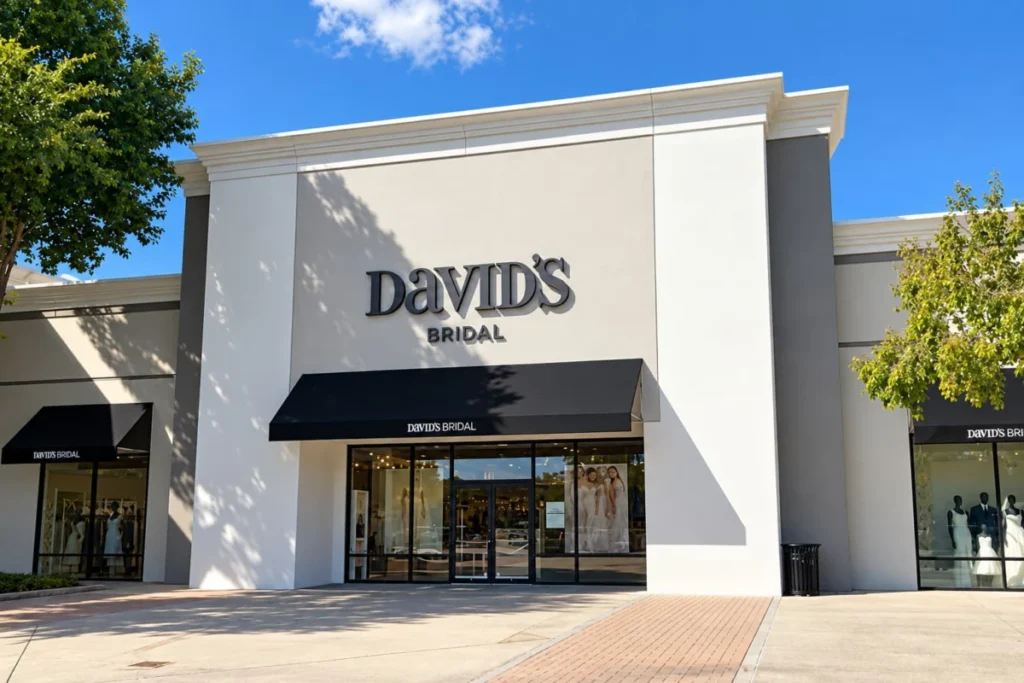
David’s Bridal is preparing to spin off its proprietary artificial intelligence platform, Pearl, into an independent, publicly traded company with a targeted valuation of roughly $350 million, according to exclusive details learned by CNBC.
The prominent bridal retailer filed a nonbinding letter of intent to execute the corporate separation. Under the terms of the strategic restructuring, the deal is widely expected to close in the first half of 2027. Following the transaction, the newly formed AI-centered enterprise will own David’s Bridal’s intellectual property while licensing it back to the brick-and-mortar retail chain. Meanwhile, the original retail business will focus on strengthening and expanding its physical store presence and core operations.
Kelly Cook, the chief executive officer of David’s Bridal who is slated to transition into the role of CEO of Pearl once the deal officially closes, highlighted the robust health of the technology division in an interview.
"We have a fast-growing, high-margin business generating positive cash flow right now in Pearl, and going public now will help us attract the talent and give us more optionality to fuel the growth that we believe that we have," Cook told CNBC. She emphasized that the two separate entities will continue working hand in hand to serve consumers seamlessly throughout the entire wedding-planning journey, describing the split as a definitive move positioning both brands for strategic long-term growth.
Pearl operates as a comprehensive suite of digital wedding services. The platform features an agentic AI-powered wedding-planning assistant, a proprietary technological tool designed to streamline customer appointments and communications, and a digital content network featuring original programming. By leveraging advanced data collection for each individual client, Pearl utilizes artificial intelligence to deliver hyper-personalized suggestions, recommendations, and logistical support.
Financial projections shared by the company indicate that Pearl is on track to generate an earnings before interest, taxes, depreciation, and amortization margin exceeding 30% for the year. Furthermore, the company projects revenue growth of more than 100% by 2027, with figures anticipated to surpass $85 million. Following the completion of the spinoff, Pearl is expected to operate debt-free and maintain positive free cash flow throughout the subsequent two years.
"Pearl has earned the right to stand on its own because it’s created more value than we’ve expected," Cook noted, explaining the rationale behind the ambitious corporate maneuver.
Under the finalized operational framework, Pearl will hold the intellectual property assets previously housed within David’s Bridal and license them directly back to the retail chain. Cook characterized this arrangement as a very healthy business model. She noted that consumer demand remains exceptionally strong across both the wedding retail and technological segments. According to industry estimates from Grand View Research, the United States wedding services market is projected to top $96 billion in 2026, and both Pearl and David’s Bridal intend to capture significant market share at the forefront of that lucrative economic segment.
Moving forward, the two companies will maintain what Cook described as a relationship built on reciprocity. They will share proprietary intelligence and direct customers back and forth to facilitate the various sequential steps involved in comprehensive wedding planning. This structural division will ultimately allow each individual company to sharpen and refine its core operational focus.
The planned public debut arrives during a complex macroeconomic climate for technology and consumer markets. Broadly speaking, artificial intelligence stocks have experienced periods of severe volatility and investor skepticism. Simultaneously, the initial public offering market for consumer-facing private companies has remained notoriously lackluster, with an increasing number of enterprises opting to postpone their public market debuts as financial backers begin to question the long-term spending patterns and profit timelines associated with the broader generative artificial intelligence boom.
Addressing these market headwinds, Cook argued that Pearl possesses a distinct structural differentiator that insulates it from broader industry skepticism. She stressed that the platform is fundamentally "not AI for AI’s sake."
"Most AI companies have to find a customer," Cook explained. "We already have her… we have her information, and it’s less about the AI side and more about modernizing this entire ecosystem for her that desperately needed modernization."
For David’s Bridal, the corporate realignment marks the latest chapter in a turbulent historical narrative defined by significant financial restructuring. The venerable bridal chain previously filed for Chapter 11 bankruptcy protection in 2018, successfully emerging from the process just a few months later. However, the company was forced to file for bankruptcy a second time in 2023. At that time, leadership cited severe business disruptions caused by the COVID-19 pandemic, changing consumer celebration habits, and persistent macroeconomic inflation. To avert a complete liquidation and shutdown, David’s Bridal ultimately executed a sale of its core business operations to asset management firm Cion Investment Corp.
As part of the upcoming Pearl spinoff transaction, Cion has already proposed investing $25 million to serve as an anchor investor in the newly independent technology company.
Cook assumed the role of CEO last year with an explicit mandate to guide the legacy retailer through a difficult transition toward a more cohesive, digitally integrated omnichannel experience combining online services with traditional in-store appointments. Reflecting on the company’s past corporate trials, Cook acknowledged that the organization has navigated challenging territory, but insisted those very struggles directly catalyzed the innovative decision to split the enterprise.
"That’s no secret, we’ve talked about that openly," Cook said regarding the past financial restructuring. "What’s extraordinary is what came out of that process is a leaner David’s, a more focused David’s… I think it’s a move from strength."