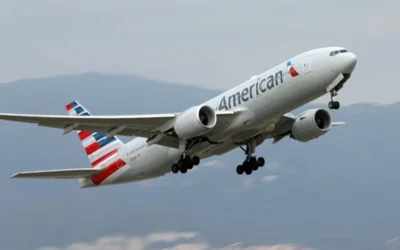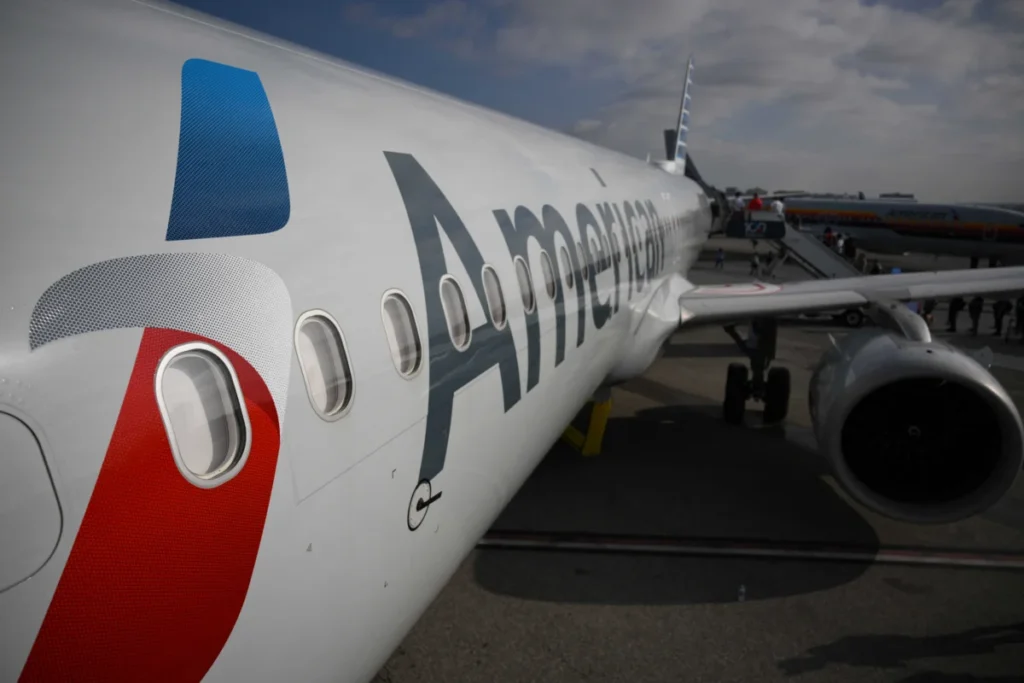
American Airlines has slashed its financial outlook for the year, warning investors that it now expects deeper losses as a staggering spike in jet fuel prices severely offsets record-setting passenger demand. The Fort Worth, Texas-based carrier revealed Thursday that it will also intentionally slow its capacity growth heading into next year, joining a wave of major U.S. airlines grappling with the volatile economic fallout stemming from the outbreak of the Iran war.
The updated financial guidance underscores the profound headwinds currently buffeting the aviation industry. Despite robust consumer appetite and historically high revenue generation, airlines find themselves vulnerable to external commodity shocks. For American Airlines, the unexpected surge in jet fuel has derailed a recovery trajectory that executives had hoped would bring the carrier back into consistent profitability.
According to the company’s updated disclosures, American now expects to post an adjusted net loss of between $1 and $1.60 per share for the 2026 fiscal year. This marks a significant and painful deterioration from the guidance issued just months prior in July, when the carrier projected its full-year adjusted earnings per share would range anywhere from a loss of 65 cents to a modest profit of 65 cents.
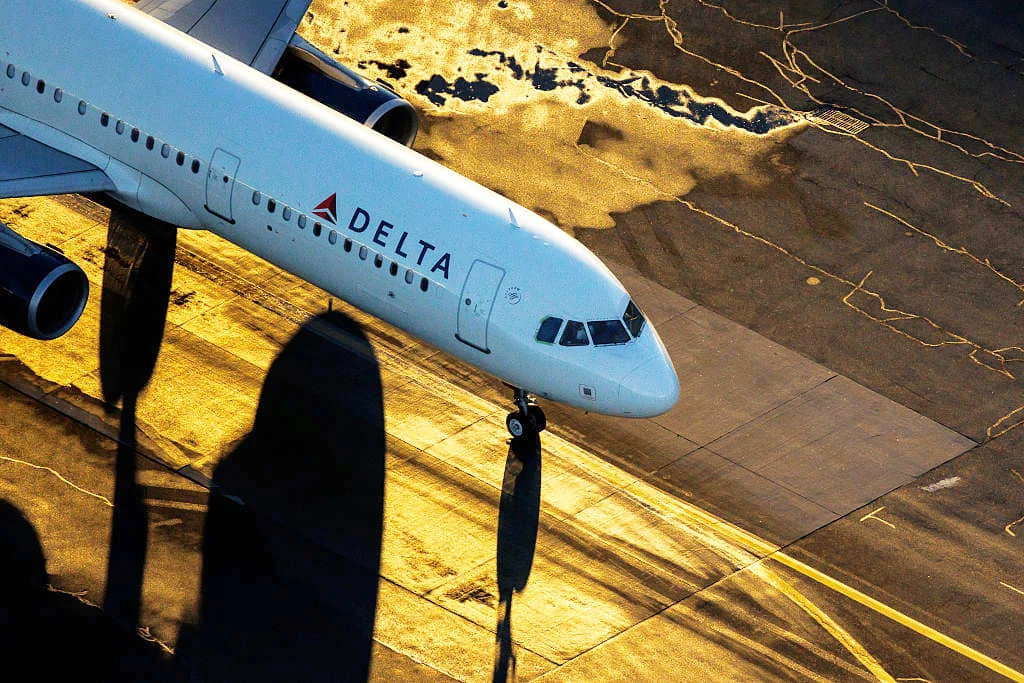
The struggle is far from isolated. American is now the fourth major U.S. carrier to formally downgrade its full-year forecast due to the steep escalation in jet fuel costs. The sudden price jump has sent shockwaves through the domestic and international aviation sectors, driving overall airfares up by more than 20% compared to the same period last year, according to a combination of corporate earnings reports and federal economic data. Industry giants Delta Air Lines, United Airlines, and Southwest Airlines have all similarly slashed their financial outlooks this month, highlighting a sector-wide vulnerability to energy market volatility.
Within the airline cost structure, jet fuel traditionally represents the single largest expense second only to labor. The recent price spikes have injected billions of dollars in unexpected operating expenses into corporate balance sheets. For American Airlines alone, the financial impact has been severe; the carrier’s fuel bill skyrocketed by 67.5% in the third quarter alone compared to the previous year, reaching an imposing $4.64 billion.
Yet, amidst the gloomy bottom-line projections, executive leadership was quick to emphasize that the underlying operational demand for air travel remains remarkably strong.
"American delivered record third-quarter revenue and the strongest year-over-year revenue growth in my career, with premium performance leading the way," said American CEO Robert Isom in a news release detailing the quarterly results.
Confidence in 2027 Profitability
Despite lowering expectations and bracing for deeper losses through the remainder of 2026, CEO Robert Isom sought to reassure investors and analysts during an earnings call on Thursday. Isom expressed "great confidence" that the airline’s temporary financial setbacks will give way to a permanent return to profitability by next year.

Isom has faced mounting pressure from shareholders and industry analysts to accelerate profit margins and close the performance gap at the carrier. Historically, American Airlines has trailed behind its major network competitors, particularly Delta Air Lines and United Airlines, both of which have managed to post stronger, more resilient profit margins in recent quarters.
In response to these competitive pressures, American has embarked on an ambitious, multi-faceted modernization and turnaround strategy. The airline has poured capital into upgrading the passenger experience, investing heavily in new airport lounges and completely revamped cabin layouts featuring an increased proportion of high-margin premium seating. Furthermore, the carrier reversed a previous strategic decision earlier this year, announcing plans to reintroduce popular seat-back entertainment screens across its entire narrow-body fleet to better compete with rivals.
The push for financial and operational improvement has also triggered a sweeping management shake-up across the airline’s corporate hierarchy. Earlier this month, American named a new network chief, marking the latest in a series of strategic appointments designed to overhaul operations and commercial strategy. Last year, the airline recruited veteran aviation executive Nat Pieper to serve as its new commercial chief, bringing fresh leadership to navigate the complex post-pandemic travel landscape.
Corporate Strategy, Fleet Upgrades, and Fourth-Quarter Outlook
Underpinning executive optimism is the persistent strength of international and premium travel demand, which has continued to defy broader economic uncertainties. Capitalizing on this momentum, American announced late last month that it plans to deepen its strategic partnership with Alaska Airlines. Under the expanded agreement, the Seattle-based carrier will officially join American’s lucrative trans-Atlantic and trans-Pacific joint businesses, a move designed to enhance global connectivity and capture higher-yielding long-haul traffic.
Simultaneously, American’s leadership team indicated that the airline is rapidly closing in on a major acquisition order for new wide-body aircraft to modernize its long-haul fleet. Chief Financial Officer Devon May told CNBC on Thursday that the carrier has actively evaluated several premier aircraft options, including the Boeing 787 Dreamliner, the Airbus A330, and the Airbus A350, as part of its long-term capacity and fleet planning.
Looking toward the immediate horizon, American forecast that it will record an adjusted net loss ranging between 50 cents and $1.10 per share for the fourth quarter. During this same period, the company anticipates that total revenue will climb by as much as 22.5% compared to the same period a year earlier, with capacity slated to expand between 5.5% and 6.5%.
The financial reality of the past quarter was laid bare in the company’s official earnings report. For the third quarter, American reported a net loss of $269 million, or 41 cents a share, widening significantly from a net loss of $114 million, or 17 cents a share, recorded during the corresponding period last year. When adjusted for one-time, non-recurring items, the airline posted a core loss of 28 cents a share.
On the top line, however, the figures reflected the powerful surge in consumer spending on travel. Total quarterly revenue jumped 19.3% from a year earlier, climbing to $16.34 billion and easily outstripping historical benchmarks, even as soaring fuel expenses consumed the financial gains.