
Cruising through the majestic waters of Alaska is a bucket-list adventure that typically brings a specific set of wildlife and natural wonders to mind. Travelers dream of spotting breaching whales, playful sled dogs, soaring bald eagles, and dramatic coastal mountain ranges. Yet, topping almost every traveler’s itinerary is the desire to witness Alaska’s legendary rivers of ice. Glacier viewing is an intrinsic part of what people hope to experience in northern waters, often serving as the primary deciding factor when choosing between a traditional cruise and an exclusively land-based vacation.
Major cruise lines recognize this profound pull toward the frozen wilderness and deliberately dedicate significant sailing time to navigating near the region’s most famous glaciers. However, with numerous routes and options available, prospective passengers often find themselves wondering which specific itinerary will deliver the most immersive and close-up glacial encounters. When planning an Alaska voyage, cruisers generally weigh two premier destinations above all others: Hubbard Glacier and Glacier Bay National Park and Preserve. While certain select itineraries manage to visit both, most travelers must choose one over the other during the booking process. Weighing the logistics, wildlife opportunities, and overall presentation reveals distinct advantages to each choice.
Essential Tips to Ensure You See a Glacier on Your Cruise
It comes as a surprise to some first-time visitors that it is entirely possible to book a cruise in Alaska that bypasses glaciers entirely. Early-season or shorter regional sailings, for instance, frequently focus on southeastern port towns rather than the deeper fjords. More importantly, even itineraries explicitly designed with glacier viewing in mind can occasionally fall short of their goals. Unpredictable weather conditions, heavy accumulations of ice in the water, and unexpected onboard medical or mechanical emergencies are the most common reasons cruise ships are forced to skip scheduled glacier visits.
To significantly improve the odds of witnessing a massive river of ice, travelers should carefully review their ship’s routing and schedule. If a cruise line offers a specialized glacier-viewing excursion on the exact day the main ship is scheduled for scenic cruising near a massive ice formation, taking it is often a wise decision. This frequently indicates that environmental regulations or the size of the vessel will prevent the primary ship from getting as close to the glacier’s face as passengers might ultimately desire. Understanding what to expect from the two most prominent glacial destinations helps travelers align their expectations with the realities of maritime exploration in the Last Frontier.
Hubbard Glacier: The Grandeur of North America’s Longest Tidewater Glacier
Hubbard Glacier stands out as an awe-inspiring natural feature, earning its reputation as the longest tidewater glacier in all of North America. Its staggering face towers more than 400 feet above the waterline and spans nearly 7 miles in width. Because of its monumental scale, the glacier remains visible even on days when floating sea ice or environmental conditions force a ship to halt its approach further out in the fjord, typically stopping between a quarter-mile and a half-mile away from the massive wall of ice.
Often referred to by locals and guides as "The Galloping Glacier," Hubbard has been steadily advancing into Disenchantment Bay for over a century. While its overall mass is currently considered relatively stable, its continuous forward movement generates immense physical pressure. This dynamic results in a dramatic process known as calving, where massive blocks of ice—frequently the height of a three-story building—break away and crash violently into the sea. This phenomenon produces a thunderous roar akin to rolling thunder and generates powerful waves that sweep across the bay.
The journey to Hubbard Glacier takes ships through the deep waters of Yakutat Bay and into Disenchantment Bay, a route surrounded by the pristine wilderness of the 13.2-million-acre Wrangell-St. Elias National Park and Preserve. Designated as a UNESCO World Heritage Site, this vast protected area encompasses the largest glacial system in the United States, with roughly 35% of the park blanketed in ice. During the transit, passengers frequently spot humpback whales, orcas, harbor seals, sea lions, and bald eagles, with onboard naturalists providing real-time commentary and announcements to help guests track wildlife activity along the shores.

A wide variety of cruise lines include Hubbard Glacier on at least one of their regional itineraries, most commonly featuring it on one-way voyages or extended 10- to 14-night sailings. While only a select few 7-night, round-trip cruises manage to incorporate the route, the list of visiting operators spans major lines as well as luxury, small-ship, and boutique operators, including recent regional entrants like Virgin Voyages, Crystal, Silversea, and The Ritz-Carlton Yacht Collection.
Glacier Bay National Park and Preserve: An Immersive Ecosystem of Seven Glaciers
In contrast to the single, towering expanse of Hubbard, Glacier Bay offers an entirely different style of glacial exploration. Encompassed within a national park and preserve spanning more than 3 million acres, the bay protects over 1,000 glaciers, seven of which are active tidewater glaciers visible directly from the deck of a ship.
The distinct advantage of a Glacier Bay itinerary is the depth of the experience. Ships typically spend nine to 10 hours traversing more than 120 miles within the protected waters of the park. Depending on the specific sailing, ships may arrive as early as 6:00 a.m. or slightly later in the morning, remaining anchored or slowly maneuvering until late afternoon or early evening. When approaching the primary tidewater glaciers, ships routinely perform a complete 360-degree rotation, lingering in front of the ice for roughly an hour to ensure every guest on board receives an unobstructed, panoramic view regardless of their location on the vessel.
Adding to the educational and cultural value of the journey, official National Park Service rangers and local cultural interpreters board the ship upon entry into the park. These experts spend the day answering passenger questions, distributing maps and charts, hosting presentations, and even stamping national park passports for enthusiastic travelers.
Federal regulations strictly limit large cruise ships to just two arrivals per day within Glacier Bay to preserve the delicate ecosystem. However, these restrictions do not apply to smaller adventure-focused lines, allowing companies like UnCruise Adventures, Lindblad Expeditions, American Cruise Lines, and Alaskan Dream Cruises to operate as tour vessels within the park. Other major lines featuring Glacier Bay on their schedules include Holland America Line, Princess Cruises, Norwegian Cruise Line, Seabourn, Cunard, and Viking.
Throughout a full day of cruising in the bay, passengers enjoy exceptional opportunities for wildlife observation. It is common to encounter harbor seals, Steller sea lions, sea otters, and bald eagles, alongside potential sightings of brown bears along the coast, black bears, humpback whales, harbor porpoises, mountain goats, orcas, and tufted puffins.
Comparing the Top Two Alaska Glacier Experiences
When evaluating whether to book an itinerary centered around Hubbard Glacier or Glacier Bay, travelers must weigh several operational and experiential factors. For the duration of scenic cruising, Glacier Bay clearly takes the lead. Because of strict daily vessel limits, a visit to the national park is treated as a comprehensive, all-day event, whereas ships visiting Hubbard Glacier typically spend a more concentrated few hours in the vicinity of the ice.

When it comes to dramatic visual presentation, however, Hubbard Glacier emerges as the undisputed showstopper. Its brilliant blue hues, massive scale, and thunderous calving events offer an intense, high-impact spectacle. The tidewater glaciers found within Glacier Bay tend to be quieter, less flashy, and statistically less prone to shedding monumental blocks of ice in immediate view of the ship.
Wildlife viewing opportunities are robust in both locations, but Glacier Bay holds an edge simply due to the extended hours ships spend moving slowly through the protected marine sanctuary, creating an environment akin to an all-day wildlife safari from the comfort of the vessel. For families traveling with children or individuals with shorter attention spans, Hubbard Glacier’s more concise visit time can be advantageous, preventing the fatigue that can sometimes accompany a long, slow day of national park cruising—though the presence of on-board park rangers in Glacier Bay offers an engaging interactive element for younger guests.
Regarding the variety of cruise lines offering these routes, Hubbard Glacier wins out in terms of sheer breadth, with roughly 16 different cruise brands incorporating it into their schedules. Nevertheless, Glacier Bay holds a distinct advantage for travelers preferring small-ship experiences, offering a robust selection of boutique expedition vessels. From a cost perspective, both destinations generally require booking a one-way open-jaw itinerary that can influence airfare expenses, though Glacier Bay edges out Hubbard slightly by appearing on a somewhat wider selection of convenient 7-night, round-trip options. Furthermore, travelers visiting Hubbard Glacier occasionally opt to purchase secondary shore excursions aboard smaller local vessels to secure a closer vantage point, introducing an additional expense. Finally, in terms of overall reliability, Glacier Bay holds the advantage simply because its multiple tidewater glaciers stack the odds in favor of successful viewings, requiring severe weather or unforeseen maritime emergencies to entirely disrupt the schedule.
Alternative Glaciers Accessible by Cruise Ship
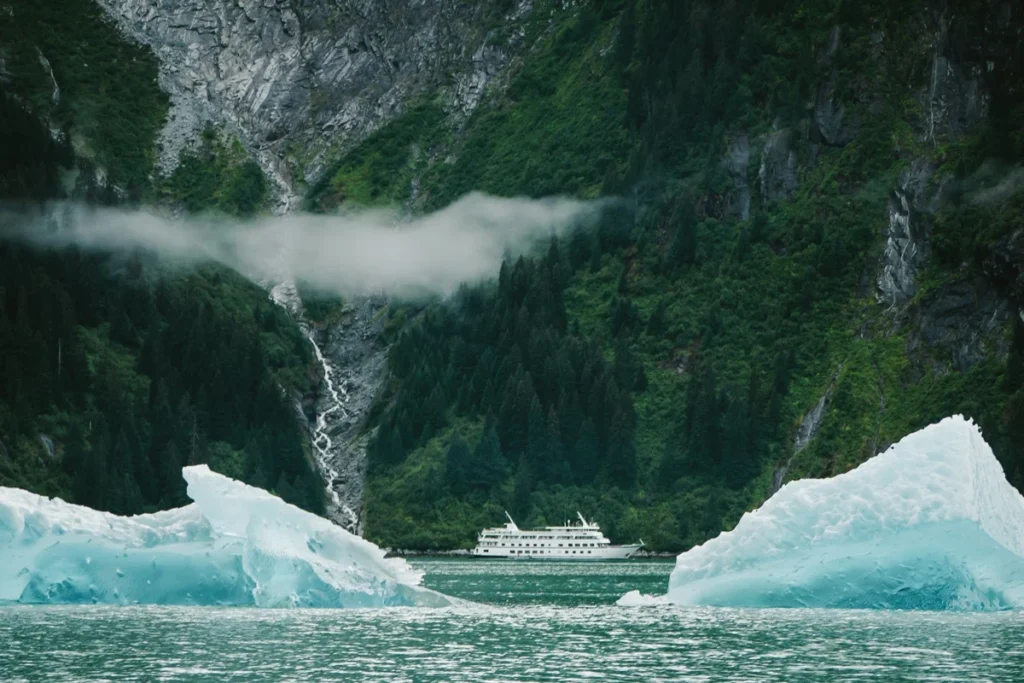
While Hubbard Glacier and Glacier Bay capture the majority of attention from Alaska cruisers, several smaller yet equally stunning glacial fjords offer alternative viewing opportunities. Itineraries that route vessels through Tracy Arm Fjord, for instance, are designed to showcase the twin Sawyer glaciers. The exceptionally narrow fjord features steep cliff walls, plunging waterfalls, and close proximity to land that frequently reveals mountain goats and coastal bears. Major operators, including MSC Cruises during its inaugural regional season, utilize these narrow waterways to provide a more intimate wilderness backdrop.
Endicott Arm serves as a neighboring fjord branching off from Tracy Arm and is frequently utilized by cruise lines as an alternative route when heavy ice or poor weather obstructs access to the Sawyer glaciers. Because Endicott Arm features a straighter channel, it accommodates some of the fleet’s largest ships, such as Royal Caribbean’s Anthem of the Seas and Ovation of the Seas. It also serves as the primary glacial destination for Disney Cruise Line itineraries, bringing passengers within sight of the striking Dawes Glacier. Depending on the operator, these locations may also feature specialized small-boat or Zodiac excursions—such as those offered on Windstar Cruises’ Star Seeker itineraries—allowing guests to navigate closer to the ice pack.
Further north near Whittier, Alaska, College Fjord offers yet another compelling viewing area. Frequently included on itineraries that begin or end in Whittier or Seward, College Fjord boasts an impressive collection of five tidewater glaciers within a single dramatic passage. Most regional sailings featuring College Fjord pair it with a visit to either Hubbard Glacier or Glacier Bay, providing travelers with multiple opportunities to witness Alaska’s frozen landscape from the sea.