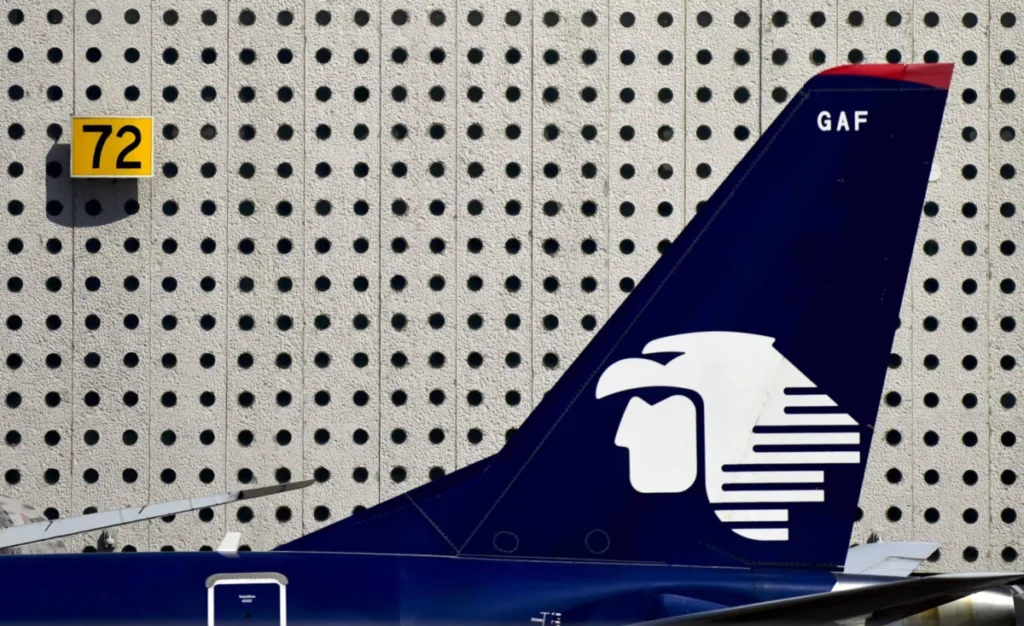
Travelers flying with Delta Air Lines and its partners will soon gain three brand-new options for traveling to the heart of Mexico. Aeromexico, a fellow SkyTeam Alliance member and close commercial partner of Delta, has officially announced plans to launch a trio of new nonstop routes connecting Mexico City’s Benito Juarez International Airport directly to prominent destinations across the United States starting this January.
The upcoming network expansion will see Aeromexico deploy its modern Boeing 737 MAX 8 aircraft on all three paths, offering a consistent onboard product featuring 166 seats per flight. The introduction of these daily services highlights a deepening of transborder connectivity despite a turbulent regulatory backdrop that has periodically strained aviation relations between Washington and Mexico City over the last several years.
The close operational ties between Aeromexico and Delta Air Lines are anchored by an immunized joint venture between the United States and Mexico. This high-level commercial pact allows the two carriers to function essentially as a single airline within the transborder market. Under the arrangement, the airlines coordinate commercial activities ranging from flight schedules to fare pricing, while also jointly selling each other’s tickets across both countries. For frequent flyers, the partnership ensures seamless reciprocal loyalty benefits, allowing members of Delta’s SkyMiles program to earn and redeem miles on Aeromexico-operated flights.

Navigating Potential Regulatory Hurdles
The announcement of Aeromexico’s new U.S. routes arrives amid lingering industry concerns regarding the safety rating of Mexico’s aviation regulator. Observers have noted the possibility that U.S. authorities could downgrade Mexico’s safety rating to Category 2 as soon as February 2027. A Category 2 designation serves as an official measure of a country’s overarching aviation safety oversight regime and regulatory body rather than an indictment of any individual commercial airline’s operating safety.
If a downgrade were to materialize, Mexican carriers would face strict regulatory limits, barring them from introducing new flights to the United States, although they would be permitted to maintain their existing flight schedules. Crucially, a Category 2 rating for Mexico would not restrict U.S. airlines from continuing to serve the market.
Despite these looming uncertainties, Mexican airlines are moving swiftly to expand their footprints. Aeromexico and rival Mexican carrier Volaris have both advanced aggressive growth plans ahead of any potential regulatory shifts. Since August, budget carrier Volaris has rolled out new service announcements to several U.S. markets, including Boston Logan International Airport, Nashville International Airport, Raleigh-Durham International Airport, and Washington Dulles International Airport, with those flights slated to commence before the end of the year.
A similar dynamic occurred in the recent past, as Mexico’s safety rating previously sat at Category 2 from 2021 through 2023 before being restored. The prospect of another potential downgrade reflects the latest chapter in a multi-year regulatory tussle between U.S. and Mexican aviation authorities.

The underlying bilateral disagreements trace back to 2022, following the opening of Mexico City’s secondary aviation hub, Felipe Ángeles International Airport. At that time, the Mexican government unilaterally moved to reduce the number of available hourly slots at Benito Juarez International Airport, sparking sharp complaints from commercial airlines and allegations from U.S. officials that Mexico was in breach of the nations’ bilateral open skies agreement.
The dispute intensified significantly when the U.S. Department of Transportation moved to terminate the Delta-Aeromexico joint venture in 2024, alongside issuing restrictions that barred Mexican airlines from adding new U.S. flights departing from Mexico City. However, the regulatory landscape shifted in August when a court ruled that the joint venture could legally continue. Shortly afterward, in October, the Department of Transportation lifted its restrictions, paving the way for Mexican airlines to resume adding new U.S. routes from the capital.
Targeting Delta Strongholds Without Direct Competition
Aeromexico’s newly unveiled routes strategically target key U.S. markets that align closely with Delta Air Lines’ historical and current network strongholds. For instance, Portland served as Delta’s primary gateway to Asia until the 2000s, and the U.S. carrier maintains a robust base of loyal corporate and leisure flyers in the Pacific Northwest, even as Alaska Airlines commands the largest market share at the airport.
A similar dynamic is evident in Florida, where Delta stands as the largest network carrier operating out of Fort Lauderdale-Hollywood International Airport, trailing only market leader JetBlue Airways in overall passenger volume.

According to comprehensive schedule data compiled by aviation analytics firm Cirium, Aeromexico will face zero direct airline competition on any of its three new paths. No other carrier currently operates nonstop flights between Mexico City and Fort Lauderdale, Portland, or the southern California market. By securing these unserved routes, the carrier aims to capture pent-up demand for transborder travel while reinforcing the broader alliance network shared with Delta Air Lines.