
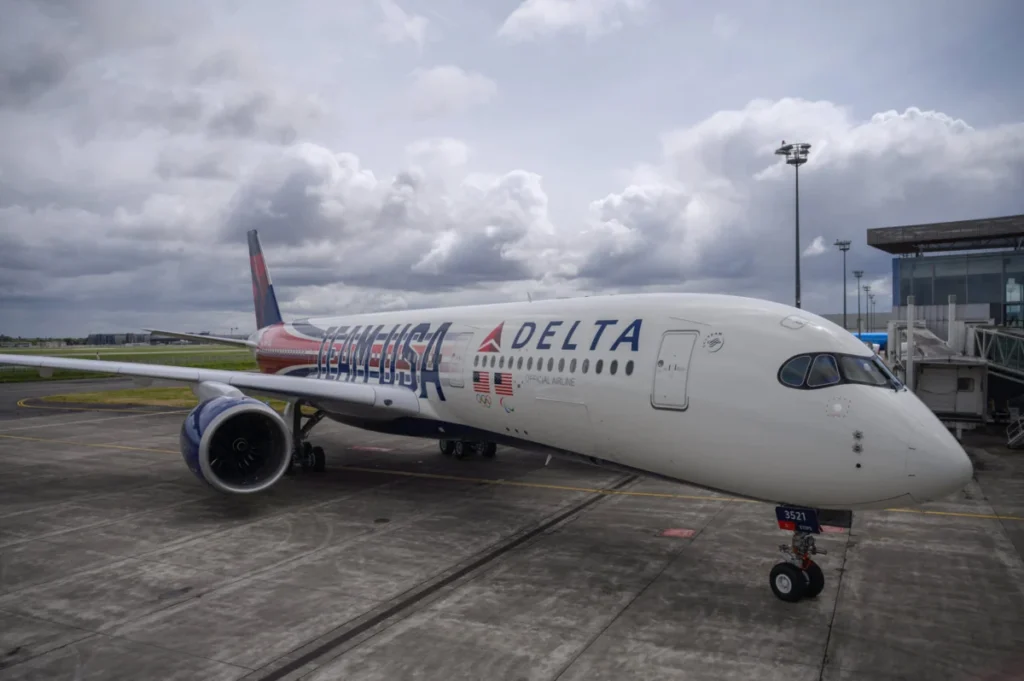
The planned flights connecting Riyadh to Delta’s largest hub are officially scheduled to begin on October 23. However, the recent outbreak of violence has introduced severe safety uncertainties that leadership must now evaluate before making a final commitment to launch the new international service.
The security situation in the Saudi capital deteriorated following reports confirmed by Saudi Arabia’s civil aviation authority that three people were killed in attacks at Riyadh’s King Khalid International Airport. The incident occurred as Houthi rebels stepped up a wave of cross-border strikes, targeting critical infrastructure and prompting international carriers to immediately re-examine their regional operations.
"Obviously, we were disappointed to see the news this week," Bastian told CNBC in an interview discussing the unfolding situation. Emphasizing the carrier’s primary operating principle, he added, "Safety is going to make the call."
The Delta chief executive noted that the airline’s executive team is monitoring intelligence closely and will communicate its final decision to customers and stakeholders soon. The airline’s cautious posture reflects the immediate operational risks faced by commercial aviation when regional conflicts spill over into major metropolitan areas and international aviation hubs.
Delta is not alone in grappling with the sudden security threat. Major international carriers are already adjusting their schedules in response to the violence. A spokesperson for German airline Lufthansa told CNBC that the carrier was pausing its flights into Saudi Arabia through at least October 16 as a precautionary measure while evaluating security protocols and airspace risks.
Delta’s proposed route holds considerable commercial and symbolic significance for the airline. Under the current schedule, Delta is planning to operate the Atlanta-Riyadh flight on a daily basis from October 23 through October 30 before transitioning to a three-times-a-week service model. When Delta originally announced the route earlier this year, it marked a major milestone in transatlantic and transcontinental network planning. The airline heavily promoted the service by noting it would stand as the first nonstop service between the United States and Riyadh ever operated by a U.S. airline, bridging a key economic and diplomatic corridor.
The initial announcement was viewed as a major expansion of Delta’s footprint in the Middle East, leveraging its dominant position at Hartsfield-Jackson Atlanta International Airport to capture business, government, and tourism travel between North America and the Kingdom of Saudi Arabia. The route was designed to facilitate closer economic ties and provide seamless connectivity for travelers moving between the American Southeast and the rapidly growing Saudi capital.
Yet, the sudden escalation of Houthi rebel activity and the tragic loss of life at King Khalid International Airport have fundamentally altered the risk calculus for the carrier. Aviation security experts point out that airport infrastructure and civilian airspace in the region remain vulnerable during periods of heightened conflict, forcing airlines to weigh the commercial benefits of launching high-profile routes against the absolute imperative of passenger and crew safety.
As the October 23 launch date approaches, industry observers and prospective passengers are waiting to see how Delta handles the logistical and strategic challenge. With the airline promising an update for customers soon, the final decision will hinge entirely on ongoing security assessments and whether conditions in the region stabilize enough to permit the safe inauguration of U.S. commercial service to Riyadh.