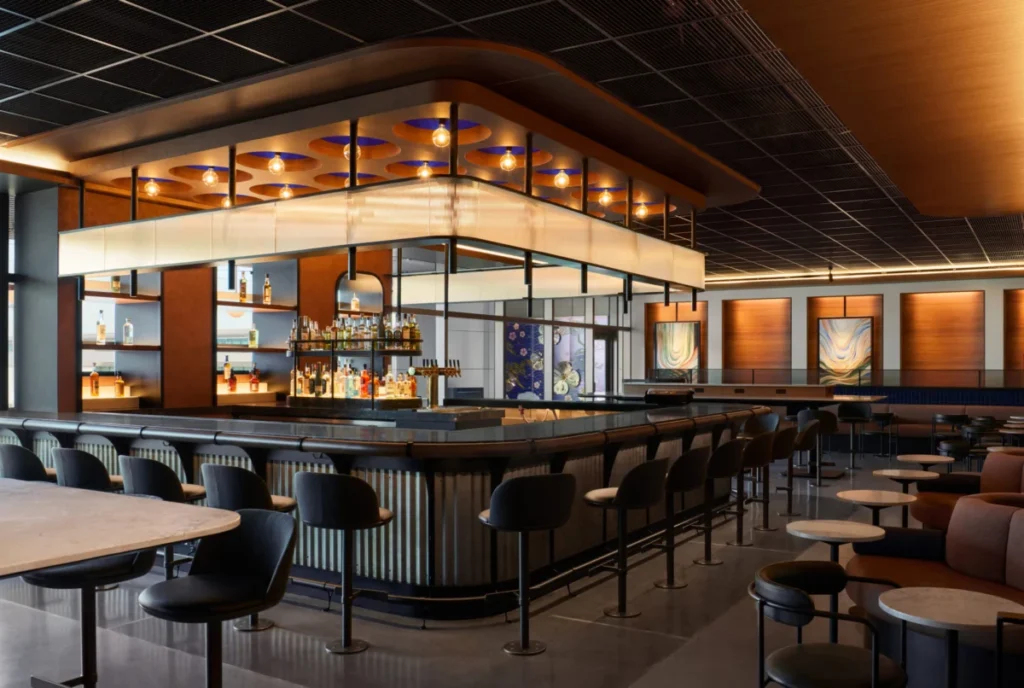
The sprawling 54,000-square-foot facility officially opens its doors on Thursday within Terminal B at the Houston hub. This grand opening forms a central part of a broader, multi-billion-dollar overhaul of the terminal facility, which also incorporates 22 new gates specifically designed to accommodate mainline aircraft. George Bush Intercontinental Airport serves as United Airlines’ primary connecting gateway for flights heading to and from Latin America, handling more than 500 departures on a typical day. This immense volume of transit traffic makes the Houston hub an ideal location for the carrier to deploy its most ambitious hospitality project to date.
Designed to accommodate up to 800 guests at any given time, the new club is packed with amenities tailored to travelers seeking comfort, productivity, or relaxation before their flights. Among its standout features is a dedicated outdoor terrace that offers panoramic views for aviation enthusiasts and plane-spotting travelers. Inside, guests will have access to two full-service bars and expansive buffet setups designed to cater to diverse culinary preferences throughout the day.
This monumental lounge project is part of a massive $2.6 billion capital investment program by United Airlines at the airport’s Terminal B. The project reflects a broader industry-wide trend where major network airlines are channeling billions of dollars into larger, more luxurious spaces. These investments are specifically targeted at capitalizing on the surging demand for premium travel, allowing airlines to cater effectively to a growing demographic of elite frequent flyers, co-branded credit card holders, and everyday travelers who are increasingly willing to pay extra for an elevated airport experience.
United is far from alone in its race to build bigger and more exclusive airport sanctuaries. The competitive landscape among major U.S. carriers has intensified dramatically over recent years, with legacy and low-cost airlines alike racing to upgrade their lounge networks. Earlier this month, American Airlines announced its own plans to construct its largest-ever lounge facility at its major hub at Charlotte Douglas International Airport in North Carolina. Meanwhile, Delta Air Lines has aggressively expanded both its widely popular network of Delta Sky Clubs and its ultra-exclusive, top-tier Delta One Lounges, which cater specifically to long-haul business and luxury travelers.
Even low-cost carriers are shifting their strategies to capture the lucrative premium market. Southwest Airlines is currently building its very first network of dedicated airport lounges, strategically tied to its credit card partnership with financial giant Chase. Just last week, Southwest gave the public a preview of its future lounge concept by unveiling detailed mock-ups of the spaces, which the carrier has named Icon. At the same time, JetBlue Airways has continued to bolster its premium footprint by opening dedicated lounges in New York and Boston over the past year, proving that the demand for high-end airport amenities has fundamentally transformed the commercial aviation industry across almost every business model.