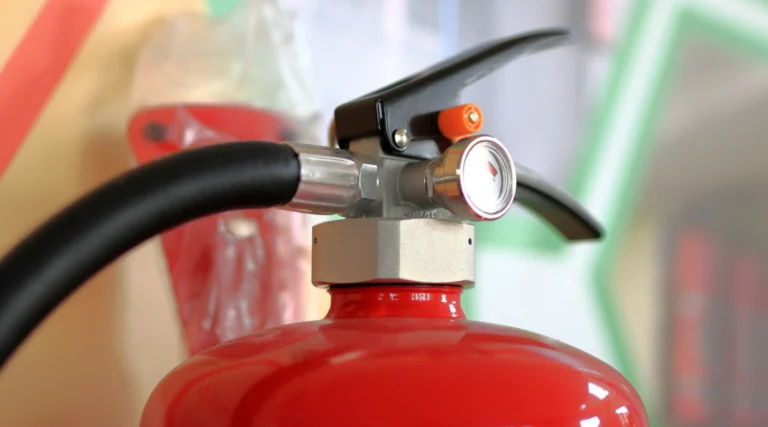
Whether it is a heavy-duty combine harvesting dry beans under high-friction conditions, a storage shed where hay was stacked with a slightly high moisture content, a burner on a high-capacity grain dryer that unexpectedly fouls, or an engine block heater left plugged in overnight in a machine shop, the vast majority of agricultural fires start small. According to rural fire safety specialists, the critical dividing line between a minor scare and a catastrophic total property loss almost always comes down to a single variable: whether a fully functioning, properly rated portable fire extinguisher was within arm’s reach during the opening sixty seconds of the incident.
Despite their undeniable importance, portable fire extinguishers are among the easiest pieces of safety equipment to overlook on a working farm. They tend to sit forgotten for years in the dusty corner of a machinery repair shop, bounce around relentlessly inside the cab of a utility tractor, accumulate corrosive residues, lose their internal charge over time, or cake up internally due to constant vibration. Often, these deficiencies go completely unnoticed until the precise moment an emergency arises and the device fails to perform.
For producers, grain handlers, and agricultural business owners operating across eastern Iowa, southwest Wisconsin, and northwest Illinois, understanding how to keep this vital safety equipment in a state of constant readiness—and knowing what regulatory frameworks actually require—is an essential part of managing risk in the rural sector.
What NFPA 10 requires
The maintenance, inspection, and placement of portable fire extinguishers across the United States are governed strictly by NFPA 10, the official Standard for Portable Fire Extinguishers published by the National Fire Protection Association. State and local fire codes across Wisconsin, Iowa, and Illinois formally adopt NFPA 10 by reference into their legal safety frameworks. Furthermore, commercial insurance carriers heavily rely on this established standard when writing, underwriting, and auditing agricultural and commercial property policies.
The standard establishes specific operational schedules that carry significant weight for farm managers. These guidelines outline how frequently units must be visually examined, how often they require internal maintenance, and when professional hydrostatic testing must be performed to ensure pressure vessels remain structurally sound under emergency conditions. Adhering to these schedules is not only a matter of regulatory compliance but also a foundational element of protecting capital investments in livestock, machinery, and rural infrastructure.
Where farms get caught
Navigating the regulatory landscape surrounding fire safety can present a confusing picture for many agricultural producers. For a traditional family-run operation that utilizes no hired help, federal Occupational Safety and Health Administration (OSHA) workplace extinguisher rules generally do not apply. This exemption frequently leads farmers to assume that no safety rules apply to their operations at all.
However, that assumption is only partially correct. The regulatory environment shifts dramatically once an operation introduces hired labor, establishes a retail storefront, or incorporates an agritourism component onto the property.
The requirements also change immediately if the business operates a licensed facility subject to specific state and federal oversight, such as a commercial dairy, a high-volume feed mill, a grain elevator, an ethanol production facility, or a commercial seed warehouse. Additionally, holding a commercial insurance policy brings its own set of mandatory safety stipulations, meaning that rural businesses ignore established fire protection standards at their own financial peril.
Why farm extinguishers fail when they are needed
Experienced technicians who service rural agricultural accounts routinely encounter the same series of mechanical failures during routine inspections. Dry chemical extinguishing powder, for instance, has a tendency to pack down densely at the bottom of a unit that spends years riding rough terrain mounted to a tractor chassis or a service truck. In these cases, the pressure gauge may read normally and indicate that the unit is fully charged, but when the trigger is pulled, the extinguisher releases only a brief, ineffective puff of powder before cutting out entirely.
Another common hazard involves pressure gauges that become permanently stuck in the green operating zone due to environmental corrosion, providing operators with a dangerously false sense of security. Rubber or synthetic hoses frequently crack and degrade where they have been tightly secured against hot engine shrouds or exposed to the elements for extended periods.
Units that are mounted outdoors or stored in unheated, damp machinery sheds are particularly susceptible to severe rust formation around the base and the valve assembly. Furthermore, many of the oldest extinguishers found on traditional farms are units that were never designed to be rechargeable in the first place, carrying no documented service history or manufacturing tags to verify their reliability.
None of these critical failure points can be identified by a casual glance from across a busy farm shop. They are typically uncovered only during a thorough annual service inspection, during which a trained technician carefully examines the chemical agent, cycles the internal valve mechanism, verifies internal pressure using specialized gauge testing equipment, and promptly replaces or recharges any unit that would fail to perform under emergency stress. That rigorous verification process is the primary reason the annual inspection tag holds such vital importance for farm safety.
What belongs where
Effective extinguisher placement across an agricultural property is ultimately a matter of managing travel distance, matching the unit to the specific class of potential fire, and ensuring that operators do not have to travel excessive distances away from a hazard to secure protection.
In high-risk areas such as fuel storage sites, welding bays, chemical handling rooms, and combine cabs, proper placement can mean the difference between containing a localized flare-up and watching an entire harvest operation go up in flames. Industry guidelines emphasize placing appropriate multi-class extinguishers near electrical panels, combustible storage zones, and high-value mobile machinery, ensuring they are mounted securely and remain conspicuously visible and unobstructed at all times.
Getting it done without a trip to town
Many agricultural operations historically ended up handling their annual fire extinguisher maintenance the hard way—loading a pickup truck bed full of heavy units and driving them into a service shop in the city, or alternatively, purchasing brand-new replacement units at the local farm supply store every single time an inspection tag expired.
Fortunately, more convenient options have emerged for rural businesses. Specialized mobile service providers routinely operate dedicated route trucks throughout the tri-state region, offering on-site service where technicians will inspect, tag, recharge, or swap out every single unit on a property during a single visit. This includes servicing specialized equipment that never leaves the farm, eliminating the downtime and hassle of transporting heavy safety gear off-site.
Local providers such as Fire & Safety Equipment III in Dubuque have specialized in delivering this exact type of mobile support for farms, agricultural co-ops, commercial dairies, and grain elevators across eastern Iowa, southwest Wisconsin, and northwest Illinois for decades. Having technicians strategically based across all three states ensures that service calls to remote rural properties remain short and efficient.
A simple annual routine
Managing farm safety amid the relentless demands of the agricultural calendar is rarely simple. Major seasonal milestones—including the intensity of harvest, the pressures of calving season, and the long hours of spring planting—invariable push fire safety maintenance down the priority list for busy producers.
However, establishing a standing annual service appointment, scheduled intentionally before the onset of the busiest operational seasons rather than during them, ensures that the entire property remains fully covered without requiring farm operators to shoulder the mental burden of tracking expiration dates year after year. By partnering with dedicated regional service providers to maintain reliable fire protection infrastructure, agricultural businesses can safeguard their investments and focus on what they do best: producing food and fiber for the marketplace.