
Fewer people are taking to the skies this year, but with airfare prices climbing rapidly, major airline executives say that dynamic is entirely acceptable to them. As the industry grapples with soaring operating expenses, the strategy has shifted decisively: capturing higher ticket prices has become far more important to carriers than fully filling their aircraft or chasing record-breaking volumes of travelers.
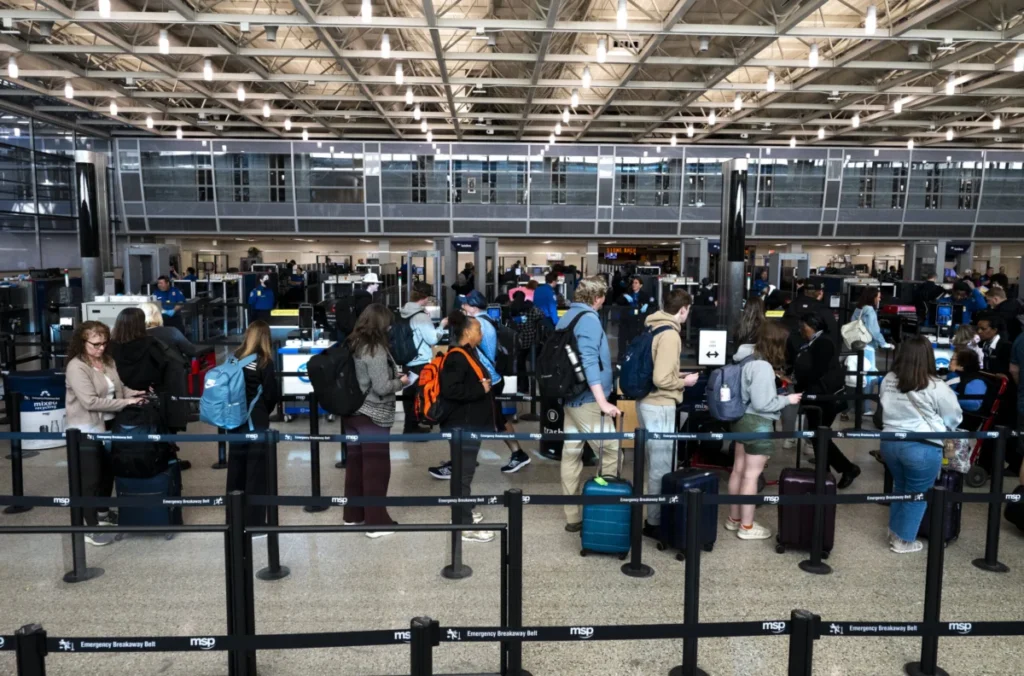
The broader shift in the U.S. aviation sector points toward an ongoing transformation in how major carriers manage capacity and profitability. Data from the Transportation Security Administration shows that the number of people screened at security checkpoints across U.S. airports is currently on track to record its first annual decline since 2020. From April—when major airlines began warning in earnest that their profit margins would take a heavy hit from spiking jet fuel costs—through Thursday, approximately 9.3 million fewer people were screened at airport checkpoints compared to the same period in 2025. While that drop represents a decrease of less than 2% from the previous year, it nevertheless marks a notable pivot following years of post-pandemic recovery and steady volume growth.
Despite this dip in overall passenger volume, top executives at major legacy and low-cost carriers alike maintain that they are satisfied with the trade-off. By focusing on higher yields rather than maximizing passenger numbers, airlines are reshaping their balance sheets to combat surging costs.
"We’re actively prioritizing yield versus load factor and really happy as we see it. It fits right in with the premium investments that we’re making," American Airlines Chief Commercial Officer Nat Pieper said during the company’s earnings call.
Reflecting this intentional strategy, American’s load factor—a key industry gauge measuring how full planes are flying on average—fell to 83.4% in the third quarter, down from 86% during the same three-month period in 2025.
Fares Keep Climbing
The underlying driver of this strategic pivot is the relentless surge in the price of plane tickets. Airfares have skyrocketed as airlines cope with a dramatic spike in jet fuel prices, which typically rank as their single largest operating expense after labor costs. Unable to completely absorb the financial blow, carriers have increasingly passed those higher expenses directly on to consumers.
According to the most recent inflation readings, consumer airfares in September were up more than 22% compared to the same month a year earlier. Meanwhile, fare tracker Hopper has indicated that it expects the upcoming holiday travel season to feature some of the most expensive ticket prices seen in years.
Individual carrier reports illustrate the magnitude of these price increases. For instance, the average fare for a Southwest Airlines flight during the third quarter was $231.69, representing an increase of nearly $50 compared to the previous year. Crucially, that average ticket price does not even account for Southwest’s newly introduced fees, such as extra charges for checked bags or selecting a seat closer to the front of the aircraft.
Even with the higher ticket costs, Southwest reported that its total count of revenue passengers fell by 3.2% from a year ago, dropping to approximately 33.5 million travelers. Yet, despite the lower head count, both passenger fares and overall volumes managed to surpass the airline’s internal forecasts.
"Passenger fares came in about $3 above what our forecast was and the more important thing is that passenger volumes also exceeded our expectations," Southwest CEO Bob Jordan told analysts and reporters during an earnings call.
The pressure on airlines stems directly from the commodities market. Jet fuel prices have more than doubled compared to year-ago levels, with U.S. Gulf Coast spot prices hovering around $4.63 a gallon, according to data from the U.S. Energy Information Administration. In response, airline leadership teams have concentrated heavily on recovering as much of that fuel price spike as humanly and economically possible through ticket pricing adjustments.
Even with some localized drops in traveler numbers, airline executives insisted during their recent earnings presentations that overall travel demand remains remarkably robust. This resilience is particularly evident in profitable premium cabins, such as business class, where travelers are consistently willing to pay top dollar.
Furthermore, not every major carrier is experiencing a contraction in traveler volume. United Airlines reported that it flew 2.4% more passengers in the third quarter than it did during the same period a year prior, alongside a 16% jump in unit revenue—marking the largest increase the company has seen since the pandemic.
"I’ve been pleasantly surprised at the industry’s ability this year to raise yields and pass through much of the increase in fuel prices," United Airlines CEO Scott Kirby said during the company’s earnings call. "So it’s possible that airlines will continue to focus on yields at the expense of load factor and that alone could get us to double-digit margins next year."
Profit Hit and Changing Capacity
Most major airlines are anticipating that fuel costs will continue to squeeze their bottom lines in the near term, but executives remain confident in their current pricing power. United, for example, stated that it expects to pay an average of $4.80 a gallon for jet fuel during the fourth quarter, up significantly from an average price of $3.90 a gallon in the third quarter.
The financial pressure has forced concrete adjustments to corporate outlooks. American Airlines, United Airlines, Delta Air Lines, and Southwest Airlines all reduced their full-year profit forecasts for 2026 during this month’s earnings reporting cycle. Among those four major legacy and domestic carriers, American Airlines stands out as the only one expecting to post an overall financial loss for the year.
In addition to adjusting profit expectations, American and other carriers have actively reined in their growth plans. Industry analysts have warned that airlines could dial back their broader goals for expanding capacity in the coming quarters, a move that would likely keep airfares elevated over the long term. Reduced seat capacity naturally creates scarcity, which can drive ticket prices even higher if consumer travel demand holds steady.
This strategy relies heavily on the continued strength of high-spending travelers. Carriers noted that demand has been exceptionally strong for premium seats, which routinely command hundreds—and sometimes thousands—of dollars more than standard coach tickets.
As the earnings season continues, attention will likely turn to smaller carriers set to report their financial results in the coming weeks. Airlines such as Frontier Airlines and Allegiant Air have traditionally catered to more price-sensitive, budget-conscious customers. Their upcoming reports could provide clearer insight into whether everyday leisure travelers are finally pulling back on travel plans or continuing to absorb higher ticket costs.
Another significant structural shift impacting the current aviation landscape is the sudden exit of Spirit Airlines, which went out of business and ceased operations in early May. The disappearance of the ultra-low-cost carrier has permanently altered market dynamics, removing millions of ultra-cheap seats from the marketplace.
"Some of its customers have likely stopped flying entirely," analysts at Bank of America noted in a research report.